
Why Your Bank Account Keeps Losing Money to Fees

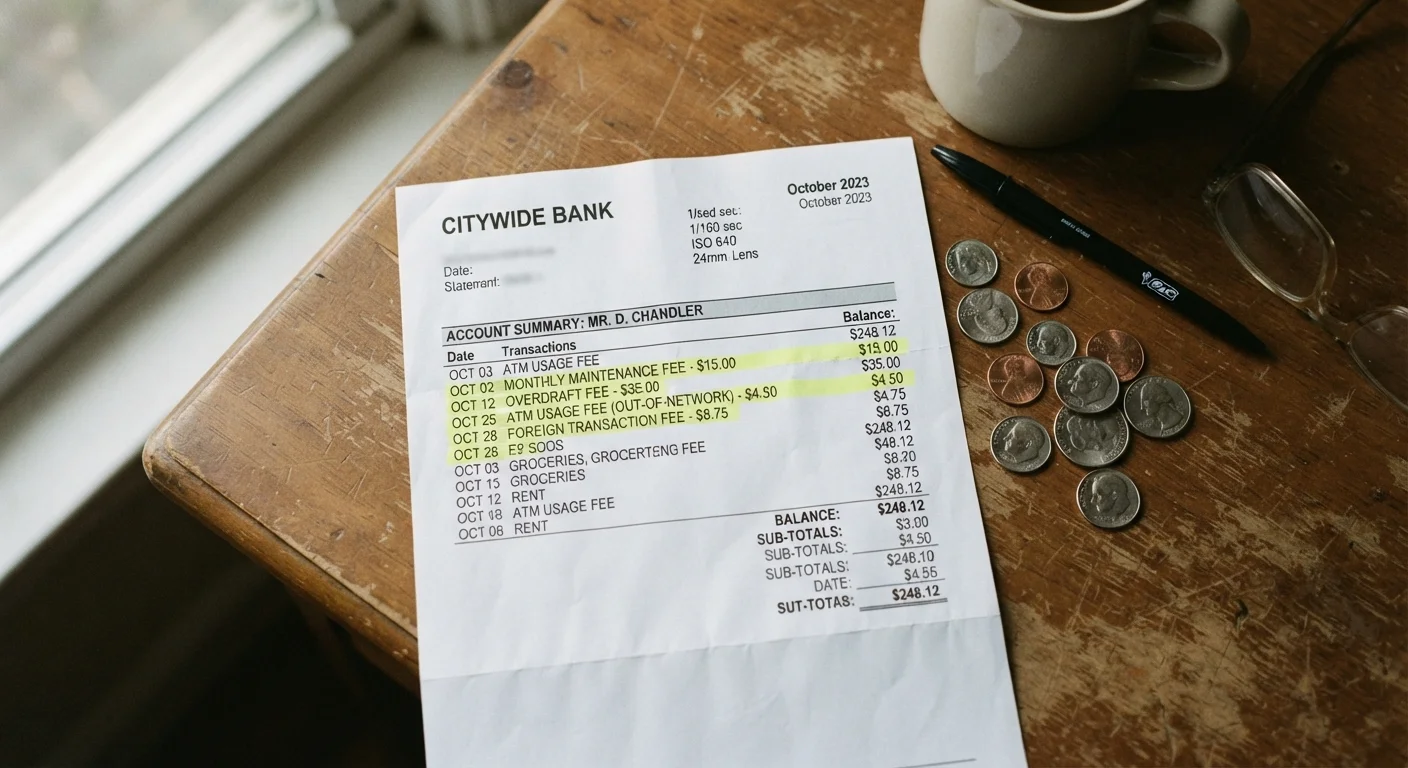
Photo: MoneyOnMind.net | Navigate Money With Clarity editorial
Key Takeaways
- Monthly maintenance fees, overdraft charges, and out-of-network ATM fees are the most common balance drains.
- Many fees are avoidable by meeting simple conditions like maintaining a minimum balance or enabling direct deposit.
- Checking your account agreement and transaction history regularly is the single most effective habit to prevent fee loss.
- Low balance alerts and automatic transfers can eliminate overdraft fees without requiring active daily monitoring.
How Fees Quietly Drain Your Account
Most bank fees don't arrive as a single obvious charge - they appear as small, recurring deductions that rarely trigger concern in isolation. A $12 monthly maintenance fee here, a $3 out-of-network ATM charge there, and suddenly you've lost over $150 a year without a single major purchase. Understanding what's actually happening inside your account is the first step to stopping it.
The fees and fine print landscape in U.S. banking is governed largely by your account's terms and conditions - a document most people never read past the first page. Banks are required to disclose fees, but disclosure doesn't mean they're prominently advertised. The result is that many account holders, especially those new to managing their own finances, pay for services they didn't know existed.
For a deeper breakdown of what each charge actually means, see what bank fees are actually charging you for. The section below focuses on the specific mistakes that cause fees to keep recurring - and how to correct each one.
Ignoring the monthly maintenance fee waiver conditions.
Using out-of-network ATMs regularly without tracking the cumulative cost.
Triggering overdraft fees by not tracking pending transactions.
Opting into overdraft coverage without understanding what it costs.
Keeping money in an account that charges inactivity fees.
Practical Habits That Keep Fees Out of Your Account
Avoiding bank fees isn't about finding a perfect account - it's about building a small set of consistent habits. The most impactful is simply reading your monthly statement line by line. Many account holders only check their ending balance, which means individual fee charges go unnoticed until they've compounded over months.
$150+
Average annual cost of common bank fees
The Consumer Financial Protection Bureau has noted that overdraft and NSF fees alone generated billions in annual revenue for U.S. banks, indicating widespread impact on everyday account holders.
$35
Typical overdraft fee per transaction
Standard overdraft fees at many large U.S. banks have historically been in the $25-$35 range per covered transaction, according to FDIC survey data on consumer checking accounts.
Setting up low-balance alerts through your bank's mobile app takes under five minutes and removes the need for daily manual checks. Most banks allow you to choose a threshold - say, $200 - and notify you by text or email when your balance drops below it. This single step eliminates the primary cause of overdraft fees.
It's also worth revisiting your account type annually. If you opened a checking account two years ago without a student status or a qualifying employer, you may no longer be meeting the conditions that waived your monthly fee. Modern banking tools - including fee analyzers built into some apps - can surface these changes automatically.
For those who want to build stronger day-to-day banking discipline overall, managing a bank account well from the start covers the foundational routines that keep balances stable and fees minimal. And if you suspect there are charges on your account you still haven't identified, paper statements, inactivity, and other fees most people forget to check for addresses the less obvious culprits that often slip through.
This article provides general financial education and is not personalized financial advice. Fee structures vary by institution and account type. Consult your bank's account agreement or a licensed financial professional for guidance specific to your situation.
The content on this site is for informational purposes only and is not a substitute for professional advice. Always consult a qualified professional for guidance specific to your situation.