
Anatomy of a Loan: Principal, Interest, and Everything In Between

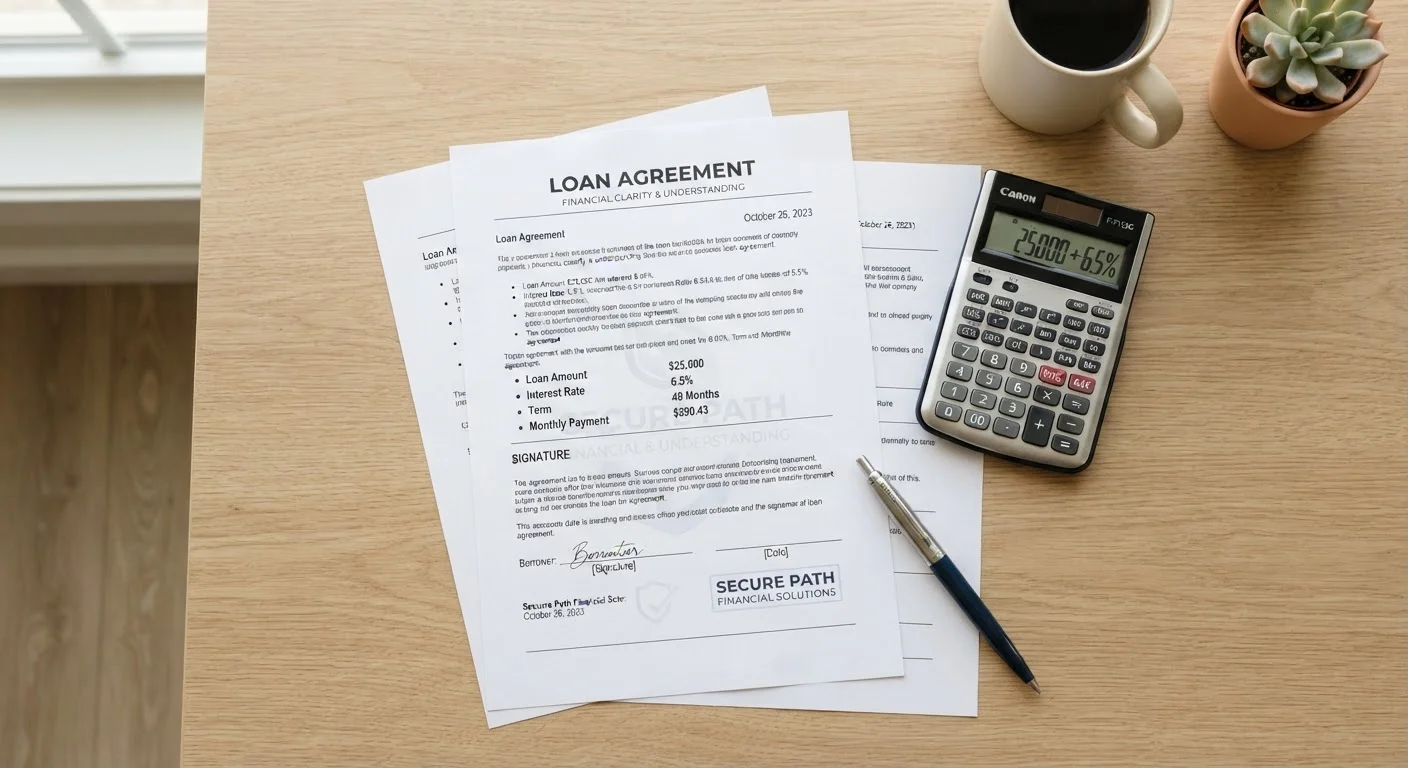
Photo: MoneyOnMind.net | Navigate Money With Clarity editorial
Key Takeaways
- Principal is the actual amount borrowed - interest and fees are added on top of it.
- The interest rate and APR are different figures; APR includes fees and gives a fuller cost picture.
- Loan term length directly affects both your monthly payment size and total interest paid.
- Fixed rates keep payments predictable; variable rates can rise or fall with market conditions.
- Always review the loan agreement for origination fees, prepayment penalties, and late-payment charges.
- Consulting a licensed financial professional before signing any loan is strongly advisable.
Principal: The Foundation of Every Loan
The principal is the amount of money you actually borrow from a lender - it's the starting point from which all other costs are calculated. If you take out a $10,000 personal loan, that $10,000 is your principal. Every monthly payment you make chips away at this balance, though early in a typical repayment schedule you'll be paying more interest than principal (more on that in a moment).
It's important to note that your principal can increase if fees are rolled into the loan rather than paid upfront, or if you miss payments and interest accrues on top of unpaid balances. Keeping your principal as low as borrowing needs allow is one of the most straightforward ways to reduce total loan cost. For a full glossary of related terms, see Loan Terminology Every Borrower Should Know.
Interest: The Cost of Borrowing Money
Interest is the fee a lender charges for letting you use their money. It is expressed as a percentage of the outstanding principal and typically calculated either as a fixed rate (stays constant for the life of the loan) or a variable rate (fluctuates based on a benchmark index such as the prime rate or SOFR).
Fixed rates offer payment predictability - your rate won't spike if market conditions shift. Variable rates may start lower but carry the risk of increasing over time, which can make long-term budgeting harder. Understanding which type applies to your loan is essential before signing.
Beyond the base interest rate, always look at the Annual Percentage Rate (APR). The APR folds in fees alongside the interest rate to produce a single annual cost figure, making it the most reliable tool for side-by-side loan comparisons. For a deeper look at how lenders build out total borrowing costs, see The Real Cost of Borrowing.
~$1.6T
Total U.S. consumer loan debt outstanding
Federal Reserve consumer credit data consistently tracks outstanding revolving and non-revolving consumer credit in the trillions, underscoring how widespread borrowing is across the U.S. population.
1%-8%
Typical origination fee range for personal loans
Consumer Financial Protection Bureau (CFPB) educational materials note that origination fees on personal loans commonly fall in this range depending on lender and borrower creditworthiness.
TILA
Federal disclosure law protecting borrowers
The Truth in Lending Act requires lenders to disclose the APR, total finance charge, and payment schedule before a loan is consummated, helping borrowers make informed comparisons.
Fees: The Often-Overlooked Third Layer
Beyond principal and interest, loans frequently carry fees that add to your total repayment obligation. Common examples include:
- Origination fees: Charged at disbursement for processing the loan, typically 1%-8% of the principal depending on loan type and lender.
- Late payment fees: Applied when a payment is missed or arrives after the grace period.
- Prepayment penalties: Charged by some lenders if you pay off a loan early, compensating for lost interest income.
- Application or underwriting fees: Less common, but worth asking about upfront.
Because fees directly affect cost, confirm all charges in writing before accepting any loan offer. The loan disclosure document - required under TILA - must list these items clearly. For concise definitions of these and related terms, Key Terms Every Borrower Should Understand is a useful reference.
Read the Full Loan Disclosure Before Signing
Repayment Terms: The Structure That Governs It All
Repayment terms define the timeline and mechanics of paying the loan back. The key elements are the loan term (total repayment period, such as 36 or 60 months), the payment frequency (usually monthly), and the payment structure.
Most consumer loans use amortisation - a method where each fixed payment covers accruing interest first, with the remainder reducing principal. Because your outstanding balance is highest at the start, early payments are disproportionately interest-heavy. Over time, that ratio shifts and more of each payment goes toward principal. See What Happens Inside an Amortisation Schedule for a step-by-step walkthrough of how this works numerically.
Some loans - such as interest-only loans or balloon loans - use different structures. Understanding which structure applies to your loan prevents unwelcome surprises down the road. You can also explore how these structures differ across common loan categories.
This article provides general financial education only and is not personalised financial or legal advice. Loan terms, rates, and regulations vary by lender and jurisdiction. Consult a licensed financial professional before making borrowing decisions specific to your situation.
Frequently Asked Questions
The content on this site is for informational purposes only and is not a substitute for professional advice. Always consult a qualified professional for guidance specific to your situation.