
Monthly Debt Review: A Practical Checklist for Staying on Course

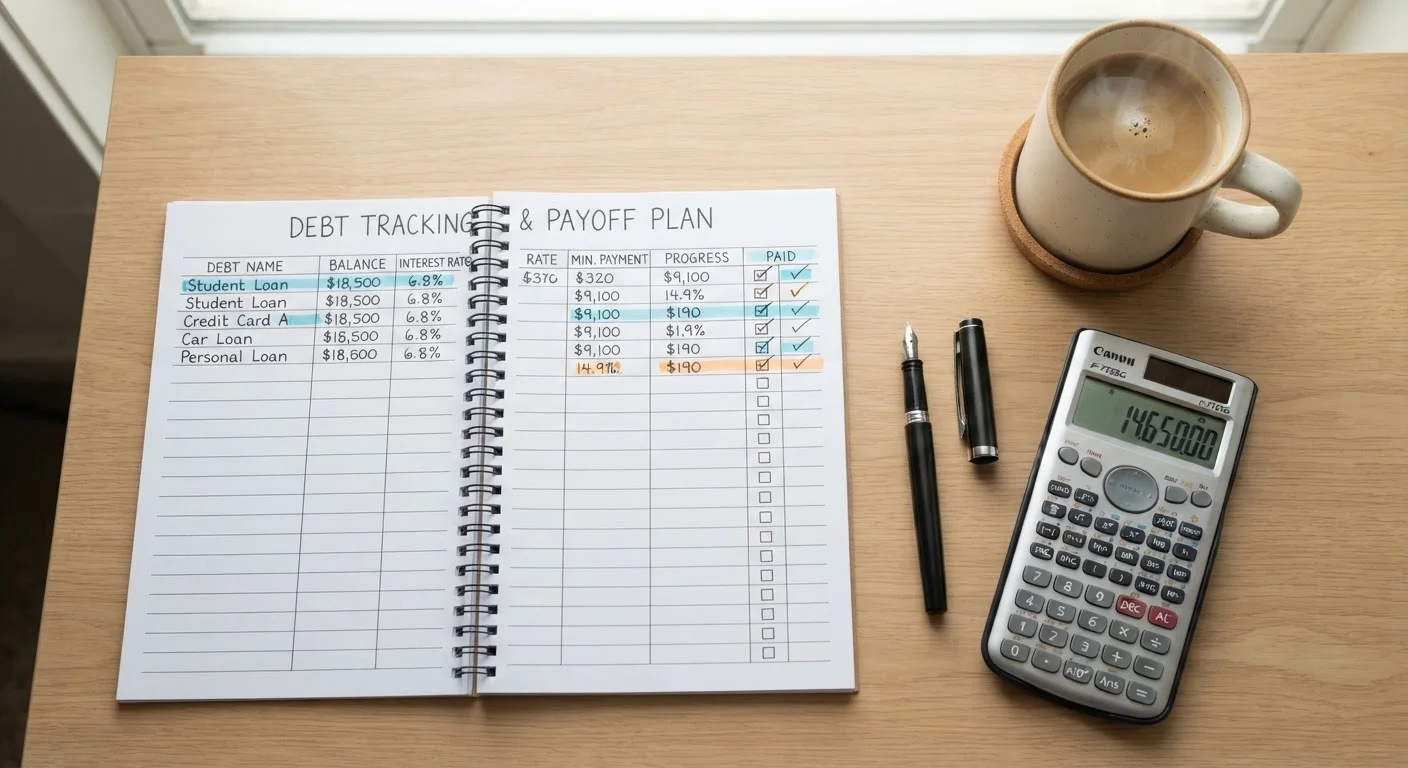
Photo: MoneyOnMind.net | Navigate Money With Clarity editorial
Key Takeaways
- A monthly debt review helps you catch errors, track progress, and avoid missed payments before they escalate.
- Reviewing all balances and interest charges together reveals your true debt picture each month.
- Comparing your current balances to last month confirms whether your repayment strategy is working.
- Spotting billing errors or unauthorized charges early protects both your wallet and your credit score.
- Adjusting your repayment plan monthly keeps it realistic as income and expenses naturally shift.
Why a Monthly Debt Review Matters
Most people set up a repayment plan once and assume it will run on autopilot. In practice, balances shift, interest accrues unevenly, promotional rates expire, and life interrupts even the best intentions. A structured monthly review closes that gap - turning a passive hope that things are improving into a confirmed, documented reality.
This checklist is designed for anyone carrying a mix of debt obligations: student loans, credit cards, auto loans, personal loans, or a combination. If you're working toward paying off debt entirely, this monthly ritual is how you stay oriented between milestones. If you're managing several accounts at once, it pairs well with strategies for managing multiple loans without losing track.
Set aside 30 to 60 minutes at the same point each month - right after statements close works well. Consistency is more important than perfection.
Don't Skip Months - Even Busy Ones
What You'll Need Before You Start
Gather the following before working through the checklist so you're not pausing mid-review to hunt down information.
Monthly statements for all debt accounts
Provides the current balance, interest charge, minimum payment, and due date for each loan or credit line.
Debt tracking spreadsheet or notebook
Centralises all account data in one place so you can compare figures month over month.
Free annual credit report
Lets you verify that all accounts on your report match what you have on file and flag any errors or unfamiliar entries.
Calculator (or spreadsheet formulas)
Helps you manually verify interest charges and calculate principal-versus-interest splits for key accounts.
Prior month's checklist notes
Enables a direct month-over-month comparison of balances and progress so trends are immediately visible.
The Monthly Debt Review Checklist
Work through each group in order. The categories move from gathering raw data to verifying accuracy, assessing progress, and planning the month ahead. Each item is designed to take only a few minutes once your documents are in front of you.
Gather Your Statements
Verify Charges and Account Accuracy
Assess Progress Against Your Plan
Review Upcoming Payments
Adjust and Plan Forward
Dispute Errors Promptly - Deadlines Apply
After completing the checklist, compare your findings with your broader budget. A monthly debt review works best alongside a full monthly budget review so that debt payments are always accounted for within your total spending plan. For a broader view of habits that support financial health over time, see what responsible credit behaviour looks like month to month.
This article is for general informational and educational purposes only. It does not constitute personalised financial, tax, or legal advice. Debt situations vary significantly by individual; consult a qualified financial adviser or credit counselor for guidance tailored to your specific circumstances.
The content on this site is for informational purposes only and is not a substitute for professional advice. Always consult a qualified professional for guidance specific to your situation.