
Why Paying the Minimum Is Costing You More Than You Think

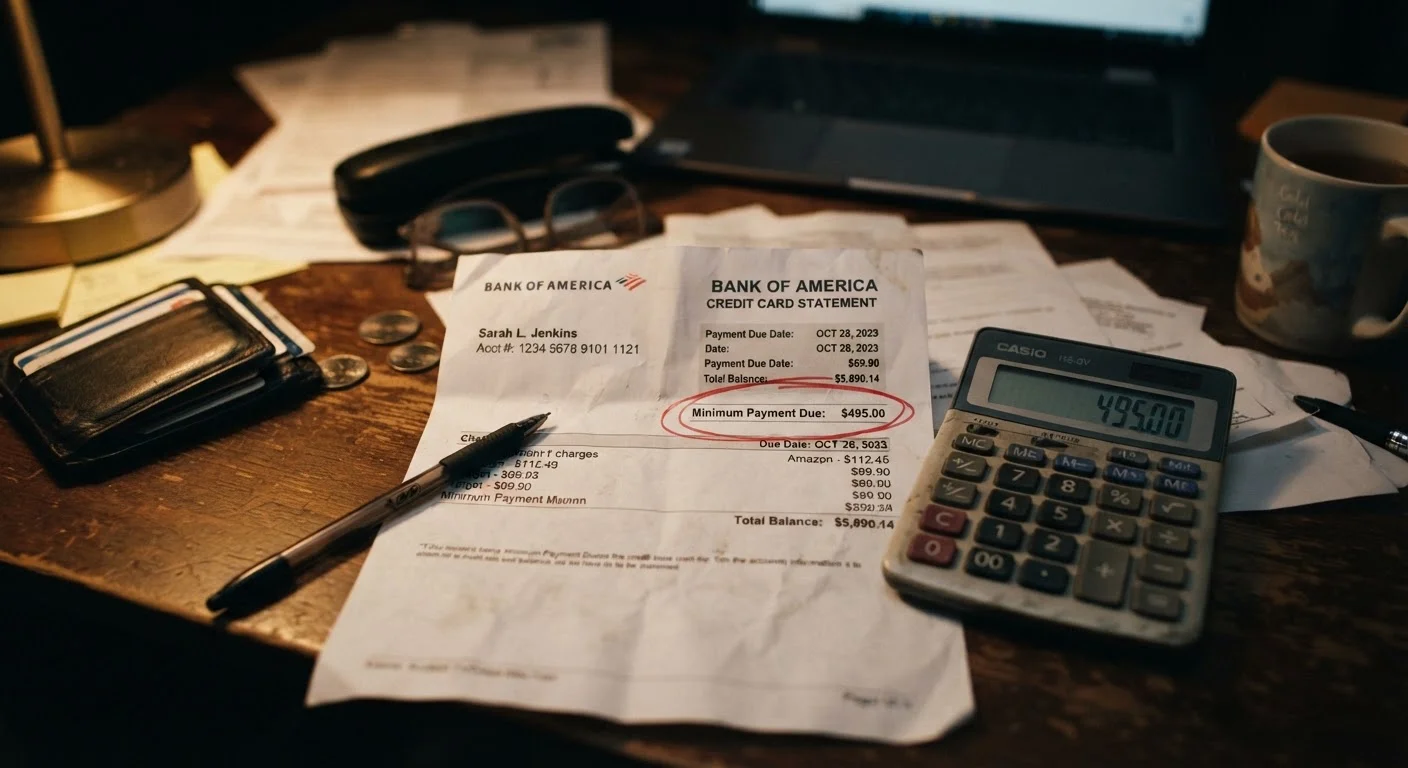
Photo: MoneyOnMind.net | Navigate Money With Clarity editorial
Key Takeaways
- Minimum payments keep your account in good standing but barely reduce your principal balance.
- Interest compounds on the remaining balance, meaning debt can persist for a decade or more.
- Paying even a small amount above the minimum can dramatically reduce total interest paid.
- Credit card issuers are legally required to disclose how long minimum-only repayment will take.
- A structured repayment strategy - not just avoiding late fees - is what breaks the cycle.
What Minimum Payments Actually Do (and Don't Do)
Every credit card statement lists a minimum payment - typically the greater of a flat dollar amount (often $25-$35) or a small percentage of your outstanding balance (commonly 1-3%). Paying this amount prevents a late fee and keeps your account current with the lender. What it does not do is meaningfully reduce what you owe.
Here's the core problem: credit card interest is calculated on your average daily balance. On a $5,000 balance at 20% APR, monthly interest alone is roughly $83. If your minimum payment is $100, only $17 of that payment actually reduces your principal. The rest disappears into interest charges. As your balance drops slowly, so does your minimum - which means you can spend years making payments and still owe most of what you started with.
This is the mechanism behind the minimum payment trap, and it's worth understanding before exploring the specific mistakes that keep borrowers stuck inside it. For a deeper look at how unpaid interest attaches itself to your principal, see our guide on interest capitalisation and why your loan balance keeps growing.
Treating the minimum payment as the target payment.
Ignoring the interest-to-principal ratio on each payment.
Adding new charges to a card while making minimum payments on an existing balance.
Believing a long repayment timeline is acceptable because payments are consistent.
Underestimating how variable-rate increases compound the problem.
How to Build a Smarter Repayment Habit
Breaking out of minimum-payment thinking requires a shift in how you measure progress. Instead of asking "Can I afford this month's minimum?", ask "How much of my payment is actually reducing my balance?" That reframe changes your behaviour.
10+ years
Typical payoff time on minimum-only payments
A $5,000 credit card balance at 20% APR paid with minimums only can take over a decade to clear, according to standard amortisation calculations.
~$4,300
Extra interest on a $5,000 balance at 20% APR
Minimum-only repayment on a $5,000 balance at 20% APR can result in paying well over $4,000 in interest charges before the debt is eliminated.
1-3%
Typical minimum payment as a share of balance
Most US credit card issuers set minimum payments at 1-3% of the outstanding balance or a flat dollar floor, whichever is greater.
Start by pulling your most recent statement. Federal law - specifically the Credit CARD Act of 2009 - requires lenders to show you two figures: how long it will take to pay off your balance making only minimum payments, and what monthly payment would eliminate the debt in three years. Use that three-year figure as your new floor, not the minimum.
If you carry balances on multiple cards, the debt repayment beliefs that can cost you money article examines why popular approaches like paying the smallest balance first aren't always the most cost-effective. Understanding the math helps you choose a strategy that fits your actual numbers.
Auto-Pay on Minimum Can Mask Deteriorating Debt
Even redirecting $50-$100 per month above your minimum can cut years off repayment and save hundreds - sometimes thousands - in interest. The goal isn't perfection; it's consistent forward movement. Consult a licensed financial adviser or nonprofit credit counselor to build a repayment plan tailored to your income, obligations, and goals - this article provides general information, not personalised financial advice.
For a broader look at misconceptions that keep borrowers from making progress, see loan myths that keep borrowers stuck and our overview of practical debt repayment strategies.
The content on this site is for informational purposes only and is not a substitute for professional advice. Always consult a qualified professional for guidance specific to your situation.