
Your First Budget in Seven Steps

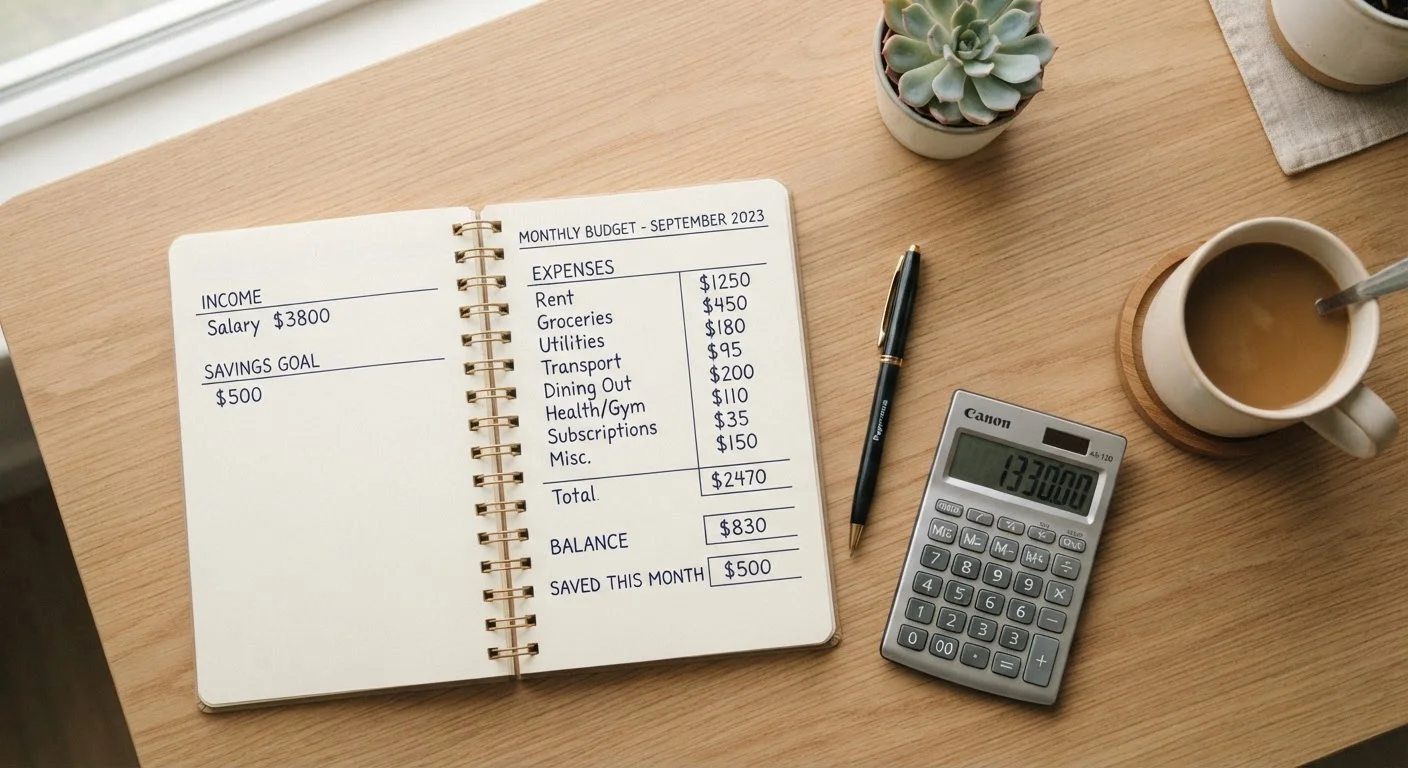
Photo: MoneyOnMind.net | Navigate Money With Clarity editorial
Key Takeaways
- Start by calculating your actual take-home income, not your gross salary.
- Separating fixed expenses from variable ones makes your budget far easier to control.
- The 50/30/20 framework gives beginners a reliable starting ratio for spending and saving.
- Tracking for at least one full month before adjusting targets prevents premature frustration.
- A budget is a living document - expect to revise it as your circumstances change.
Why a First Budget Feels Harder Than It Should
Most people who attempt a first budget don't fail because they lack discipline - they fail because they start without a clear process or realistic numbers. A budget built on guesses collapses the moment real life doesn't match the estimate. The steps in this guide address that directly: gather real data first, apply a proven framework second, and refine from there.
If you want broader context on how budgeting fits into your overall financial picture before diving into the steps, our complete introduction to personal budgeting covers the foundational concepts in depth.
What you will need
Bank and credit card statements (3 months)
Provides accurate historical spending data to populate your expense categories.
Spreadsheet application (e.g., Google Sheets or Excel)
Used to record income, categorise expenses, and calculate totals in one place.
Pay stubs or income records
Confirms your exact take-home pay after taxes and deductions.
Budgeting app (e.g., a zero-based or envelope-style tool)
Optional digital alternative to a spreadsheet for ongoing tracking on mobile.
Building Your Budget Step by Step
This Is Education, Not Personalised Advice
Don't Skip the Debt Picture
Calculate your total monthly take-home income
Start with what actually lands in your bank account after federal and state taxes, Social Security, Medicare, and any employer deductions (health insurance, retirement contributions). If you are salaried, this is straightforward. If you are hourly or freelance, use a conservative three-month average - not your best month.
Include all income sources: wages, side income, rental income, or consistent government benefits. Exclude one-off windfalls like tax refunds, which are unreliable planning inputs.
List every fixed expense
Fixed expenses are costs that stay the same amount each month: rent or mortgage, car loan payments, insurance premiums, minimum debt repayments, and fixed subscriptions. Write each one down with its exact monthly cost. These are non-negotiable line items - they must be covered before anything else.
If you have existing debt, treat minimum payments as fixed expenses here. For a clearer picture of what you owe, building a debt inventory first is a helpful foundation step.
Identify and categorise variable expenses
Variable expenses fluctuate each month: groceries, dining out, petrol, clothing, entertainment, and personal care. Pull your statements and group transactions into logical categories. Be honest - miscategorising spending is the most common reason a first budget fails to reflect reality.
Common categories include: groceries, transport, dining and takeaway, utilities, personal care, and hobbies. Avoid making categories so narrow that tracking becomes burdensome.
Apply the 50/30/20 framework as a starting ratio
The 50/30/20 rule - popularised by Senator Elizabeth Warren in academic work on consumer finance - allocates your take-home pay into three broad buckets: 50% toward needs (housing, utilities, groceries, minimum debt payments), 30% toward wants (dining out, entertainment, hobbies), and 20% toward savings and additional debt repayment.
This ratio is a starting point, not a law. High housing costs in major cities often push the needs bucket above 50%. Adjust the wants category downward first rather than the savings category. For a broader comparison of budgeting frameworks, see budgeting methods worth knowing.
Set a spending target for each variable category
Using your historical averages from Step 3 and your 50/30/20 allocation from Step 4, assign a dollar target to each variable category. These targets should be realistic, not aspirational - cutting your dining budget by 70% in month one is a recipe for abandonment.
Start by reducing the largest discretionary categories by 10-15%. Small reductions that hold are worth more than aggressive cuts that collapse by week two.
Build in savings as a non-negotiable line item
Treat savings like a fixed expense, not what is left over at month's end. Even a small consistent contribution - whether toward an emergency fund, a retirement account, or a debt payoff target - builds the habit and compounds over time. Automate the transfer on payday if possible.
If you are just starting out, three to six months of essential expenses is a widely cited emergency fund target, though any amount is better than none. Once your budget stabilises, setting structured financial goals is a natural next step.
Track, review, and adjust at month's end
At the end of your first full budget month, compare actual spending against every target. Expect misses - they are data, not defeats. Identify which categories ran over, whether they were one-off or structural, and whether your targets need revising or your behaviour does.
Schedule a 15-minute monthly budget review as a recurring calendar event. Consistency in reviewing is more valuable than perfection in any single month. If your budget keeps slipping after the first few weeks, understanding why budgets fail early can help you diagnose the specific breakdown point.
Use One Month of Real Data
This article is for general informational and educational purposes only. It does not constitute personalised financial, tax, or legal advice. Financial situations vary - consult a qualified financial adviser before making decisions specific to your circumstances.
The content on this site is for informational purposes only and is not a substitute for professional advice. Always consult a qualified professional for guidance specific to your situation.