
FAFSA Filing: What to Gather Before You Start

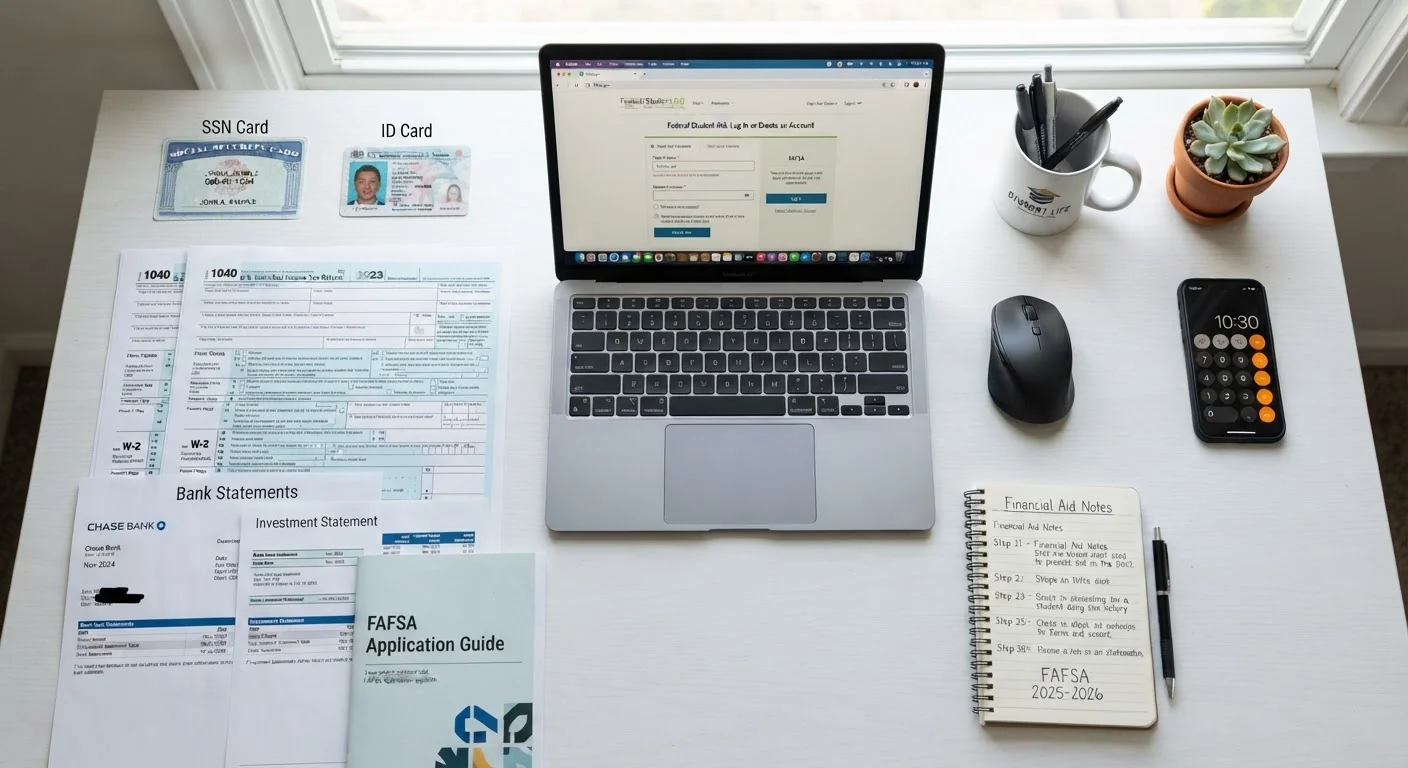
Photo: MoneyOnMind.net | Navigate Money With Clarity editorial
Key Takeaways
- Missing documents are the leading cause of FAFSA delays - gather everything before you log in.
- Both student and parent information are required for most dependent students.
- You will need tax returns, bank statements, and Social Security numbers for all parties.
- Creating your FSA ID in advance is a separate step that can take up to three days to verify.
- Filing early - ideally when the FAFSA opens - maximizes access to limited state and institutional aid.
Why Preparation Makes or Breaks Your FAFSA
The Free Application for Federal Student Aid (FAFSA) is the gateway to federal grants, work-study programs, and subsidized loans. It is also the foundation most colleges use to build your financial aid package. Yet a significant number of applicants abandon or delay their forms mid-session because they realize they are missing a tax document, a Social Security number, or login credentials.
Unlike many online forms, the FAFSA pulls live data from the IRS and requires specific identification numbers that cannot be estimated or filled in later. Starting without everything in hand does not just cause frustration - it can push your submission past priority deadlines and cost you grant money that is awarded on a first-come, first-served basis.
For a broader understanding of how the FAFSA fits into the full aid timeline, see our step-by-step financial aid walkthrough. This checklist focuses specifically on what to have ready before you open the form.
studentaid.gov
The official Federal Student Aid website where you create your FSA ID, complete the FAFSA, and track your application status.
IRS Direct Data Exchange (formerly IRS Data Retrieval Tool)
Automatically imports your tax data from IRS records into the FAFSA, reducing manual entry errors.
Federal School Code Search
Lets you look up the four- or six-digit code for each school you want to list on your FAFSA.
State Higher Education Agency Website
Provides your state's specific FAFSA priority deadline and any state-level grant program requirements.
Your Complete Pre-FAFSA Document Checklist
Work through the groups below and check off each item before you begin your session. Dependent students - generally those under 24 without a degree, not married, and not a veteran or ward of the court - will need parent information in addition to their own.
Identity & Login Credentials
Student Financial Records
Parent Financial Records (Dependent Students)
School & Program Information
Dependent vs. Independent Status Changes Everything
A Few Things to Double-Check Before You Submit
Once your documents are gathered, a few process details are worth confirming before you open the FAFSA at studentaid.gov.
- FSA ID status: Both the student and one contributing parent need separate FSA IDs (a username and password). These must be created in advance - identity verification can take up to three business days. If you or a parent uses an ITIN instead of a Social Security number, the FSA ID process differs slightly; review the Federal Student Aid website for current guidance.
- IRS Direct Data Exchange: The FAFSA offers a tool that pulls tax data directly from the IRS. To use it, the tax filer must have already filed their federal return and have their FSA ID ready. This feature reduces errors significantly.
- State and school deadlines: Federal deadlines are typically generous, but state agencies and individual colleges set their own earlier priority dates. Check each school's financial aid page and your state's higher education agency website for specific cutoffs.
If you are comparing this process to scholarship or grant applications, note that those have different documentation requirements. Our scholarship application readiness checklist and grant application readiness checklist cover those separately.
Do Not Estimate Tax Figures
State Aid Can Run Out Before the Federal Deadline
This article is for general informational purposes only and does not constitute personalized financial, legal, or tax advice. Aid eligibility, deadlines, and program rules change - always verify current requirements directly with the Federal Student Aid office and your state's higher education agency. Consult a qualified financial aid adviser for guidance specific to your situation.
The content on this site is for informational purposes only and is not a substitute for professional advice. Always consult a qualified professional for guidance specific to your situation.