
Grants vs. Loans: Why Free Money Isn't Too Good to Be True

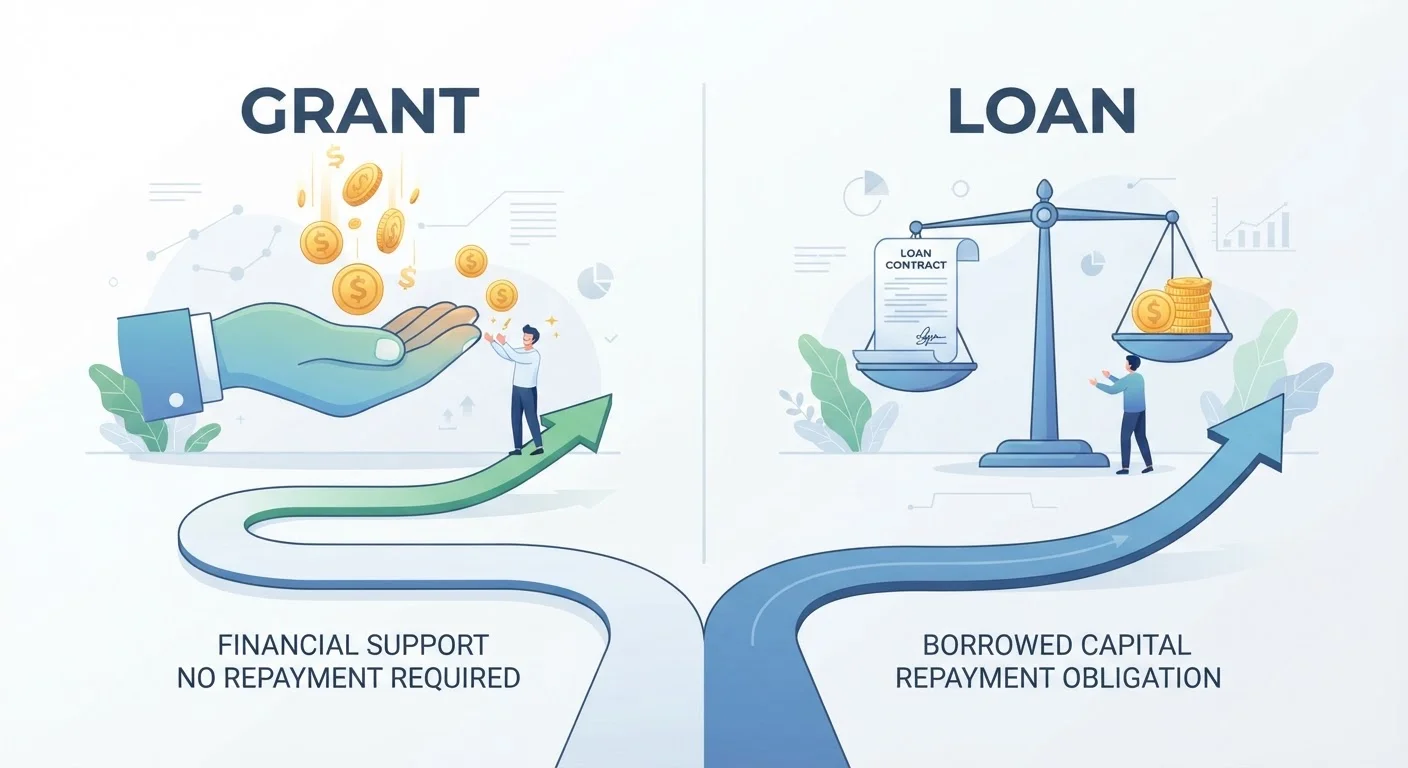
Photo: MoneyOnMind.net | Navigate Money With Clarity editorial
Key Takeaways
- Grants are non-repayable funds awarded based on eligibility criteria - they are not too good to be true.
- Loans provide flexible access to capital but always come with repayment obligations, often plus interest.
- Grants typically require more documentation and a competitive application process than most loans.
- Receiving a grant does not affect your credit score; defaulting on a loan does.
- Many people qualify for grants they never apply for due to persistent myths about eligibility.
- Using grants before loans is a sound strategy for reducing long-term debt burden.
The Core Difference: Repayment vs. No Repayment
The single most important distinction between grants and loans is straightforward: loans must be repaid; grants do not. That's not a marketing slogan - it's a legal and financial reality with significant long-term implications for your balance sheet.
A loan is a credit product. A lender provides capital, and you agree to return it - usually with interest - over a defined period. Whether it's a federal student loan, a personal loan, or a small business term loan, borrowing always creates a liability. Miss payments and you risk credit damage, collections, or legal consequences. For a deeper look at how loan terms are often misunderstood, see common loan myths that keep borrowers stuck.
A grant, by contrast, is an award. It comes from a government agency, a private foundation, a corporation, or an educational institution. Once you receive it and fulfill any stated conditions - completing a degree program, submitting progress reports, or hitting a research milestone - the money is yours. There's no repayment schedule, no interest rate, and no debt on your credit report. To understand exactly how this funding mechanism works, the anatomy of a grant breaks it down in plain language.
| Criterion | Grants | Loans |
|---|---|---|
| Repayment required | No | Yes, plus interest |
| Interest charges | None | Typically yes |
| Impact on credit score | None | Yes - positive or negative |
| Eligibility basis | Merit, need, or purpose | Creditworthiness and income |
| Application complexity | High - proposals, docs, criteria | Low to moderate |
| Approval timeline | Weeks to months | Hours to days |
| Long-term debt created | None | Yes |
| Funding source | Government, foundations, institutions | Banks, credit unions, federal programs |
Access, Eligibility, and What the Application Process Actually Looks Like
If grants are free, why doesn't everyone use them? The honest answer is a combination of limited awareness, persistent myths, and a more demanding application process compared to most loans.
Loans are designed for broad accessibility. Lenders assess your creditworthiness - primarily through your credit score and income - and approve or deny based on financial risk. The process can take days or even hours for some personal loan products.
Grants are awarded on merit, need, or purpose - not creditworthiness. Eligibility may depend on your income level, field of study, profession, geographic location, demographic background, or the specific project you plan to fund. Applications often require written proposals, supporting documentation, and sometimes references or budgets. Federal grants, for example, are governed by strict compliance requirements set by the agency issuing them.
This complexity leads many people to assume they won't qualify - which is one of the most damaging assumptions in personal finance. The reality is that grant myths stop many eligible applicants from ever submitting an application. Many grants go underfunded simply because too few people apply.
$41B+
Federal Pell Grant funding awarded annually
The U.S. Department of Education distributes over $41 billion in Pell Grant aid each year to eligible undergraduate students with demonstrated financial need.
$1.7T
Total U.S. student loan debt outstanding
According to Federal Reserve data, outstanding student loan balances in the United States exceed $1.7 trillion, underscoring the long-term cost of loan-dependent education financing.
0%
Interest rate on a grant
Unlike any loan product, grants carry no interest - the amount awarded is the amount the recipient keeps, provided grant conditions are met.
Timelines also differ significantly. A loan approval might come in days; a competitive grant cycle can take weeks to months from application to award. Smart financial planning means pursuing grants early and treating loans as a parallel or backup option - not the default.
How Each Option Affects Your Long-Term Financial Health
The financial consequences of choosing a loan versus a grant extend well beyond the initial funding moment. Loans accumulate interest over time. Depending on the type, rate, and repayment term, you may repay significantly more than you originally borrowed. Federal student loan borrowers, for instance, can carry balances for ten years or more after graduation.
Grants carry no such cost. The dollar amount awarded is the dollar amount you use - with no interest clock running in the background. That difference, compounded over years, can represent tens of thousands of dollars in avoided debt service.
From a credit perspective, grants are invisible to credit bureaus - receiving one neither helps nor hurts your score. Loans, however, appear on your credit report. Managed responsibly, they can build credit history. Mismanaged, they can damage it significantly.
For those navigating education funding specifically, combining grant aid with scholarships before considering loans is a well-established strategy. scholarships, like grants, don't require repayment - understanding both options together gives you a fuller picture of debt-free funding. You can also explore the broader scholarship landscape and loan fundamentals to inform a complete aid strategy.
Grants Can Have Conditions - Read the Fine Print
This article is for general informational purposes only and does not constitute personalized financial, legal, or tax advice. Grant eligibility, loan terms, and program availability vary widely. Consult a qualified financial adviser or aid counselor for guidance specific to your situation.
The content on this site is for informational purposes only and is not a substitute for professional advice. Always consult a qualified professional for guidance specific to your situation.