
State Grant Programs: How Funding Varies Across the Country

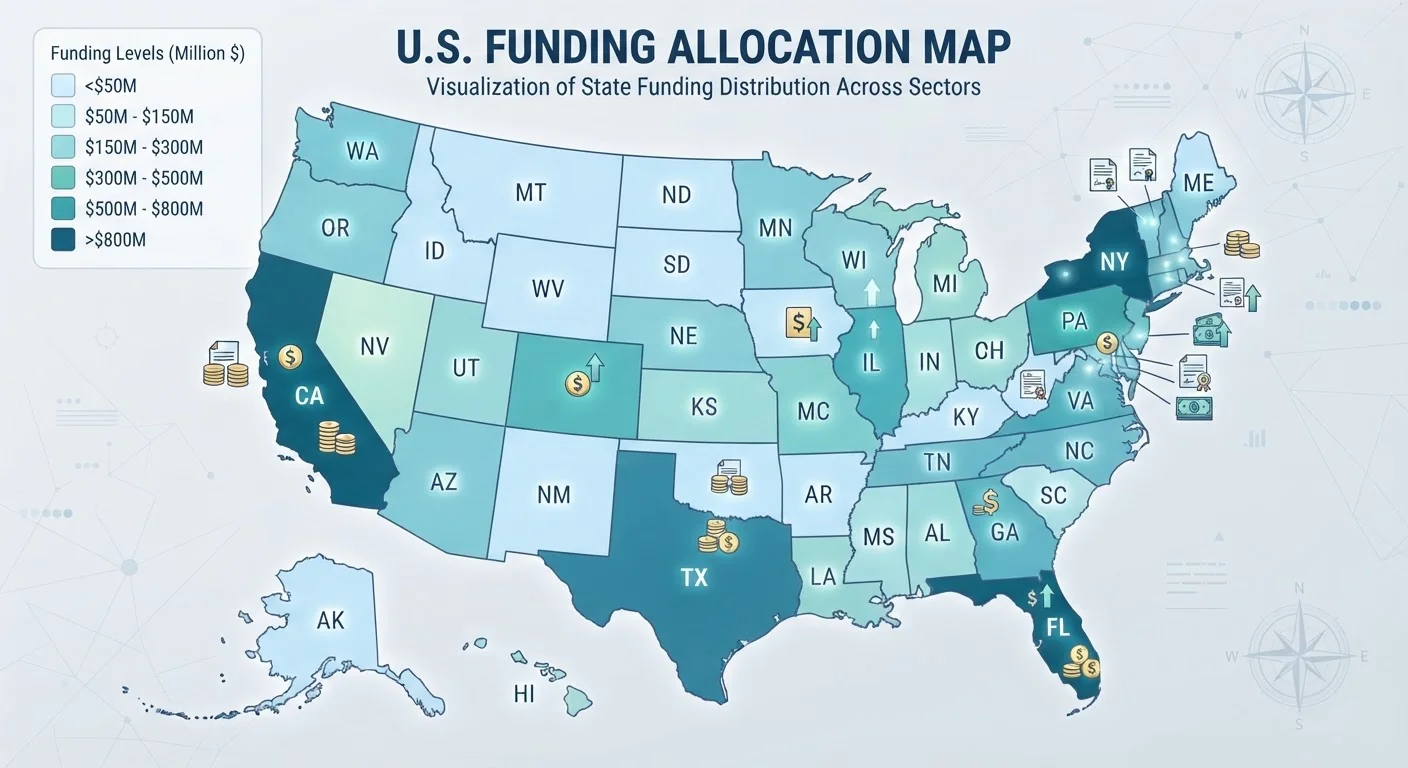
Photo: MoneyOnMind.net | Navigate Money With Clarity editorial
Key Takeaways
- State grant programs vary widely in type, amount, and eligibility rules depending on your state.
- Some states fund robust need-based education grants; others prioritize workforce training or housing assistance.
- Federal funding flowing to states affects how much individual states can offer residents.
- Residency, income, field of study, or profession can all affect your eligibility for state-level aid.
- Checking your state's higher education agency or economic development office is the best starting point.
- State grants can complement - not replace - federal aid, scholarships, and other funding sources.
Why State Matters So Much in Grant Funding
When most people think about grants, they imagine a single national pool of funding available to anyone who qualifies. The reality is more decentralized - and more nuanced. State governments run their own grant programs, shaped by local budgets, legislative priorities, and the federal dollars that flow their way.
To understand why this matters, it helps to know that the U.S. grant landscape operates on multiple tiers. Federal programs like the Pell Grant set a national floor for need-based education aid. But states then build on - or sometimes significantly exceed - that floor with their own funding. As a result, two people with identical financial profiles can have very different access to free money depending solely on which state they call home.
Understanding what grants actually are and who administers them is a useful foundation before exploring how state programs work, since the structure of state-level funding builds directly on those basics.
$14B+
Annual state grant aid for undergraduates
According to the College Board's Trends in Student Aid report, states collectively distribute over $14 billion in grant aid to undergraduate students each year, though distribution is highly uneven across states.
50+
Separate state higher education grant systems
Every U.S. state operates at least one distinct grant program for residents, and many states run multiple programs targeting different populations or career fields.
~30%
Of state grant aid concentrated in 5 states
Research from the National Association of State Student Grant and Aid Programs (NASSGAP) consistently shows that a small number of large states account for a disproportionate share of total state grant spending nationwide.
What Shapes a State's Grant Offerings
Several forces determine how robust a state's grant programs are and who they serve:
- State budget and tax revenue: States with stronger tax bases can dedicate more of their own funds to grant programs. States facing budget pressures may reduce or freeze funding even for established programs.
- Federal block grants and formula funding: Much of what states distribute originates at the federal level. Programs like the Community Development Block Grant (CDBG) or Workforce Innovation and Opportunity Act (WIOA) funds flow to states, which then allocate them locally. A shift in federal policy affects what states have to work with.
- Lottery and dedicated revenue streams: Several states - including Georgia, Florida, and Tennessee - fund significant scholarship and grant programs through lottery proceeds. These states often sustain larger need- and merit-based aid pools as a result.
- Legislative priorities: Some state legislatures emphasize STEM workforce development; others focus on rural housing, healthcare worker recruitment, or small business support. These priorities directly determine which populations state grants target.
Reviewing common grant categories can help you recognize which type of state program might match your situation before you begin applying.
Federal Funding Affects What States Can Offer
Types of State Grant Programs You May Encounter
State grant programs generally fall into a few broad categories, though the specific programs, amounts, and rules vary by state:
- Need-based education grants
- Designed to help low- and moderate-income students pay for college or vocational training at in-state institutions. Eligibility typically ties to FAFSA results and state residency.
- Merit and career-based scholarships
- Some states offer awards based on academic achievement or career field - particularly for nursing, teaching, or healthcare, where workforce shortages exist.
- Workforce and retraining grants
- These programs help adults upskill or change careers, often tied to in-demand industries within the state. Young professionals navigating career pivots may find real opportunity here.
- Small business and entrepreneurship grants
- State economic development agencies often fund grants for startups or small businesses in targeted sectors. Business grants follow different rules than personal aid, so it's worth understanding those distinctions before applying.
- Housing and community assistance grants
- First-time homebuyer programs, rental assistance, and home repair grants exist in many states, administered through housing finance agencies.
Start With Your State's Official Agency Websites
How to Navigate State-Level Applications
Unlike federal programs with a single application point (like FAFSA for education aid), state grant programs are fragmented. Each agency runs its own process. That said, a few consistent steps apply across most state programs:
- Identify the administering agency. Higher education grants typically flow through a state's Higher Education Services Corporation or equivalent. Workforce grants often sit with the state Department of Labor. Housing grants go through the state Housing Finance Agency.
- Check residency and enrollment requirements early. Most state education grants require enrollment at an in-state institution and a minimum period of state residency. Confirm both before investing time in an application.
- Gather financial documentation. Many state grants use FAFSA data as a baseline, so filing your FAFSA - even if you're not sure you'll use federal aid - is often a prerequisite.
- Meet deadlines strictly. State grant pools are finite. Many programs close when funds are exhausted, and late applications are rarely reconsidered. Treat state grant deadlines with the same urgency as federal ones.
State grants work best when viewed as one layer in a broader financial aid strategy. Understanding the difference between grants and loans helps clarify why maximizing grant funding - before turning to borrowing - can meaningfully affect your long-term financial picture.
This article provides general educational information about state grant programs and is not personalized financial, legal, or tax advice. Program details, eligibility rules, and funding availability change frequently. Consult a qualified financial aid counselor or tax professional for guidance specific to your circumstances.
Frequently Asked Questions
The content on this site is for informational purposes only and is not a substitute for professional advice. Always consult a qualified professional for guidance specific to your situation.