
Neobanks vs Traditional Banks: Understanding the Real Differences

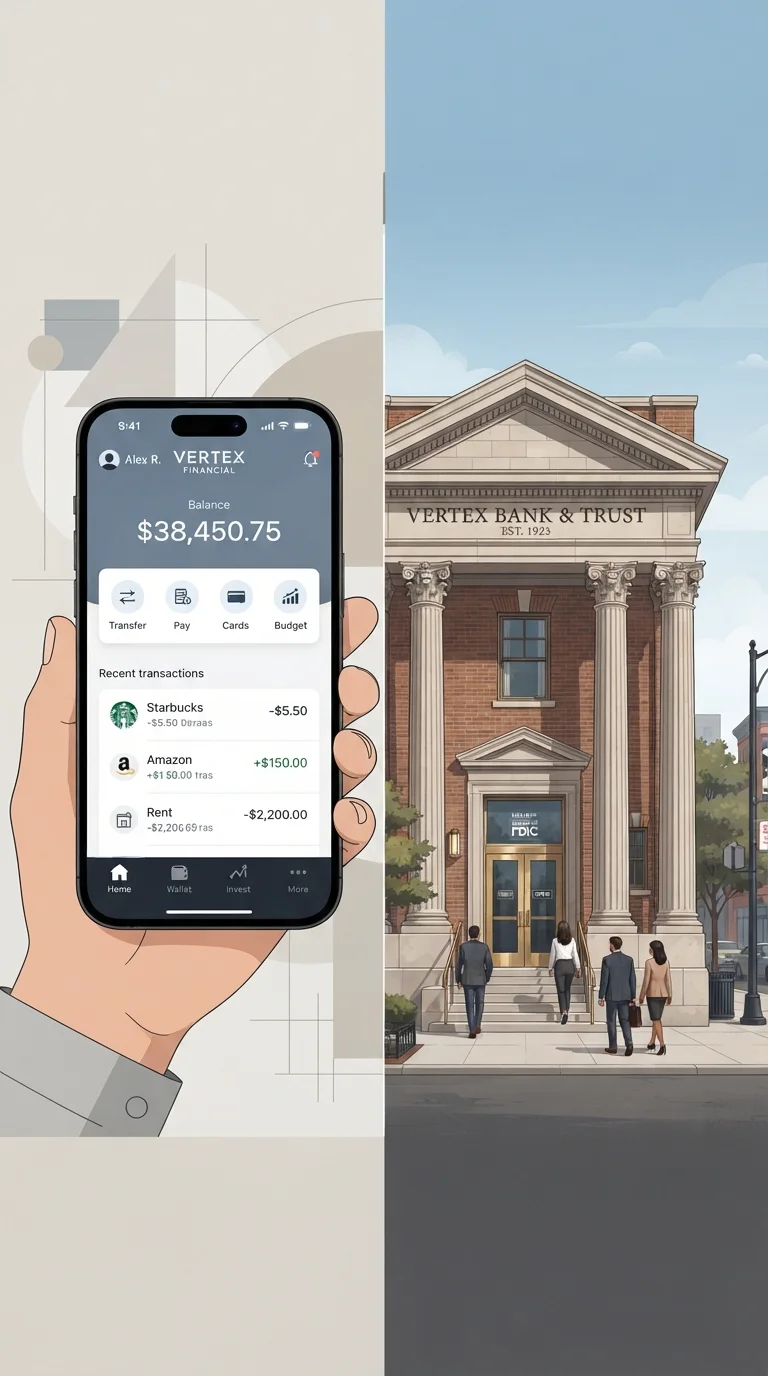
Photo: MoneyOnMind.net | Navigate Money With Clarity editorial
Key Takeaways
- Neobanks operate entirely online, typically with lower fees and faster account opening than traditional banks.
- Traditional banks offer a wider product range - mortgages, auto loans, business accounts - that most neobanks cannot yet match.
- Both neobank and traditional bank deposits are FDIC-insured up to $250,000 when held at an insured institution.
- Neobanks often lack physical branches, which can be a barrier for cash deposits or complex financial conversations.
- Many people use both: a neobank for everyday spending and a traditional bank for loans and savings goals.
What Separates a Neobank from a Traditional Bank?
A neobank is a financial technology company that delivers banking services - checking, savings, debit cards, and payments - exclusively through a mobile app or website. Neobanks do not operate physical branches. Many are not banks themselves in the legal sense; instead, they partner with FDIC-insured banks to hold customer deposits, which means your money still carries federal insurance protection up to $250,000 per depositor.
A traditional bank, by contrast, holds its own federal or state banking charter, operates physical branches, and offers a much wider product portfolio: personal loans, mortgages, business banking, investment accounts, and more. Traditional banks are regulated by agencies such as the Office of the Comptroller of the Currency (OCC) or state banking departments, and deposits are directly FDIC-insured.
For a thorough breakdown of the account types both categories offer, see every type of bank account explained.
Verify FDIC Coverage Before You Open
Head-to-Head: Fees, Features, and Access
The clearest differences appear when you compare practical details side by side.
| Criterion | Neobanks | Traditional Banks |
|---|---|---|
| Monthly fees | Typically none | $0-$15 (often waivable) |
| Account opening | Minutes, fully online | Minutes to days; branch may be required |
| Physical branches | None | Nationwide or regional networks |
| FDIC insurance | Via partner bank (verify eligibility) | Directly insured up to $250,000 |
| Lending products | Very limited | Mortgages, auto, personal, business |
| Cash deposits | Third-party retail network only | In-branch and ATM |
| International fees | Often waived or minimal | Typically 1%-3% per transaction |
| Mobile app experience | Core strength; rapid feature rollout | Improving but variable by institution |
Fee structures are where neobanks most visibly outperform their traditional counterparts. Traditional banks have historically charged monthly maintenance fees averaging $12-$15 (waivable with balance minimums), overdraft fees around $35, and out-of-network ATM charges. Neobanks built their business model around eliminating or sharply reducing those charges, often relying on interchange revenue from debit card transactions instead.
On the technology front, neobanks tend to ship features faster - instant payment notifications, spending categorization, and automated savings rules are often standard. Banking automation features worth using like round-up savings and recurring transfer rules were pioneered by digital-first providers and have since been adopted unevenly by traditional banks.
Where Traditional Banks Still Hold a Clear Edge
Despite the fee and UX advantages of neobanks, traditional banks retain structural advantages that matter enormously for anyone building wealth beyond a basic checking account.
- Lending products: Mortgages, home equity lines of credit, auto loans, and small business loans require a chartered bank's balance sheet and regulatory framework. Most neobanks cannot originate these products independently.
- Relationship banking: A long-standing account history at a traditional bank can be leveraged when negotiating loan terms or credit limits, especially for small business owners.
- Cash handling: Depositing or withdrawing large amounts of cash is straightforward at a branch; neobank customers typically depend on third-party retail deposit partners with per-transaction limits.
- Trust and estate services: Fiduciary products, safe deposit boxes, and notarization services are branch-dependent offerings that neobanks do not carry.
For a comprehensive overview of how these institutions differ across every product category, explore our side-by-side look at traditional and online banks.
Making the Choice - or Combining Both
The either/or framing of neobanks versus traditional banks often misses how most financially organized people actually behave: they use both. A neobank account works well as an everyday spending hub - low friction, instant visibility, minimal fees - while a traditional bank handles longer-term financial infrastructure like mortgage payments, emergency savings earning competitive yields in a money market account, or a business checking account.
Before choosing a primary banking relationship, consider three questions: Do you deposit cash regularly? Do you anticipate needing a loan in the next two to three years? Do you prefer speaking with someone in person when something goes wrong? If you answered yes to any of these, a traditional bank should anchor your financial setup - with a neobank as a supplementary tool.
To explore how digital tools from both categories can streamline your financial life, see modern banking tools from end to end.
This article is for general informational and educational purposes only, and does not constitute personalized financial, banking, or legal advice. Product features, fees, and FDIC coverage eligibility vary by institution. Consult a licensed financial adviser or your bank's representative for guidance specific to your situation.
The content on this site is for informational purposes only and is not a substitute for professional advice. Always consult a qualified professional for guidance specific to your situation.