
Hard Enquiries vs. Soft Enquiries on Your Credit File

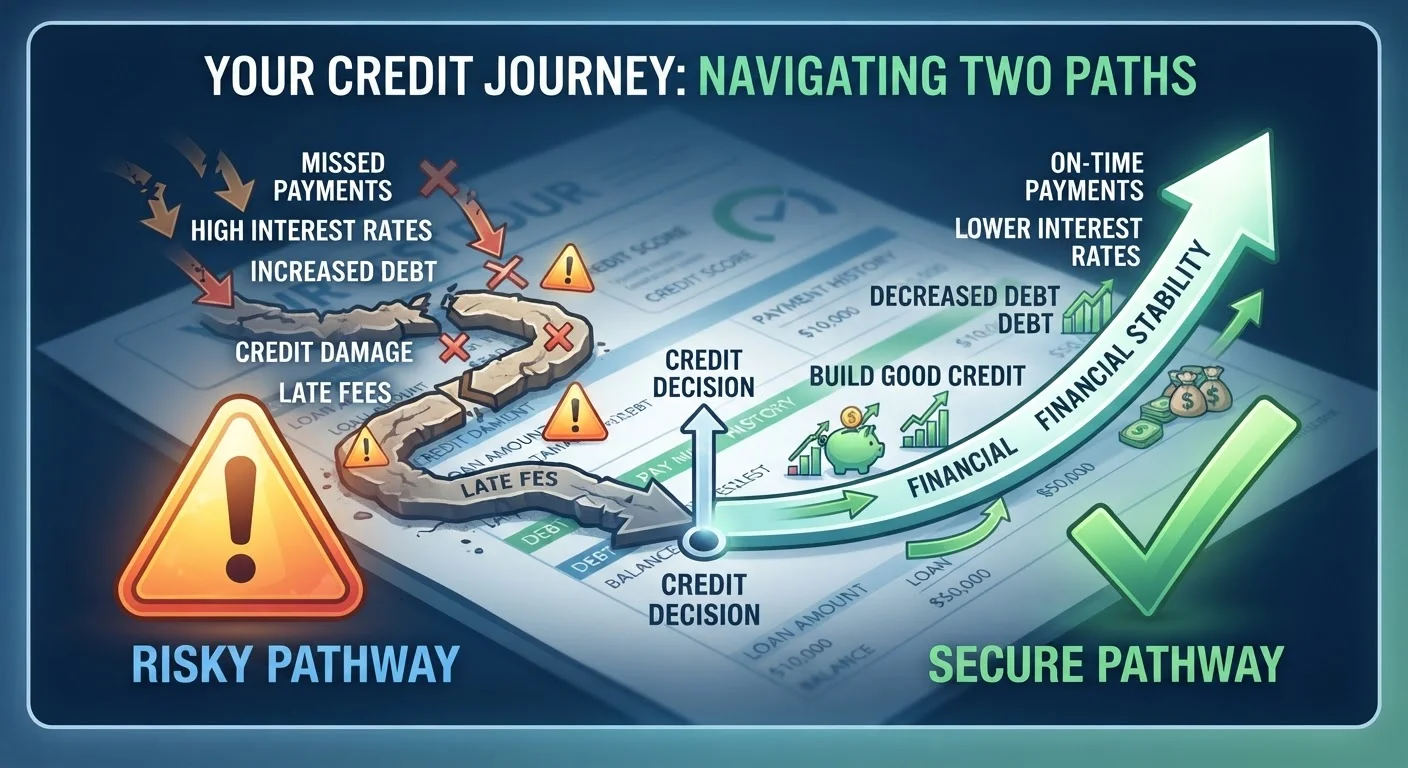
Photo: MoneyOnMind.net | Navigate Money With Clarity editorial
Key Takeaways
- Hard enquiries occur when a lender checks your credit as part of a formal application and can lower your score slightly.
- Soft enquiries have no impact on your credit score and are not visible to lenders reviewing your file.
- Multiple hard enquiries within a short window for the same loan type are often grouped as one by scoring models.
- Hard enquiries typically remain on your credit report for two years but their score impact usually fades within 12 months.
- Checking your own credit always counts as a soft enquiry - it never hurts your score.
What Triggers Each Type of Enquiry
When anyone accesses your credit file, that access is recorded as an enquiry - but not all enquiries are created equal. The key distinction is who initiates the check and why.
A hard enquiry (also called a hard pull) is triggered when you formally apply for new credit. This includes applications for credit cards, personal loans, auto loans, student loans, and mortgages. The lender requests your full credit report from one or more of the three major bureaus - Equifax, Experian, or TransUnion - to evaluate your application. Because you've authorized this pull as part of a credit application, it's recorded and visible to future lenders.
A soft enquiry (or soft pull) happens in a much wider range of situations and does not require a formal application. Common examples include:
- Checking your own credit report or score
- Pre-qualification checks by credit card issuers or lenders
- Employer background checks (with your permission)
- Landlord tenant screenings
- Existing creditors reviewing your account
See what lenders actually see when they pull your credit report to understand exactly which enquiry types appear in a lender's view versus your own.
| Criterion | Hard Enquiry | Soft Enquiry |
|---|---|---|
| Triggered by | Formal credit application | Self-checks, pre-quals, background checks |
| Requires your authorization | Yes - via application | Sometimes (background checks); often automatic |
| Impacts credit score | Yes - typically under 5 points | No impact whatsoever |
| Visible to lenders | Yes | No - only visible to you |
| Stays on report | Up to 2 years | Appears in your view; no set removal window |
| Scoring model counts it | For up to 12 months | Never counted |
| Rate-shopping protection | Multiple may count as one (14-45 day window) | N/A - no score impact |
How Each Type Affects Your Credit Score
This is where the practical difference matters most. Soft enquiries have zero effect on your credit score. They may appear in your personal credit report view, but they're invisible to lenders and scoring algorithms ignore them entirely.
Hard enquiries do have an impact, though it's often smaller than people fear. Under the FICO scoring model, a single hard enquiry typically reduces your score by fewer than five points. The effect varies based on your overall credit profile - the thinner your credit history, the more noticeable each enquiry tends to be.
<5 pts
Typical score drop per hard enquiry
According to FICO's published guidance, a single hard enquiry generally lowers a score by fewer than five points for most consumers.
12 months
How long hard enquiries affect your score
Hard enquiries remain on your credit report for two years but FICO scoring models typically stop factoring them in after 12 months.
45 days
Rate-shopping grouping window (FICO 8+)
FICO 8 and later versions group multiple hard enquiries for the same loan type within 45 days into a single enquiry to protect rate-shoppers.
Hard enquiries remain on your credit report for two years, but most scoring models only factor them into calculations for 12 months. After that, they're visible on your report but carry no scoring weight.
One important nuance: if you're rate-shopping for a mortgage, auto loan, or student loan, FICO groups all hard enquiries for the same loan type within a 45-day window and counts them as a single enquiry. This policy exists specifically to encourage consumers to shop for the best rate without being penalized. Older FICO versions use a 14-day window, so the window length can vary. For more on score variation across platforms, see why your credit score differs across bureaus and platforms.
Protecting Your Score When You Need to Apply
Knowing the mechanics of hard enquiries gives you real tools to minimize unnecessary score impact. Here's how to be strategic:
- Check your own report first. Before applying anywhere, pull your own credit report - it's always a soft enquiry. Look for errors that could be dragging your score down. Errors on your credit report are more common than most people expect, and disputing them before applying can improve your starting position.
- Use pre-qualification tools. Many lenders offer pre-qualification that uses a soft pull. This gives you a realistic sense of your approval odds and likely rate before committing to a hard enquiry.
- Cluster rate-shopping tightly. If you're comparing mortgage or auto loan offers, try to complete all applications within a 14-45 day window to take advantage of the enquiry-grouping rules.
- Avoid unnecessary applications. Each unneeded hard enquiry adds a small cost. Applying for multiple credit cards in a short period adds up and signals elevated risk to lenders.
For a broader look at how enquiries fit into your full credit picture, explore the Credit Reports hub and the Credit Scores hub.
This article is for general informational and educational purposes only and does not constitute personalised financial or credit advice. Credit scoring models and lender practices vary. Consult a qualified financial adviser or credit counsellor for guidance specific to your situation.
The content on this site is for informational purposes only and is not a substitute for professional advice. Always consult a qualified professional for guidance specific to your situation.