
Why a Single Late Payment Can Linger for Years

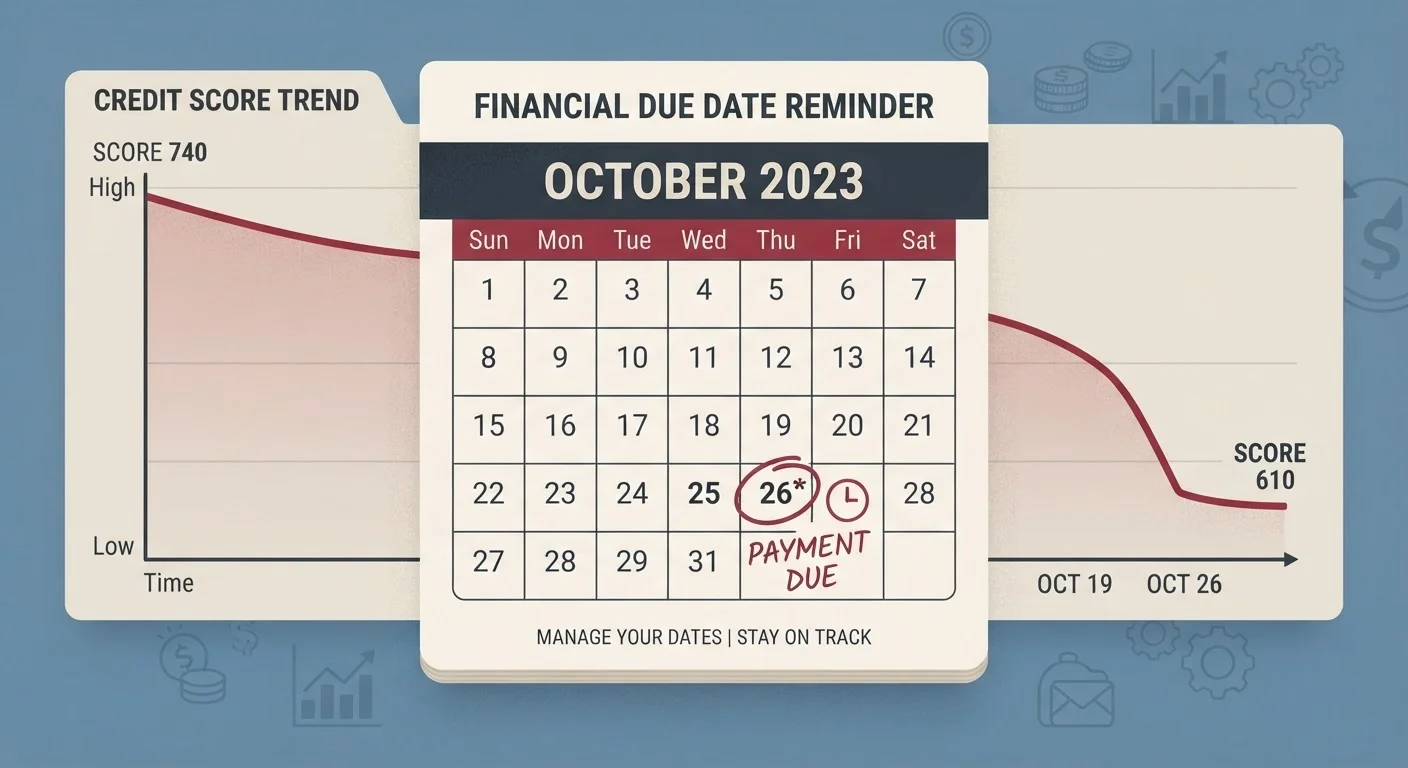
Photo: MoneyOnMind.net | Navigate Money With Clarity editorial
Key Takeaways
- A single late payment can stay on your credit report for up to seven years from the original delinquency date.
- Payment history makes up 35% of your FICO score - the single largest factor in the calculation.
- The later a payment becomes (30, 60, 90 days), the more severe the score impact.
- Catching up quickly and building a consistent payment record afterward softens the long-term damage.
- You can sometimes request a goodwill adjustment from your lender to remove an isolated late payment.
How a Late Payment Gets Reported - and Why It Sticks
When you miss a payment due date, the clock starts ticking - but it doesn't immediately show up on your credit report. Most lenders have a grace period of a few days, and they generally don't file a derogatory report with the credit bureaus until a payment is at least 30 days past due. After that point, the late payment becomes part of your official credit history.
Once reported, the mark is governed by the FCRA, which allows negative items like late payments to remain for up to seven years from the original date of delinquency. That's the date you first missed the payment - not the date you eventually caught up. Paying the overdue balance stops additional damage but does not erase the record of what happened.
The severity of the mark also escalates over time. A 30-day late payment has a meaningful impact; a 60-day late payment is worse; a 90-day late payment is significantly more damaging. For a full timeline of how different negative items age off your file, see how long negative items stay on your credit report.
Payment History Is Your Biggest Credit Factor
Common Mistakes That Make a Late Payment Worse
A late payment is painful enough on its own, but several predictable errors turn a manageable setback into a longer-term obstacle. Understanding why these mistakes happen - and how to sidestep them - is the most direct path to recovery.
Assuming a one-time late payment disappears quickly.
Letting a missed payment go past 30 days without catching up.
Closing an account after a late payment to 'clean it up.'
Never requesting a goodwill adjustment for an isolated mistake.
Ignoring the credit report after the late payment is resolved.
For a broader look at the subtle habits that compound credit damage over time, see habits that quietly erode a good credit score.
Missing 90+ Days Triggers Severe Consequences
Recovering Your Score After a Late Payment
The good news is that a single late payment becomes progressively less influential as time passes and positive behavior accumulates. Scoring models weigh recent activity more heavily, so a consistent record of on-time payments in the months and years following the incident will gradually reduce its impact on your score.
35%
Weight of payment history in FICO score
According to FICO's published score factor breakdown, payment history is the single largest component of a standard FICO credit score.
7 years
Maximum reporting window for late payments
Under the Fair Credit Reporting Act, most negative credit items including late payments may remain on a consumer's credit report for no longer than seven years.
~100 pts
Potential score drop from one late payment
FICO research indicates that a single 30-day late payment can lower a score in the 780-850 range by roughly 90-110 points, with the exact impact varying by credit profile.
Practical steps to accelerate recovery include:
- Set up autopay or calendar reminders for every account to prevent recurrence.
- Pay down existing balances to lower your credit utilization ratio, which can partially offset score damage from the late mark.
- Avoid applying for new credit unnecessarily in the immediate aftermath, since hard inquiries add a secondary negative signal.
Keep in mind that the financial consequences of a damaged score extend well beyond a number on a screen. The long-term cost of a low credit score illustrates how even a modest score drop can affect the interest rates you're offered on auto loans, mortgages, and personal credit lines.
This article is for general informational purposes only and does not constitute personalized financial or legal advice. Credit outcomes vary based on individual circumstances. Consult a licensed financial professional for guidance specific to your situation.
The content on this site is for informational purposes only and is not a substitute for professional advice. Always consult a qualified professional for guidance specific to your situation.