
Habits That Quietly Erode a Good Credit Score Over Time

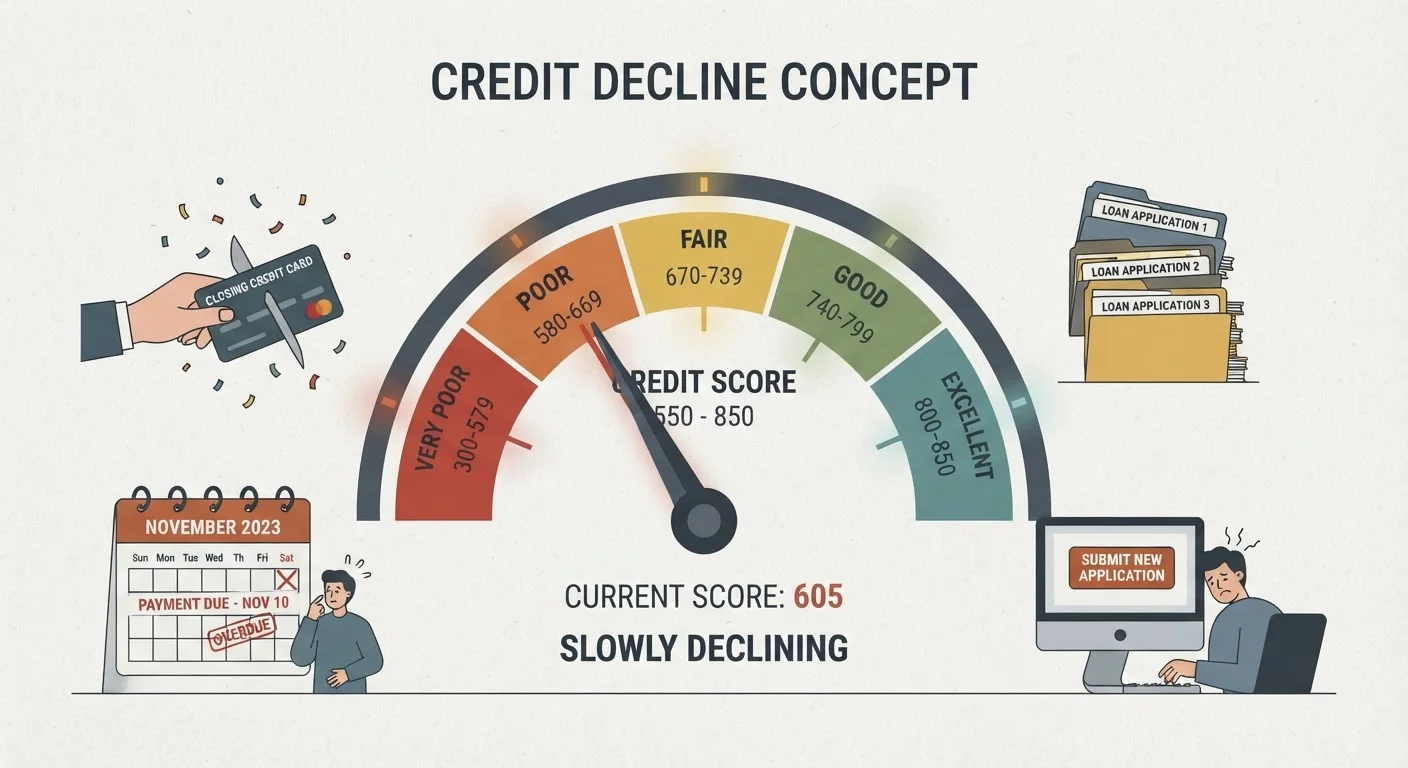
Photo: MoneyOnMind.net | Navigate Money With Clarity editorial
Key Takeaways
- Payment history is the single largest factor in your credit score - even one late payment causes measurable damage.
- Closing old credit accounts can shorten your credit history and spike your utilization ratio simultaneously.
- Applying for multiple credit products in a short window generates hard inquiries that lower your score.
- High credit card balances relative to your limit hurt your score even if you pay in full each month.
- Ignoring your credit report means errors and fraudulent accounts can silently erode your standing for months.
Why Credit Damage Often Happens Quietly
Most people know that missing payments or defaulting on a loan will hurt their credit score. What catches many young professionals off guard are the slow, undramatic habits that chip away at a score built over years of responsible behaviour. These aren't emergencies - they're routines that look harmless until the cumulative damage shows up on a report.
Credit scores are calculated from five weighted factors: payment history, amounts owed (including utilization), length of credit history, new credit inquiries, and credit mix. The habits discussed below each map directly to one or more of those factors. Understanding the mechanics makes the damage legible - and preventable. For a broader look at how the scoring model works in practice, see our guide to common credit score misconceptions.
One Late Payment Can Linger for Seven Years
The Habits That Do the Most Damage
The mistakes below are ordered roughly by how silently they operate - the most overlooked errors come first. Each one has a direct mechanism that ties it to a specific part of your credit score calculation.
Making payments even a few days late and assuming it won't be reported.
Closing old or unused credit card accounts to simplify finances.
Applying for several new credit products within a short period.
Carrying a high balance relative to your credit limit even while paying on time.
Never reviewing your credit report and missing errors or fraudulent accounts.
Closing Cards Doesn't Erase Their History - But It Does Hurt Utilization
It's worth noting that score damage from these habits doesn't mean recovery is impossible. Paying down debt and correcting habits produces measurable improvement over time - but it takes longer to repair damage than to prevent it.
Building a Monitoring Habit to Catch Problems Early
Most of the damage described above is preventable with regular credit report reviews. Errors - including accounts you didn't open, incorrectly reported late payments, and outdated balances - are a documented problem across the credit reporting system. The sooner they are identified and disputed, the less damage they cause.
35%
Weight of payment history in FICO score
According to FICO's published score factor weightings, payment history is the single largest component of a standard FICO score.
30%
Weight of credit utilization in FICO score
FICO's published model shows amounts owed - including utilization ratio - accounts for roughly 30% of a standard FICO score calculation.
1 in 5
Consumers with a credit report error
A study commissioned by the FTC found approximately one in five consumers had an error on at least one of their three credit bureau reports.
A sustainable monitoring practice doesn't require daily attention. Staggering your bureau checks across the year is one practical approach that provides near-continuous visibility without becoming burdensome. Pair that habit with the monthly credit-building behaviours that actively strengthen your profile, and the combination gives you both offense and defence.
If you want to understand what a healthy credit routine looks like in concrete terms, see what responsible credit behaviour looks like month to month. And for the longer-term stakes, the long-term cost of a low credit score shows exactly how these habits translate into real borrowing costs over time.
This article provides general financial education and is not personalised financial advice. Credit scoring models vary, and your individual results will depend on your full credit profile. Consult a qualified financial adviser or credit counsellor for guidance specific to your situation.
The content on this site is for informational purposes only and is not a substitute for professional advice. Always consult a qualified professional for guidance specific to your situation.