
Signs Your Credit Report May Contain Identity Theft

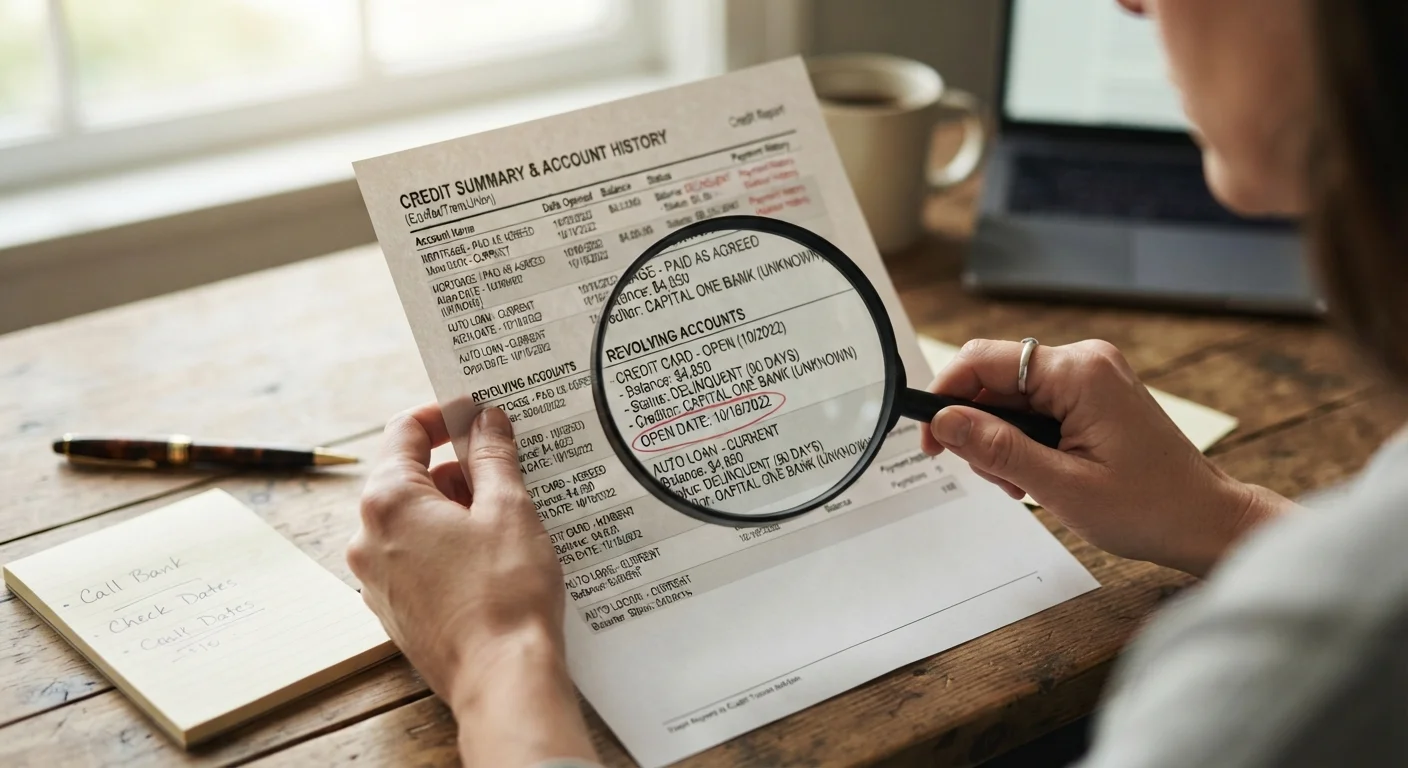
Photo: MoneyOnMind.net | Navigate Money With Clarity editorial
Key Takeaways
- Accounts you never opened are the most direct sign of identity theft on a credit report.
- Unfamiliar addresses, employers, or phone numbers can indicate someone else is using your identity.
- Hard inquiries you didn't authorize suggest someone may have applied for credit in your name.
- A sudden, unexplained credit score drop warrants an immediate full review of your report.
- You can place a free fraud alert or credit freeze with the three major bureaus if you suspect theft.
- Catching these red flags early limits long-term damage to your credit and finances.
Why Reading Your Credit Report Critically Matters
Your credit report is more than a financial scorecard - it's a detailed record of every credit account, inquiry, and address linked to your name. When someone steals your identity, that record is often where the evidence first surfaces. The problem is that most people only glance at their report looking for a score, not for signs that a stranger has been using their personal information.
Not every unfamiliar item signals fraud. Some entries reflect legitimate reporting quirks - for example, a single debt can legitimately show up more than once. See our explanation of duplicate debt entries for context on what's normal. But certain patterns are genuine red flags that warrant immediate investigation.
This checklist walks you through every major section of a standard US credit report so you can systematically identify signs of identity theft rather than guessing. If you discover something suspicious, our guide to disputing credit report errors covers the steps to take next.
Personal Information Section
Accounts and Credit Lines
Inquiries Section
Public Records and Collections
Behavioral and Score Signals
What to Do If You Find a Red Flag
Finding a suspicious item doesn't automatically confirm identity theft - but it always warrants follow-up. Begin by pulling your full reports from all three major bureaus (Equifax, Experian, and TransUnion) through AnnualCreditReport.com, the federally mandated free access point. Comparing reports across bureaus can reveal whether fraudulent activity is isolated or widespread.
Don't Delay If You Suspect Active Fraud
If you confirm something is wrong, place a free fraud alert with one bureau - they are required to notify the other two. A fraud alert prompts lenders to take extra verification steps before opening new credit in your name. For stronger protection, consider a credit freeze, which restricts new creditors from accessing your report entirely until you lift it.
File an identity theft report at IdentityTheft.gov, the FTC's dedicated resource, and keep copies of everything you submit. Not every unfamiliar item is fraud - some entries simply reflect how credit reporting works. Our article on commonly misread credit report entries can help you distinguish genuine red flags from harmless ones before you escalate.
To stay ahead of future issues, build a routine of checking your reports throughout the year. Year-round credit monitoring habits don't have to be time-consuming - even a quarterly review significantly improves your ability to catch problems early.
This article is for general informational and educational purposes only and does not constitute personalized financial, legal, or credit advice. Credit report procedures, consumer protections, and dispute processes vary by situation. Consult a qualified financial adviser or consumer law attorney for guidance specific to your circumstances.
The content on this site is for informational purposes only and is not a substitute for professional advice. Always consult a qualified professional for guidance specific to your situation.