
Loan Basics

Healthy Borrowing Habits to Build From Your Very First Loan

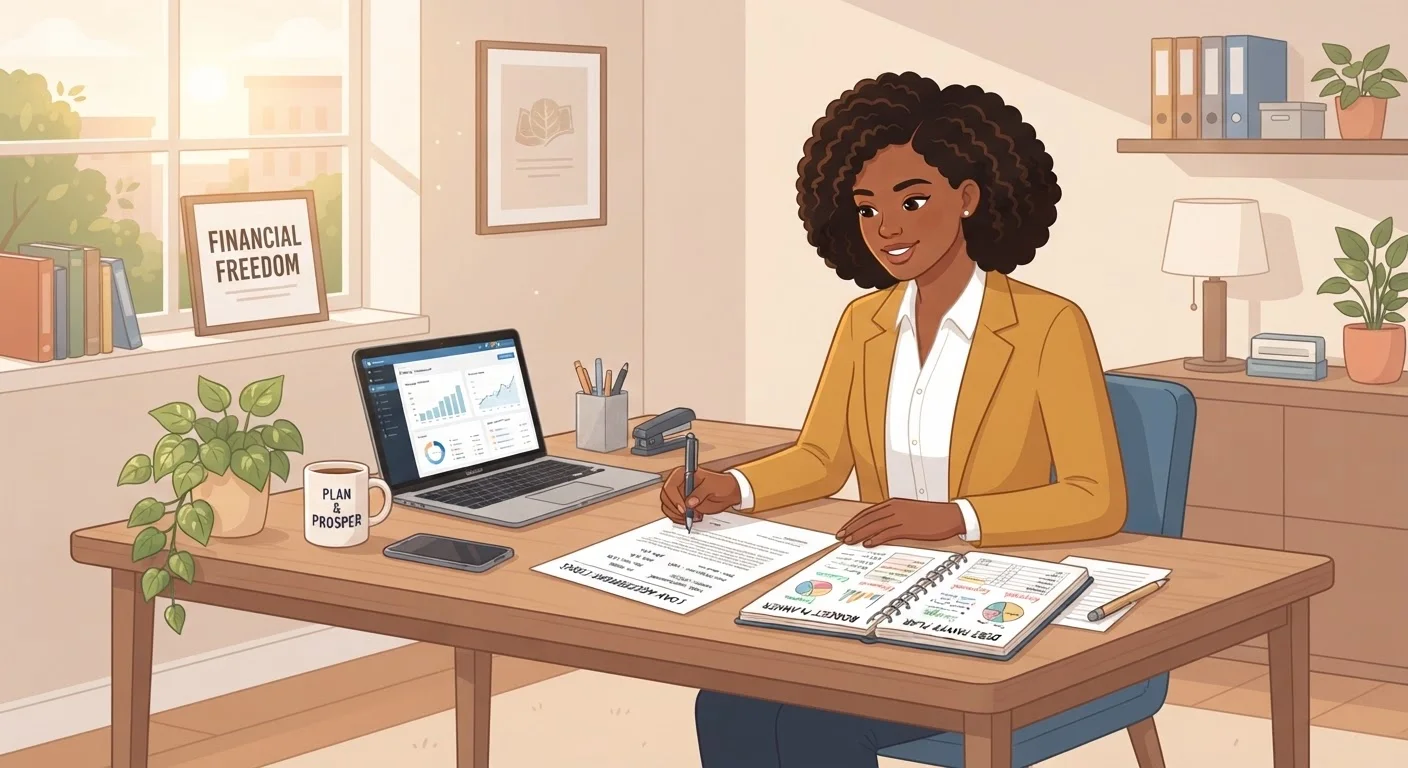
Healthy Borrowing Habits to Build From Your Very First Loan

Photo: MoneyOnMind.net | Navigate Money With Clarity editorial

Establish sound borrowing behaviour early — from matching loan purpose to loan type, to building a repayment buffer into your budget.

Key Takeaways

  • Match the loan type to your specific purpose — mismatched products often carry higher costs and risks.
  • Always calculate the total repayment cost, not just the monthly payment, before signing.
  • Build a dedicated repayment buffer into your monthly budget before you borrow.
  • Paying on time consistently is the single most powerful way to protect your credit profile.
  • Borrow only what you need — a smaller principal reduces interest paid over the loan's life.

Why Your First Loan Sets the Tone

The habits you form around your first loan tend to stick. Borrowing confidently isn't about avoiding debt entirely — it's about approaching it deliberately. Lenders, credit bureaus, and your own future financial flexibility all respond to how you handle early obligations. Think of your first loan not just as a financial product, but as your first structured lesson in debt management.

If you're new to loans altogether, our first-timer's loan roadmap explains the full mechanics of how borrowing works — from application to final payment. This article builds on that foundation with specific habits to practice from day one.

1

Match the loan type to your actual purpose before you apply.

Different loan structures — personal loans, auto loans, student loans — are designed for specific uses and carry different interest rates, terms, and protections. Using a high-interest personal loan for a purpose that qualifies for a subsidised or secured product means overpaying unnecessarily.
Example: A borrower financing a used car with an unsecured personal loan instead of an auto loan may pay a significantly higher APR, simply because they didn't explore the purpose-built product first.
2

Calculate the total cost of the loan, not just the monthly payment.

Lenders often present monthly payment figures prominently because they appear manageable. But a low monthly payment stretched over a long term can mean paying far more interest in total. Understanding the full repayment amount protects you from underestimating the true cost of borrowing.
Example: A $10,000 loan at 8% APR over 5 years costs roughly $2,166 in interest — but the same loan over 7 years costs around $3,067, nearly $900 more for the same principal.
3

Build a repayment buffer into your monthly budget before signing.

Income can fluctuate, unexpected expenses arise, and budgets that look tight on paper often feel tighter in practice. Adding a small buffer — even $50–$100 above your minimum payment — gives you room to absorb disruption without missing a due date.
Example: A borrower who accounts for their $320 monthly loan payment as $370 in their budget consistently avoids scrambling for funds when a utility bill spikes.
4

Never borrow more than you demonstrably need.

Lenders may approve you for a higher amount than your actual need. Accepting the maximum because it's available increases your debt load, your monthly obligation, and the total interest paid — without adding proportional benefit.
Example: Approved for $15,000 to consolidate $11,000 in debt, a disciplined borrower takes only the $11,000 and avoids paying interest on $4,000 they didn't need.
5

Set up automatic payments to protect your payment history.

Payment history is the most heavily weighted factor in standard credit scoring models. A single missed payment can drop your score meaningfully and remain on your credit report for up to seven years. Automation removes reliance on memory during busy or stressful periods.
Example: Scheduling automatic payments for at least the minimum amount due ensures you never accidentally miss a deadline, even during job transitions or moving periods.

Habits That Separate Confident Borrowers From Overwhelmed Ones

Most borrowing mistakes aren't made out of recklessness — they're made out of incomplete information. The practices below address the most common gaps that leave first-time borrowers scrambling.

high Use a free loan amortisation calculator today to compute the total interest cost of any loan you're considering — not just the monthly payment.
high Open your bank's bill-pay or auto-pay settings and schedule your upcoming loan payment for the day after your paycheck clears.
medium Review your monthly budget and identify one non-essential expense you can redirect to a repayment buffer before you borrow.

35%

Share of FICO score driven by payment history

According to FICO's published scoring model breakdown, on-time payment history is the single largest factor in a standard credit score.

7 years

How long a missed payment stays on your credit report

Under the Fair Credit Reporting Act (FCRA), most negative items, including late payments, can remain on a consumer's credit report for up to seven years.

Building Credit While You Repay

Every on-time payment you make is reported to the major credit bureaus — Equifax, Experian, and TransUnion — and contributes positively to your payment history, which is the largest single factor in most credit scoring models. This makes a loan a genuine credit-building tool when managed correctly.

Responsible loan repayment works in tandem with other credit habits. See our guide on monthly habits that keep a young credit profile growing for complementary practices. And if you're still establishing a credit history from the ground up, our complete roadmap for building credit from scratch provides a structured path forward.

Make One Extra Payment Per Year

If your loan has no prepayment penalty, making a single additional payment annually — even a partial one — directly reduces your principal balance. A lower principal means less interest accrues over the remaining term, shortening your repayment timeline without dramatically changing your monthly budget. Always confirm with your lender that extra payments are applied to principal, not to future interest.

This article is for general informational and educational purposes only. It does not constitute personalised financial, legal, or tax advice. Loan terms, eligibility, and costs vary by lender and individual circumstances. Consult a qualified financial adviser before making borrowing decisions specific to your situation.

Debt & Loans Editorial Team

MoneyOnMind.net | Navigate Money With Clarity

Debt & Loans Editorial Team is the collective byline for our editorial team and contributor network. Articles published under this byline or an editorial pen name are researched, written, and reviewed according to our editorial standards for clarity, consistency, and independence before publication.

Loan BasicsDebt RepaymentManaging Debt
View author profile

The content on this site is for informational purposes only and is not a substitute for professional advice. Always consult a qualified professional for guidance specific to your situation.