
Building Credit From Scratch: A Complete Roadmap

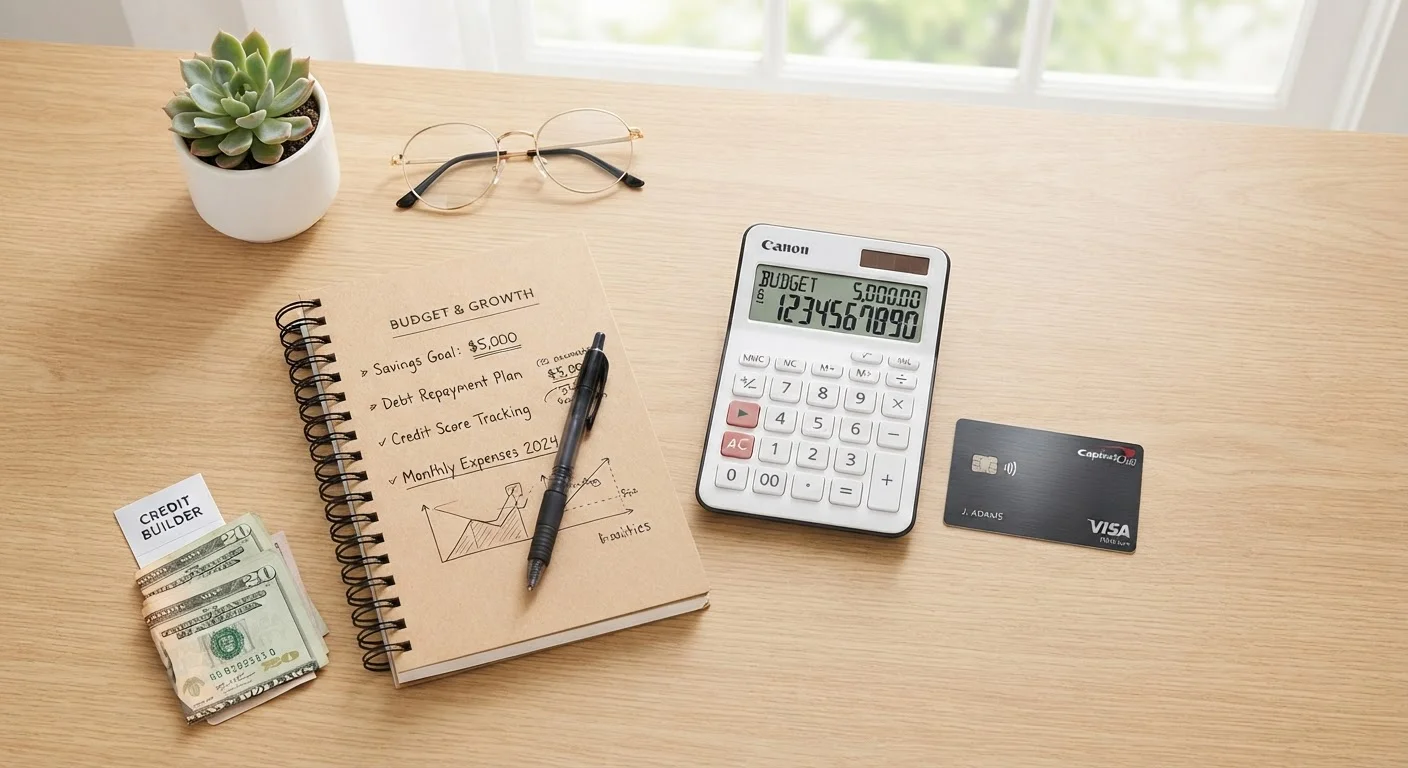
Photo: MoneyOnMind.net | Navigate Money With Clarity editorial
Key Takeaways
- Payment history is the single largest factor in your credit score - pay on time, every time.
- Secured credit cards and credit-builder loans are the most accessible entry points for newcomers.
- Keeping your credit utilization below 30% significantly improves your score over time.
- Building credit takes consistent behavior over months, not a one-time action.
- You can check your credit reports for free annually at AnnualCreditReport.com.
- Avoid applying for multiple credit accounts in a short window - each hard inquiry can lower your score.
Why Credit History Matters More Than You Think
When you apply for an apartment, a car loan, or even certain jobs, lenders and landlords look at your credit history to judge how reliably you manage financial obligations. Without any history, you're an unknown quantity - and that can close doors.
A strong credit profile doesn't just unlock borrowing. It can reduce the interest rate you pay on loans, determine your insurance premiums in some states, and even affect utility deposit requirements. Understanding these stakes early makes the effort worthwhile.
Before diving into strategies, it helps to understand what a credit score actually measures. See our complete guide to understanding credit scores for a foundational breakdown of how scores are built and why they matter.
35%
Weight of payment history in FICO score
According to FICO's published score factor breakdown, on-time payments carry more weight than any other single factor.
~26M
Americans with no credit file
The Consumer Financial Protection Bureau (CFPB) has reported that tens of millions of US adults are 'credit invisible,' meaning bureaus have no file on them.
30%
Recommended maximum credit utilization
Credit scoring guidance widely cited by consumer finance educators suggests staying below 30% utilization for healthy score maintenance.
Understanding the Building Blocks of Your Credit Score
Credit scores - most commonly FICO® scores, ranging from 300 to 850 - are calculated from five weighted factors:
- Payment history (35%): Whether you pay bills on time. The single most influential factor.
- Credit utilization (30%): How much of your available revolving credit you're using. Lower is better.
- Length of credit history (15%): How long your accounts have been open. Older is generally better.
- Credit mix (10%): A variety of account types (credit cards, installment loans) shows you can handle different obligations.
- New credit (10%): Recent applications and hard inquiries. Too many in a short period signals risk.
Each decision you make - opening an account, making a payment, carrying a balance - touches one or more of these factors. Once you see the mechanics, building credit becomes a matter of intentional, consistent action.
When you get your first secured card, charge one small, recurring expense to it each month - like a streaming subscription - and pay it in full. This creates consistent activity without the risk of carrying a balance.
Ask your credit card issuer for a credit limit increase after 6-12 months of on-time payments - even if you don't plan to use it. A higher limit with the same spending level automatically lowers your utilization ratio.
Your First Steps: Opening the Right Accounts
If you have no credit file at all, lenders can't evaluate you using traditional criteria. Your goal in the first phase is to generate a scoreable file. Two low-risk tools are well-suited for this:
Secured Credit Cards
A secured card requires a refundable cash deposit - typically $200-$500 - that becomes your credit limit. You use it like a regular card, and your payment activity is reported to the major credit bureaus. This is one of the fastest ways to begin building a record. Read our detailed guide on making your first credit card work without going into debt before applying.
Credit-Builder Loans
Offered by many credit unions and community banks, a credit-builder loan works in reverse from a normal loan: you make payments first, and receive the funds at the end. The on-time payments are reported to credit bureaus, building your history with minimal risk of overspending.
Becoming an Authorized User
If a parent or trusted family member has a long-standing, well-managed credit card, they can add you as an authorized user. That account's history may appear on your credit report, giving your score an immediate boost - even if you never use the card.
Start With One Account, Not Several
Habits That Build a Strong Profile Over Time
Opening your first account is only the starting line. The behaviors you repeat each month determine whether your profile strengthens or stalls. These are the habits that compound:
- Pay every bill on time. Set up autopay for at least the minimum due to eliminate the risk of forgetting. Missed payments can stay on your report for up to seven years.
- Keep utilization low. Aim to use no more than 30% of your available credit limit - ideally under 10% for optimal scoring. If your limit is $500, try to carry a balance no higher than $150 at statement close.
- Don't close old accounts unnecessarily. Closing an account reduces your available credit and can shorten your credit history length, both of which can lower your score.
- Apply for new credit sparingly. Each application typically triggers a hard inquiry. Space out applications by at least six months.
For a deeper look at the monthly routines that keep a young credit profile moving forward, see our guide on monthly habits that keep a young credit profile growing steadily.
Common Pitfalls and How to Avoid Them
Credit newcomers often make a handful of the same avoidable mistakes. Being aware of them puts you ahead of the curve.
Carrying a Balance Does Not Help Your Score
Another frequently misunderstood area is the difference between soft inquiries (checking your own score, pre-approval checks) and hard inquiries (formal applications for credit). Only hard inquiries affect your score, and their impact fades within 12 months. For a fuller breakdown of credit myths, visit our article on things people get wrong about building credit quickly.
If you're also starting to explore loans, understanding responsible borrowing habits early pays dividends. Our guide on healthy borrowing habits from your very first loan is a practical companion to this roadmap.
Tracking Your Progress: Credit Reports and Scores
You can't manage what you don't measure. US consumers are entitled to a free credit report from each of the three major bureaus - Equifax, Experian, and TransUnion - through AnnualCreditReport.com. Reviewing these reports regularly lets you:
- Confirm that positive accounts are being reported correctly.
- Catch errors or unfamiliar accounts that could signal identity theft.
- Dispute inaccurate negative items that may be dragging your score down.
To understand exactly what you're reading on your report, our credit reports hub covers how to interpret each section and take action when something looks wrong. And if you want to understand the scoring side more deeply, explore the credit scores hub for context on score ranges and what they signal to lenders.
“Credit is not about how much you can borrow - it's a track record of how responsibly you manage what you already have. Build that record deliberately, and the borrowing capacity follows naturally.”
— Credit Basics Editorial Team, Finance educators and credit specialists
This article is for general informational and educational purposes only and does not constitute personalized financial or credit advice. Credit products, terms, and outcomes vary by individual and lender. Consult a qualified financial professional for guidance specific to your situation.
The content on this site is for informational purposes only and is not a substitute for professional advice. Always consult a qualified professional for guidance specific to your situation.