
Your First Credit Card: Making It Work Without Going Into Debt

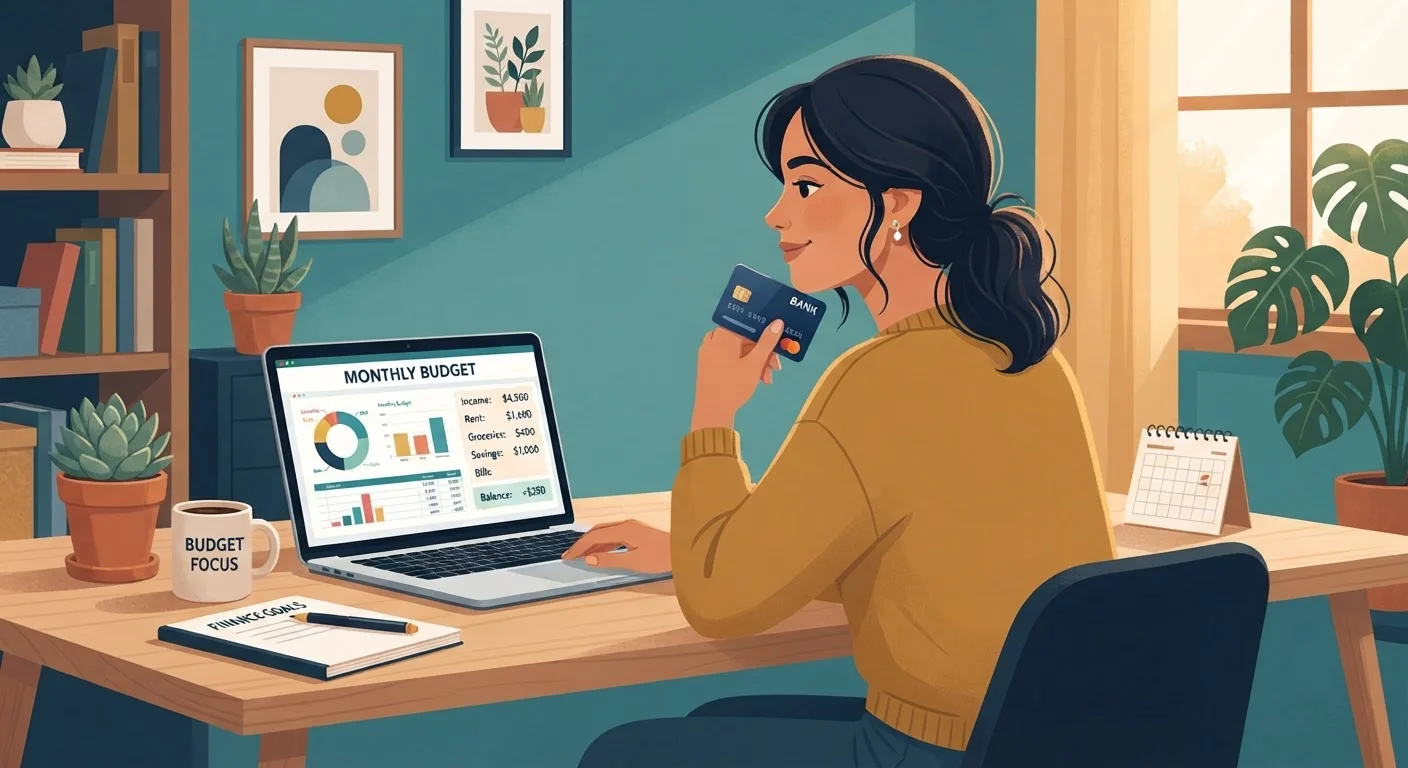
Photo: MoneyOnMind.net | Navigate Money With Clarity editorial
Key Takeaways
- Paying your full statement balance each month eliminates interest charges entirely.
- Keeping credit utilization below 30% protects your credit score from unnecessary damage.
- Your payment history is the single largest factor in your credit score calculation.
- Setting up autopay for at least the minimum payment prevents accidental missed payments.
- A first credit card used responsibly can establish a strong credit profile within 6-12 months.
Why Your First Credit Card Is a Credit-Building Tool
A credit card is one of the fastest and most accessible ways to establish a credit history in the US, provided you use it deliberately. Unlike a loan, where borrowing and repaying is the entire transaction, a credit card gives you a revolving line of credit you can use - and pay off - every month. Each on-time payment is reported to the credit bureaus and gradually builds the payment history that lenders rely on when evaluating future applications.
If you are still exploring which type of card suits your situation, our guide on secured vs. unsecured credit cards for credit builders explains the key differences and helps you identify the right starting point. And if you want to understand exactly how a credit score is calculated before you begin, Your Complete Starting Point for Understanding Credit Scores covers the mechanics in plain language.
What you will need
Step-by-Step: Using Your Card Without Accumulating Debt
The five steps below form a practical routine you can follow from the moment your card is activated. Each one addresses a specific habit that separates cardholders who build credit from those who accumulate debt. The tools below support that routine.
Credit Card Online Account Portal
Lets you monitor your balance, review transactions, and set up autopay directly with your card issuer.
Personal Budget Spreadsheet or App
Tracks monthly income and expenses so you always know how much you can safely charge to your card.
Free Credit Monitoring Service
Alerts you to changes in your credit report and shows how your habits affect your score over time.
Activate your card and review the terms
Once your card arrives, activate it through your issuer's website or app. Before making a single purchase, locate three key figures in your card agreement: the annual percentage rate (APR), the credit limit, and the payment due date. The APR is the annualized interest rate applied to any balance you carry past the due date. Knowing these numbers upfront prevents costly surprises.
Set a personal spending limit below your credit limit
Your card issuer assigns a credit limit - the maximum you can charge - but spending up to that ceiling can hurt your credit score. Credit utilization, the percentage of your available credit you're using, accounts for a meaningful portion of your score calculation. Aim to keep your balance below 30% of your limit at any point in the billing cycle. For example, if your limit is $1,000, try to keep your balance under $300.
Use the card for one or two routine purchases only
A common mistake is treating a new credit card as extra spending power. Instead, designate it for one or two predictable, recurring expenses - such as a streaming subscription or monthly transit pass - that fit easily within your budget. This keeps the balance low, creates consistent on-time payment opportunities, and builds credit history without the temptation to overspend.
Enable autopay for the full statement balance
Log in to your card's online portal and schedule autopay to pay the full statement balance - not just the minimum - on or before the due date each month. This single action eliminates interest charges, ensures you never miss a payment, and automatically builds the payment history that makes up the largest share of your credit score. Confirm the linked bank account has enough funds a few days before each payment date.
Check your statement and credit report regularly
Review your credit card statement at least once a month to catch unauthorized charges early and confirm payments have posted correctly. Separately, monitor your credit report to see how your habits translate into your credit profile over time. Under federal law, you can access your credit report from each of the three major bureaus - Equifax, Experian, and TransUnion - at no cost through AnnualCreditReport.com. For a deeper walkthrough of what you'll find there, see Your First Credit Report: A Complete Walkthrough.
Treat Your Card Like a Debit Card
Missing Payments Has Lasting Consequences
Minimum Payments Are a Debt Trap
If you are also managing a student loan or other debt alongside your new card, the principles in Healthy Borrowing Habits to Build From Your Very First Loan apply directly to keeping your overall debt load manageable.
This article is for general informational and educational purposes only and does not constitute personalised financial advice. Credit terms, rates, and eligibility vary by issuer and individual circumstance. Consult a qualified financial professional for guidance specific to your situation.
The content on this site is for informational purposes only and is not a substitute for professional advice. Always consult a qualified professional for guidance specific to your situation.