
Reading a Loan Agreement Without Getting Lost in the Fine Print

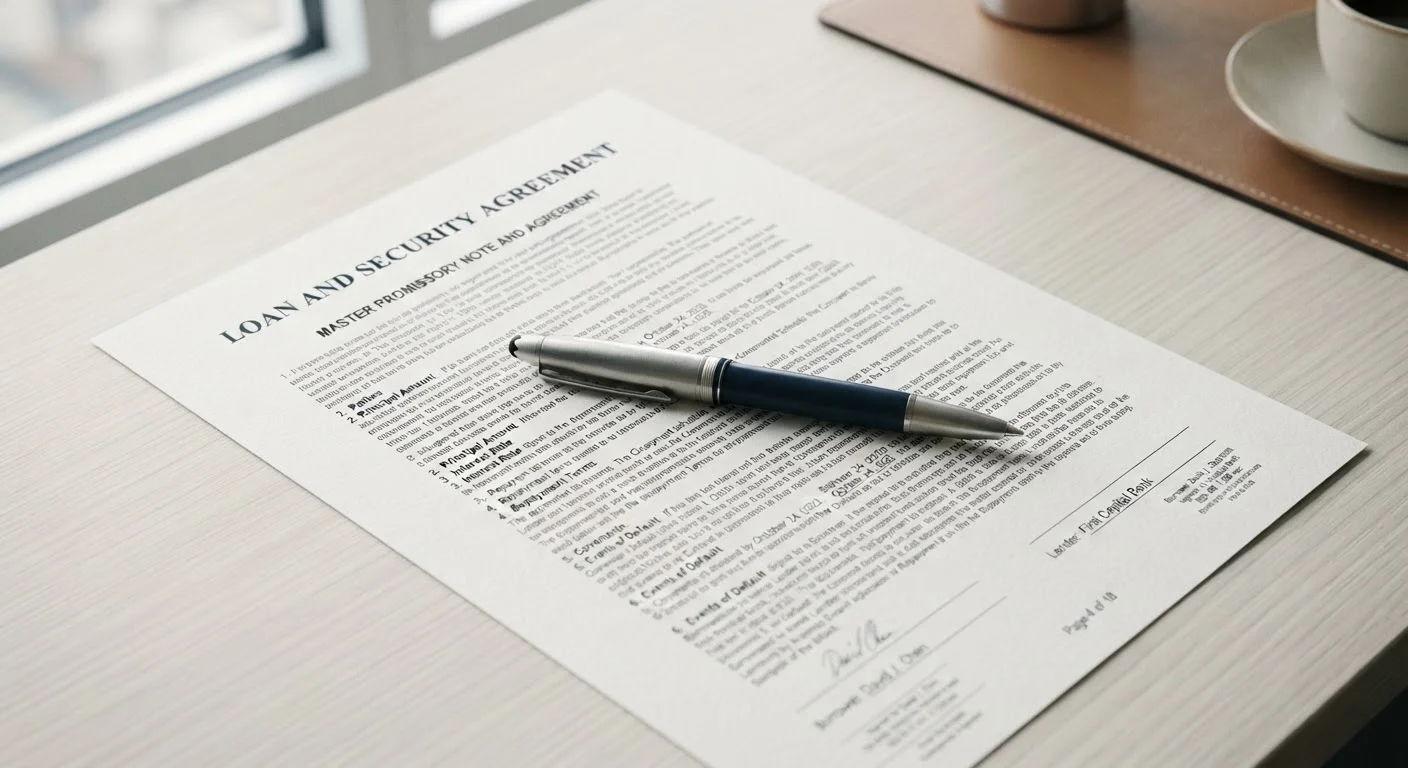
Photo: MoneyOnMind.net | Navigate Money With Clarity editorial
Key Takeaways
- The APR reflects the true annual cost of borrowing, including fees beyond the base interest rate.
- Prepayment penalty clauses can make paying off your loan early more expensive than expected.
- Arbitration clauses limit your right to sue a lender in court if a dispute arises.
- Default triggers vary by lender - missing one payment may accelerate your entire balance.
- Always verify loan amount, disbursement date, and repayment schedule match what you were promised verbally.
Why Loan Agreements Are Written the Way They Are
Loan contracts are long because they must anticipate years of possible scenarios: missed payments, refinancing, bankruptcy, property damage (for secured loans), and regulatory changes. Lenders use precise legal language to remove ambiguity that could expose them to loss. That precision, while legitimate, often works against borrowers who skim rather than read. Before diving into the clauses, build a working vocabulary. Our loan terminology guide covers the key terms - from origination fee to amortization - in plain English so you can parse the contract language without stumbling.
Loan agreements share structural similarities with other dense financial documents. If you have ever tried to read an insurance policy, the approach is comparable: both reward methodical, section-by-section review rather than a quick scan. See how to read an insurance policy for a parallel walkthrough of that document type.
What you will need
What to Watch For: Red-Flag Language
Not all concerning clauses are buried in footnotes - many appear in standard paragraphs but use phrasing that obscures their impact. Watch for these patterns:
- "At the lender's sole discretion" - gives the lender unilateral authority to modify terms or declare default without negotiation.
- "Variable rate subject to change" without a stated cap - means your payment could rise without a defined ceiling.
- "Cross-default" - your default on one loan with the same lender triggers default on all your loans with that institution.
- "As permitted by applicable law" following a fee description - signals that the lender intends to charge the maximum the law allows.
Many of the same disclosure patterns appear in banking products. Understanding the hidden language of bank fee disclosures gives you a complementary skill set for spotting cost-obscuring language across financial documents.
Variable Rates Without Caps Carry Real Risk
Step-by-Step: Reading the Agreement
Work through your loan agreement using the structured steps below. Read each section slowly enough that you can state - in your own words - what it says. If you cannot paraphrase a clause, that is your signal to ask the lender for clarification in writing before signing.
Confirm the loan amount and disbursement details
Locate the section labeled Principal Amount or Loan Amount. Confirm this matches the figure you were quoted - net of any origination fees the lender deducts before disbursing funds. For example, a $10,000 loan with a 3% origination fee means you receive $9,700 but repay $10,000. Check the disbursement date and method (direct deposit, check, or payment to a third party) to ensure funds arrive as expected.
Locate and understand the APR
The Annual Percentage Rate (APR) is your single most important number. Unlike the nominal interest rate, the APR folds in fees and other costs, expressing the true yearly cost of the loan. Federal law (the Truth in Lending Act, or TILA) requires lenders to disclose APR prominently. Find the APR disclosure box - often titled Federal Truth-in-Lending Disclosure - and compare it to any rate you were advertised. A large gap between the nominal rate and the APR signals significant fees buried elsewhere.
Review the repayment schedule and payment allocation
Find the amortization schedule or payment table. Confirm the number of payments, due dates, and the amount applied to principal versus interest each month. Early payments on amortizing loans are heavily weighted toward interest - this is normal, but understanding it helps you plan extra payments strategically. Also note whether payments are due on a fixed calendar date or a rolling date from disbursement.
Identify prepayment penalty clauses
Search the document for the words prepayment, early payoff, or payoff penalty. Some lenders charge a fee if you repay the loan before the scheduled end date, because early repayment reduces the interest they collect. The penalty may be a flat fee, a percentage of the remaining balance, or a set number of months' interest. Understand this clause fully before deciding to make extra payments - it could offset the interest savings you expected.
Understand default triggers and acceleration clauses
A default clause defines the conditions under which you are considered in breach of the agreement. Most people assume only missing payments triggers default, but agreements often list additional events: filing for bankruptcy, a material change in your financial situation, or even providing false information on the application. An acceleration clause means that upon default, the lender may demand the entire remaining balance immediately - not just the missed payment. Read this section carefully and highlight any trigger that surprises you.
Check for arbitration and class-action waiver language
Scan for sections titled Dispute Resolution or Arbitration Agreement. These clauses require you to resolve disputes through a private arbitration process rather than through the court system. A class-action waiver prevents you from joining a group lawsuit against the lender. Neither clause is automatically harmful, but both significantly limit your legal remedies. If you find one, decide whether you are comfortable waiving court access before signing. For broader context on fine print that affects your finances, see common banking clauses that affect your money.
This article provides general financial education and is not personalized legal or financial advice. Loan terms vary by lender, loan type, and state law. Consult a licensed financial adviser or attorney before making decisions based on your specific contract.
After You Sign: Keeping Your Agreement Working for You
Once you have signed, store a copy of the full agreement - including all exhibits and addenda - in a secure, accessible location. Set calendar reminders for your payment due dates and review your credit report periodically to confirm that the lender is reporting your payment history accurately. If you ever consider refinancing, pull your original agreement first to check for prepayment penalties that could reduce the financial benefit of a new loan.
Request Everything in Writing
Loan agreements are living documents in the sense that your behavior under them - on-time payments, extra principal payments, or default - shapes both your financial cost and your credit profile for years. Reading carefully before signing is the highest-leverage action a borrower can take.
The content on this site is for informational purposes only and is not a substitute for professional advice. Always consult a qualified professional for guidance specific to your situation.