
Reading an Insurance Policy Without Getting Lost

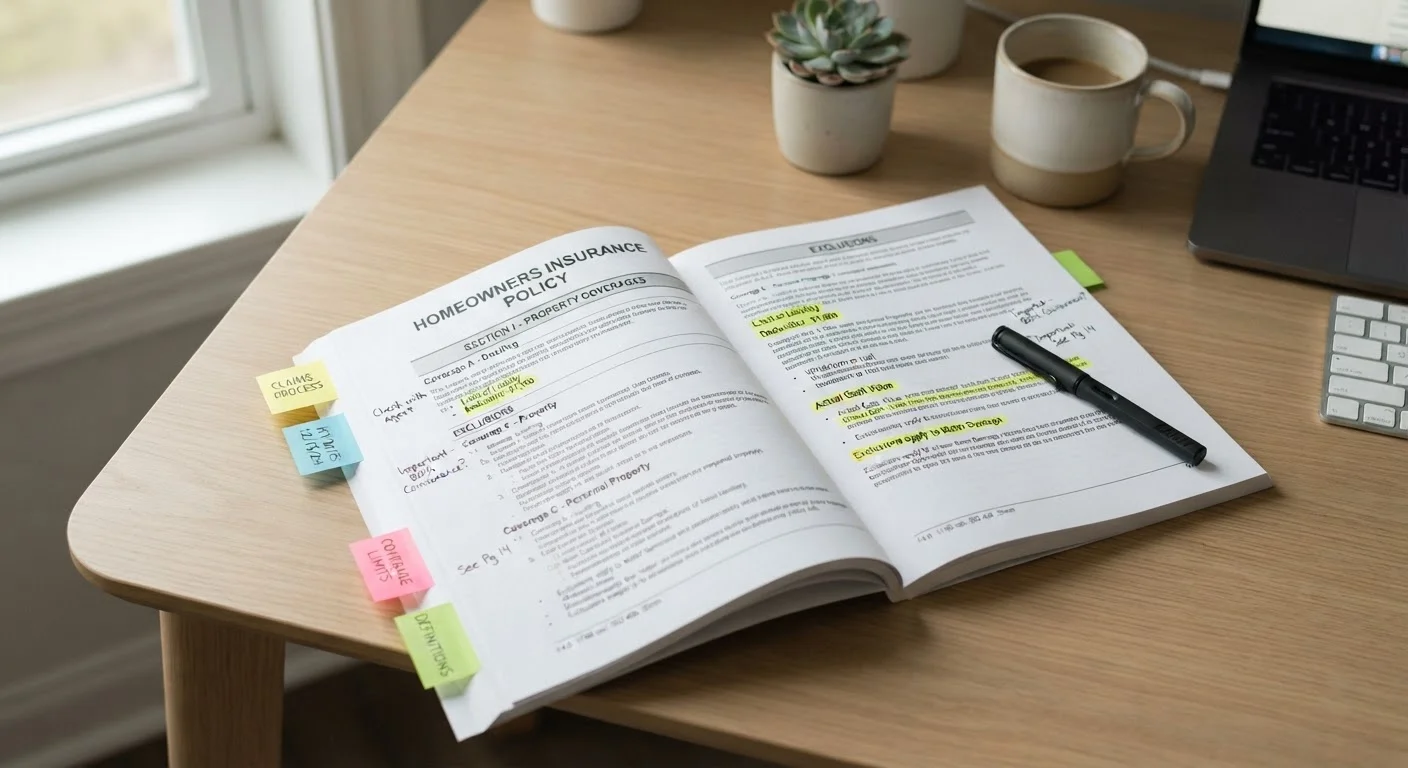
Photo: MoneyOnMind.net | Navigate Money With Clarity editorial
Key Takeaways
- Every insurance policy follows a predictable structure - learning that structure makes any document readable.
- The declarations page summarizes your core coverage details and is always your best starting point.
- Exclusions and conditions sections define what the insurer will not pay - read these as carefully as coverage sections.
- Coverage limits and deductibles directly determine your out-of-pocket exposure in a claim.
- Always cross-check the definitions section when unfamiliar terms appear elsewhere in the policy.
Why Policy Documents Feel So Hard to Read
Insurance contracts are legal documents written to satisfy regulatory requirements and protect the insurer from ambiguity in court. That purpose - not a desire to confuse you - explains the dense language, repeated definitions, and cross-references throughout. The good news is that US insurance policies follow a broadly standardised structure across most product types. Once you know that structure, navigating any policy becomes a predictable exercise rather than a guessing game.
If you are new to insurance entirely, the First-Time Buyer's Roadmap to Understanding Insurance is a useful starting point before working through this walkthrough.
What you will need
Full Policy Document (PDF or Print)
The legally binding contract - the only source that accurately represents your actual coverage.
Notepad or Digital Notes App
Record coverage limits, exclusions, deductible amounts, and questions to ask your agent.
Licensed Insurance Agent or Broker
Clarify ambiguous policy language and confirm whether your coverage matches your needs.
State Insurance Department Website
Verify that your insurer is licensed in your state and check for consumer complaint data.
How to Work Through Your Policy Step by Step
Follow the steps below in order. Each section of a standard policy builds on the last - skipping ahead often means misreading a coverage clause because you have not yet encountered the definition that constrains it. Keep your notepad nearby to record figures and flag language you want to discuss with a licensed agent.
This Is General Information, Not Advice
Start with the Declarations Page
The declarations page (sometimes called the "dec page") is almost always at the front of the policy and acts as a snapshot of your coverage. Look for: your name and address as the named insured, the policy period (start and end dates), the types of coverage included, each coverage limit expressed in dollar amounts, and your premium. If any detail looks wrong - a misspelled name, an incorrect address, or an unfamiliar coverage - flag it immediately, because errors here can affect a claim.
Read the Definitions Section Before Anything Else
Most policies include a dedicated definitions section, often near the front or clearly labelled. Terms printed in bold or with quotation marks throughout the document are defined here with specific legal meanings that may differ from everyday usage. Read through key definitions - especially 'insured,' 'covered loss,' 'occurrence,' and 'property' - before diving into coverage details. This context prevents misreading coverage clauses later.
Identify What Is Covered (Insuring Agreement)
The insuring agreement is the section that describes what the insurer promises to pay for. It typically begins with broad language like "We will pay for direct physical loss to covered property." Read it closely and note: what events or perils are named, whether coverage is "open perils" (covers everything not excluded) or "named perils" (covers only what is explicitly listed), and any dollar sub-limits that apply to specific categories. Sub-limits - for example, a $1,500 cap on jewellery within a broader personal property limit - are easy to miss and important to find.
Scrutinise the Exclusions Section
Exclusions define what the insurer will not pay for under any circumstances. This section is where many policyholders get surprised at claim time. Common exclusions include flood, earthquake, intentional acts, and wear and tear - but exclusions vary significantly by policy type and provider. Read every exclusion and ask: "Is this a risk I face?" If so, you may need a separate endorsement or a different policy to fill the gap. For a deeper look at common coverage gaps, see what insurance actually covers and what it doesn't.
Note Your Deductible and Coverage Limits
Your deductible is the amount you pay out of pocket before the insurer contributes to a claim. Coverage limits cap how much the insurer will pay in total. Both figures appear on the declarations page and sometimes again in the coverage sections. Calculate the realistic worst-case scenario: if you suffered a covered total loss, what would you owe before insurance kicks in, and would the limit be sufficient to replace or repair what you lost? This exercise often reveals whether your current limits are adequate.
Review Conditions, Duties, and Endorsements
The conditions section lists obligations you must fulfil to keep your coverage valid - such as notifying the insurer promptly after a loss, cooperating with investigations, or maintaining certain safety measures. Failing to meet a condition can give the insurer grounds to deny a claim. Finally, check for endorsements (also called riders or amendments): these are add-ons that modify the base policy, either expanding or restricting coverage. Endorsements are often attached at the back of the policy and must be read as part of the whole contract. Once you have reviewed all sections, use a structured review checklist - such as this policy review checklist - before committing to the policy.
Never Rely on a Summary Alone
Use the Definitions Section as a Decoder
For broader context on how loan and financial contracts share similar structural patterns, the article on reading a loan agreement without getting lost in the fine print applies many of the same critical-reading principles. When you are ready to put everything together, the Smart Claims Tips hub covers how to use your policy knowledge effectively if you ever need to file.
This article is for general informational and educational purposes only. It does not constitute personalised insurance, financial, or legal advice. Coverage terms, exclusions, limits, and applicable regulations vary by insurer, policy type, and US state. Always read your complete policy documents and consult a licensed insurance professional before making coverage decisions.
The content on this site is for informational purposes only and is not a substitute for professional advice. Always consult a qualified professional for guidance specific to your situation.