
Good Debt, Bad Debt, and Everything In Between

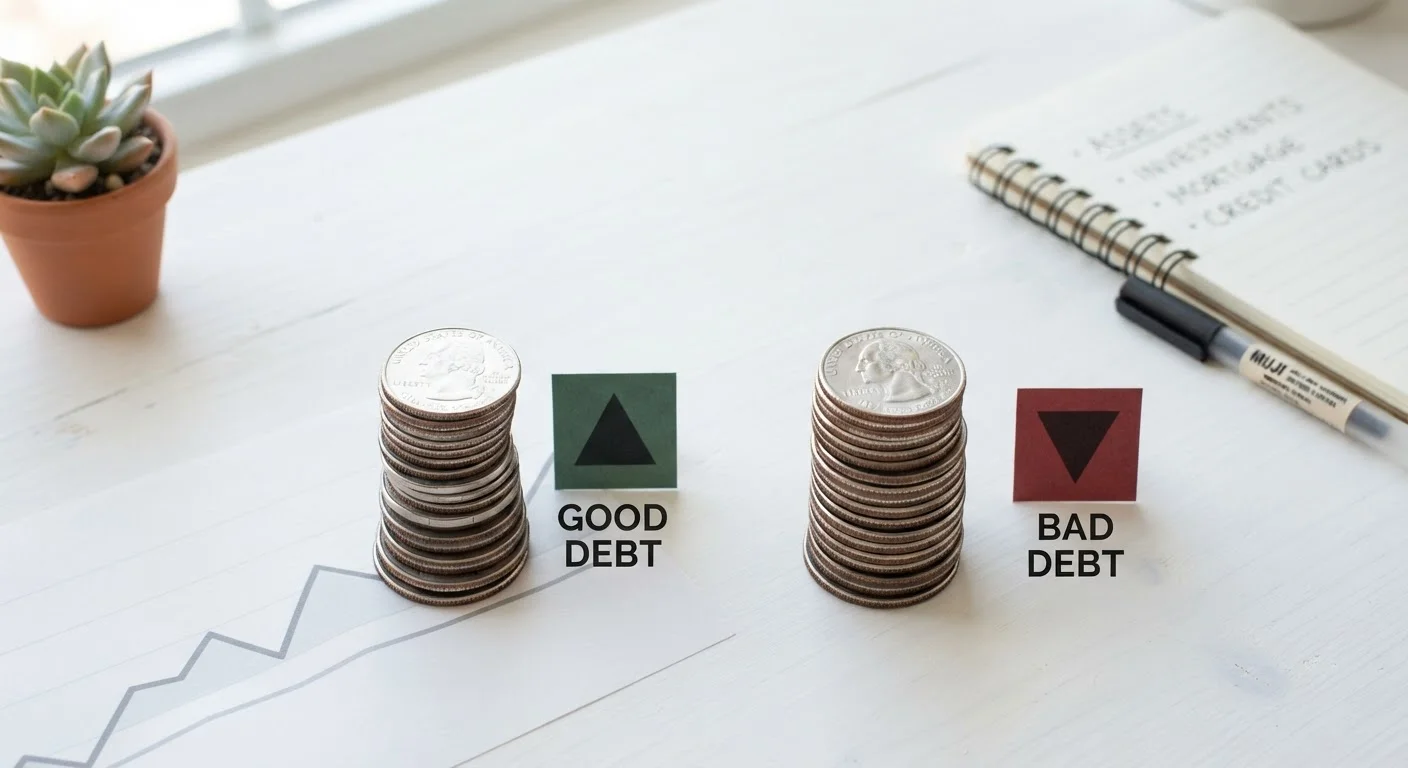
Photo: MoneyOnMind.net | Navigate Money With Clarity editorial
Key Takeaways
- Debt categorised as 'good' typically builds long-term value or earning potential.
- High-interest consumer debt is generally considered 'bad' because its cost outweighs any benefit.
- The same loan type can shift categories depending on interest rate, terms, and how funds are used.
- Prioritising high-interest debt repayment reduces the total cost you pay over time.
- Your debt-to-income ratio matters to lenders regardless of how debt is categorised.
Why the Good/Bad Framework Exists
When you're juggling multiple loan payments, it's easy to treat all debt as equally urgent - or equally shameful. Neither reaction helps you make smart financial decisions. The good/bad debt framework gives borrowers a practical lens for evaluating obligations: not by moral judgment, but by the economic trade-off each one creates.
At its core, the framework asks a straightforward question: does this debt put money to work for you, or does it simply cost you money? A loan that funds an asset likely to appreciate or an education that grows your income is a different financial instrument from a revolving credit card balance carrying 24% interest on last month's groceries.
Understanding this distinction is especially useful when you're deciding which debt to pay down aggressively and which to manage steadily. For a plain-language breakdown of the terms you'll encounter along the way, see our debt management glossary.
The Same Loan Can Change Categories
What Makes Debt 'Good'
Good debt shares two defining characteristics: a relatively low interest rate and a productive purpose - meaning it funds something that builds financial value over time.
- Mortgages: Real estate has historically appreciated over long periods, and the asset serves as collateral. Mortgage interest rates are generally among the lowest available to consumer borrowers.
- Student loans: Federal student loans carry fixed rates and income-driven repayment options. When the degree translates to a meaningful income increase, the return can outweigh the cost of borrowing - though this varies significantly by field, institution, and total amount borrowed.
- Small business loans: Borrowing to start or grow a revenue-generating business can create returns that exceed the interest paid, making it productive debt by definition.
Good debt still carries risk. A mortgage on a property you can't afford, or student loans that far exceed your expected salary, can quickly become a financial burden. The category is a starting point for evaluation, not a guarantee. Consult a licensed financial professional before taking on any significant debt obligation.
22%+
Average credit card interest rate in the US
Federal Reserve data has shown average credit card rates exceeding 22% APR, making revolving balances one of the most expensive forms of consumer debt.
~$37,000
Average student loan debt per borrower
The Education Data Initiative estimates the average federal student loan balance per borrower in the US at approximately $37,000, underscoring why repayment planning matters early.
43%
DTI threshold most conventional lenders prefer
Most conventional mortgage lenders prefer a debt-to-income ratio below 43%, regardless of whether individual debts are categorised as good or bad.
What Makes Debt 'Bad'
Bad debt is typically defined by two features working against you simultaneously: high interest rates and spending on depreciating or consumable goods. When the item you borrowed to buy loses value faster than you repay - and the interest compounds - you pay well above the original price.
- Credit card balances: Carrying a balance month-to-month at double-digit interest rates is the textbook example of bad debt. A $1,000 balance at 22% APR with minimum payments can take years to eliminate and cost hundreds in interest.
- Payday loans: Short-term, extremely high-rate loans used to cover immediate expenses represent some of the most costly consumer debt available.
- High-rate personal loans for discretionary spending: Financing a vacation or luxury purchase with an unsecured personal loan at high interest creates a net negative: the experience has no residual financial value, but the debt does.
If you want to understand what's actually at stake when these debts go unpaid, our article on secured vs. unsecured debt explains how different debt structures affect your financial exposure.
The Messy Middle: Neutral and Context-Dependent Debt
Not every loan lands cleanly in one category. Auto loans are the most common example of neutral debt: a vehicle depreciates the moment you drive it off the lot, but for many borrowers it's essential for getting to work. Whether an auto loan skews good or bad depends heavily on the interest rate, the vehicle's price relative to your income, and whether public transportation is a realistic alternative.
Context also shifts categorisation. A home equity loan used to renovate and increase a property's market value behaves more like good debt. The same loan used to fund everyday living expenses behaves like bad debt - borrowing against an asset to consume rather than to invest.
The practical takeaway: evaluate each loan by its specific interest rate, purpose, and impact on your overall financial picture, not just its loan type. Some widely-held assumptions about how to handle these situations aren't as reliable as they seem - our piece on common debt repayment beliefs that can cost you money examines several of them.
Rank Debts by Interest Rate First
Using the Framework to Set Repayment Priorities
Once you've categorised your debts, the framework becomes actionable. A widely accepted approach is to direct extra payments toward high-interest bad debt first - this reduces the total interest you'll pay across your entire debt load. Meanwhile, low-rate good debt can often be maintained on its standard schedule without penalty.
Your debt-to-income ratio matters here too. Lenders assess this figure regardless of whether your debt is categorised as good or bad - a high ratio can limit future borrowing even if your existing debt is technically productive.
For a broader look at structuring a repayment plan, debt management explained walks through the core strategies. And if you've encountered the idea that all debt is inherently harmful, common debt myths debunked addresses that and other misconceptions with evidence-based context.
Finally, explore practical debt repayment strategies and how different loan types actually work to build a complete picture before making repayment decisions.
This article is for general informational and educational purposes only. It does not constitute personalised financial, legal, or tax advice. Speak with a licensed financial adviser before making decisions about your specific debt obligations.
Frequently Asked Questions
The content on this site is for informational purposes only and is not a substitute for professional advice. Always consult a qualified professional for guidance specific to your situation.