
Needs, Wants, and Savings: The Core Categories Every Budget Needs

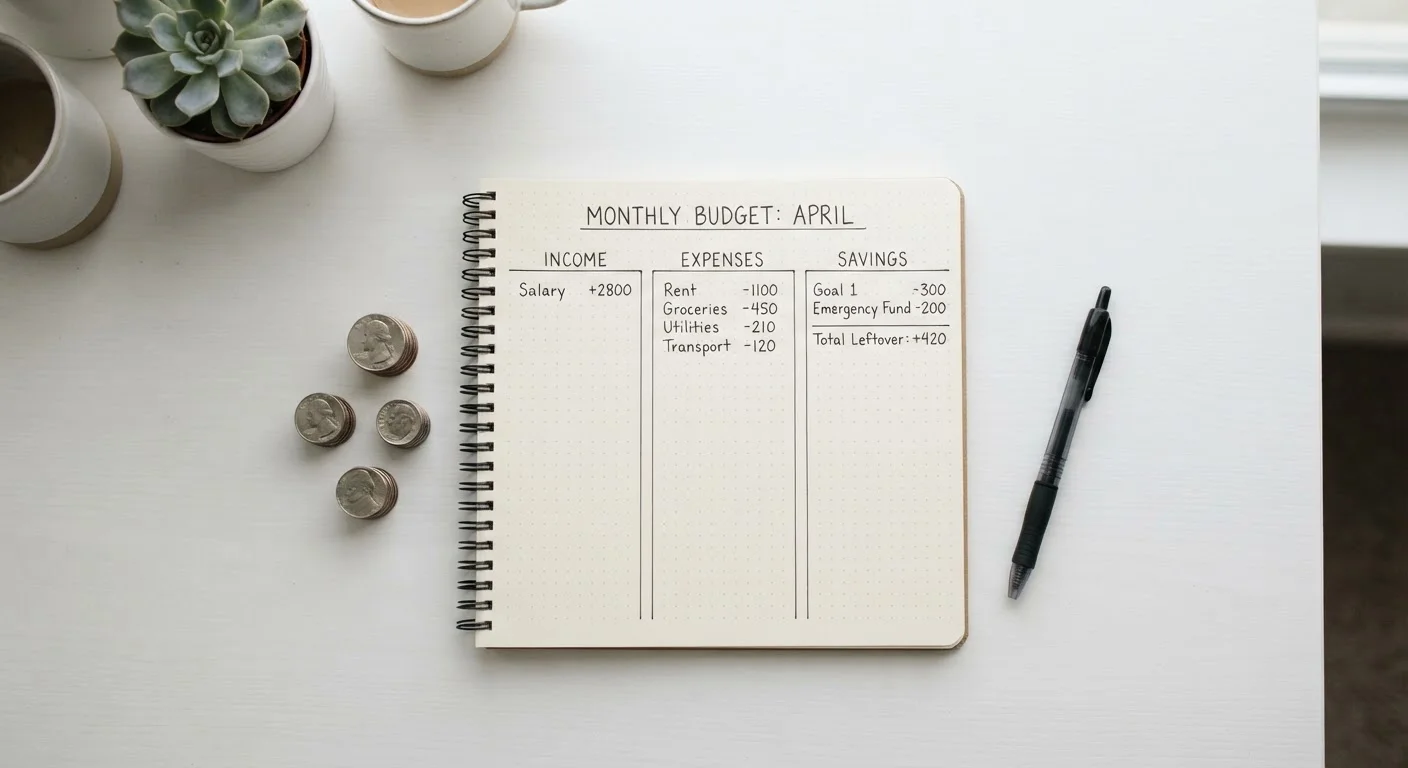
Photo: MoneyOnMind.net | Navigate Money With Clarity editorial
Why Three Categories Are Enough to Start
Most people abandon budgeting not because they lack discipline, but because their systems are too complicated. Tracking fifteen spending categories is exhausting. A simpler starting point - one built around just three buckets - removes that friction entirely.
The three-category framework, widely associated with the 50/30/20 rule, divides your after-tax income into needs, wants, and savings. Each bucket serves a distinct purpose, and together they cover every dollar you earn. If you're new to budgeting, start by reading what a personal budget actually means before diving into the categories below.
Breaking Down Each Category
Needs (roughly 50% of take-home pay)
Needs are expenses you genuinely cannot avoid without serious consequence - housing, utilities, groceries, minimum debt payments, and essential transportation. The test is straightforward: if skipping this payment would put your health, housing, or legal standing at risk, it's a need.
Be honest here. A car payment on a vehicle you chose for status is partly a want. A gym membership counts as a want unless a doctor has prescribed exercise as treatment. The goal isn't to be harsh - it's to see your spending clearly.
Wants (roughly 30% of take-home pay)
Wants are the spending that makes life enjoyable but isn't strictly necessary: dining out, streaming subscriptions, travel, hobbies, and upgrades beyond the functional minimum. This category is not the enemy. Cutting wants entirely leads to burnout, not balance.
A useful framework for ranking wants by priority is covered in this guide to ranking financial priorities. Knowing which wants matter most to you helps you spend intentionally rather than reactively.
Savings (roughly 20% of take-home pay)
Savings - and debt repayment beyond minimums - form the third category. This bucket builds your financial future: an emergency fund, retirement contributions, and accelerated loan payoff. Think of this as paying your future self before discretionary spending crowds it out.
Needs
Essential, non-negotiable expenses required to maintain basic living standards and financial obligations - such as rent, utilities, groceries, and minimum debt payments.
Wants
Discretionary spending on items or experiences that improve quality of life but are not strictly necessary for survival or financial standing - such as dining out, subscriptions, or travel.
Savings rate
The percentage of take-home income directed toward saving or investing rather than spending. A higher savings rate generally accelerates wealth-building and financial resilience.
Discretionary spending
Any expense that is optional and can be reduced or eliminated without immediate harm - the spending you choose rather than the spending you owe.
Emergency fund
A dedicated cash reserve set aside to cover unexpected expenses - such as a medical bill or job loss - without taking on new debt. A common target is three to six months of essential expenses.
50/30/20 rule
A budgeting heuristic suggesting you allocate roughly 50% of after-tax income to needs, 30% to wants, and 20% to savings and debt repayment beyond minimums.
Adjusting the Percentages to Your Reality
The 50/30/20 split is a benchmark, not a law. High-cost cities may push needs above 60% of take-home pay. Heavy student loan burdens may require redirecting want-spending toward debt repayment. Start by recording your actual spending for one month, then compare it to these targets - the gap tells you exactly where to focus.
If your needs already exceed 50%, look for structural changes over time: refinancing loans, finding a roommate, or negotiating recurring bills. If savings are consistently below 20%, even moving to 10% is progress worth making. Refer to essential budgeting vocabulary to get comfortable with terms like discretionary spending and sinking funds as you refine your plan.
The Percentages Are Guides, Not Rigid Rules
Once you're comfortable with this three-category structure, explore how different budgeting methods - envelopes, zero-based, pay-yourself-first - can apply the same logic with different tools in budgeting methods worth knowing. For a complete beginner's roadmap, the full guide at Taking Control of Your Money ties all these concepts together.
57%
Americans unable to cover a $1,000 emergency from savings
According to a Bankrate survey conducted in early 2024, highlighting the widespread gap in emergency savings.
20%
Recommended savings and debt-payoff share of take-home pay
The savings target under the 50/30/20 framework, widely cited in personal finance education as a practical starting benchmark.
This article is for general educational purposes only and does not constitute personalised financial advice. Your income, expenses, and financial goals are unique. Consult a qualified financial adviser before making significant changes to your budget or debt repayment strategy.
The content on this site is for informational purposes only and is not a substitute for professional advice. Always consult a qualified professional for guidance specific to your situation.