
Budgeting Methods Worth Knowing: From Envelopes to Spreadsheets

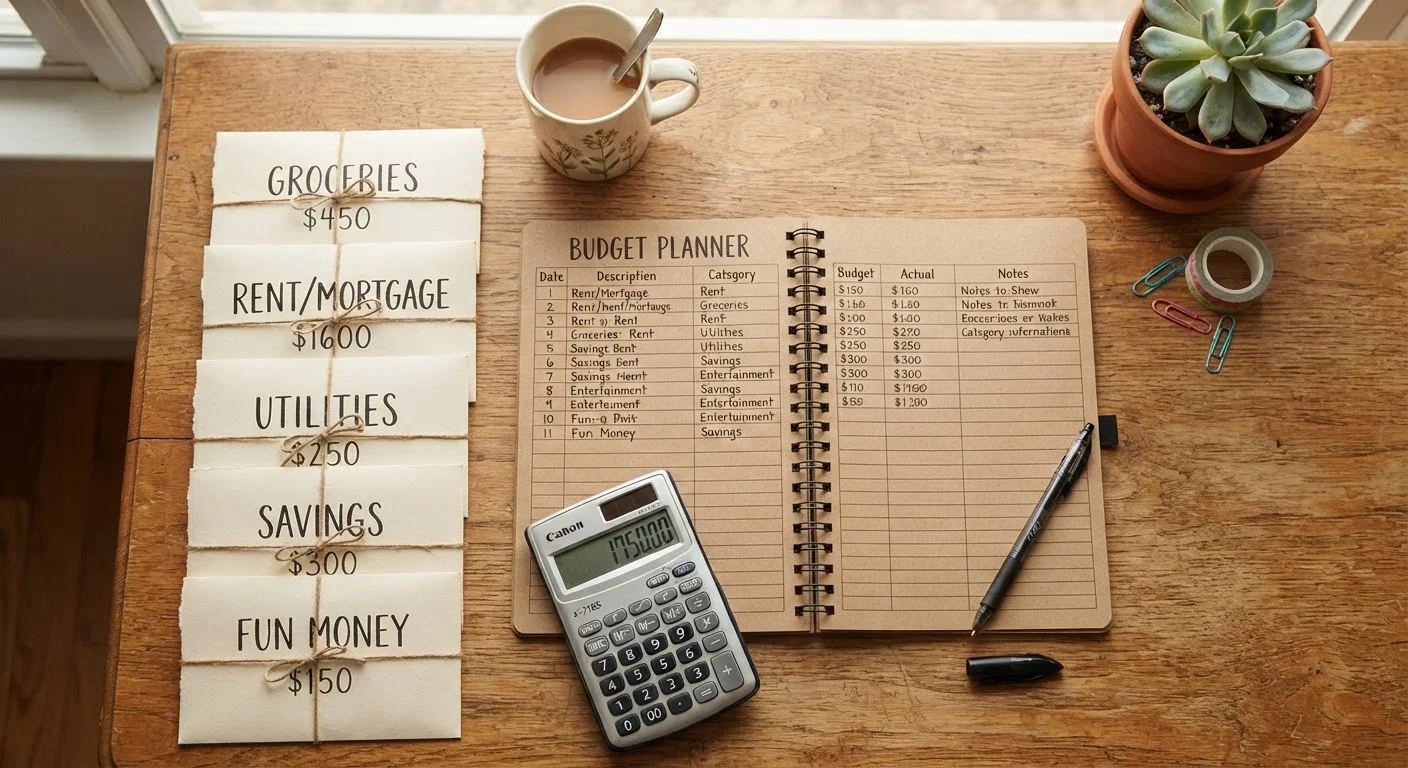
Photo: MoneyOnMind.net | Navigate Money With Clarity editorial
Key Takeaways
- No single budgeting method works for everyone - the best system is one you will actually use consistently.
- The 50/30/20 rule offers a flexible percentage-based starting point ideal for beginners with variable spending.
- Zero-based budgeting assigns every dollar a job, making it powerful for those who want full spending visibility.
- Envelope budgeting builds strong spending discipline by using hard category limits, whether physical or digital.
- Pay-yourself-first automates savings before spending, reducing reliance on willpower alone.
Why the Method You Choose Matters
A budget is only useful if you use it. That sounds obvious, but it explains why one person thrives on a color-coded spreadsheet while another abandons it after two weeks. Before you commit to any framework, it helps to understand how the major options differ - and what each one demands of you. If you are new to the concept of personal budgeting altogether, start with the fundamentals before diving into method comparisons.
The four most widely used personal budgeting frameworks are the 50/30/20 rule, zero-based budgeting, envelope budgeting, and the pay-yourself-first method. Each has a distinct philosophy, a different time commitment, and a different tolerance for financial complexity. The comparison below lays out how they stack up across several practical criteria.
| 50/30/20 Rule | Zero-Based Budgeting | Envelope Budgeting | Pay-Yourself-First | |
|---|---|---|---|---|
| Core philosophy | Percentage allocation by category | Every dollar assigned a purpose | Hard limits per spending category | Save first, spend the rest |
| Time commitment | Low - review monthly | High - track throughout month | Medium - set up and monitor envelopes | Low - automate and go |
| Best for | Beginners, simple incomes | Detail-oriented planners | Overspenders, impulsive buyers | Those prioritizing savings growth |
| Handles variable income | Moderately well | Very well - rebuilt each month | Moderately well | Requires income estimate upfront |
| Savings discipline built in | Yes - 20% allocated | Yes - savings assigned explicitly | Depends on setup | Yes - savings are non-negotiable |
| Spending visibility | Broad categories only | High - line-item detail | High - per envelope | Low - focuses on savings only |
| Setup complexity | Simple | High | Medium | Simple |
Breaking Down Each Method
50/30/20 Rule
This percentage-based approach divides after-tax income into three buckets: 50% toward needs (rent, utilities, groceries), 30% toward wants (dining out, subscriptions, entertainment), and 20% toward savings and debt repayment. Its appeal lies in simplicity - no line-item tracking required. The trade-off is reduced precision; high-cost-of-living cities may make the 50% needs cap nearly impossible without significant adjustments. For a deeper side-by-side look at this method against zero-based budgeting, see this detailed comparison.
Zero-Based Budgeting
Every dollar of income is assigned a specific purpose - spending, saving, or debt repayment - until the balance reaches zero. This is not the same as spending everything; it means accounting for everything. Zero-based budgeting offers the highest level of financial visibility but requires consistent tracking throughout the month. It rewards planners who enjoy detail and want to know exactly where every dollar goes.
Envelope Budgeting
Originally a cash system - physically placing spending money into labeled envelopes per category - the envelope method enforces hard limits. When an envelope is empty, spending in that category stops for the month. This tactile constraint makes it especially effective for people who overspend on discretionary items. Digital tools now replicate the logic without requiring cash. Learn how to adapt it for modern banking in envelope budgeting in a cashless world.
Pay-Yourself-First
This method flips the typical order of operations: savings and investments are transferred automatically on payday, before any discretionary spending occurs. The remainder funds all other expenses. It removes the need for willpower by making savings automatic and non-negotiable. The limitation is that it doesn't actively manage spending categories, so it works best when paired with some awareness of monthly expenses.
Automate to Remove Friction
Matching a Method to Your Situation
Your income type, spending habits, and financial goals should guide your choice. A few practical considerations:
- Variable income (freelancers, gig workers): Zero-based budgeting adapts well because you rebuild it each month around what you actually earned.
- Consistent paycheck, savings struggles: Pay-yourself-first removes the temptation to spend before saving.
- Overspending on specific categories: Envelope budgeting creates visible, physical or digital limits where they matter most.
- Just starting out: The 50/30/20 rule provides enough structure without requiring granular tracking.
No method is permanent. Many people start with the 50/30/20 rule for its accessibility, then migrate to zero-based budgeting as their financial picture becomes more complex. You can also hybridize - for example, automating savings (pay-yourself-first) and then applying envelope logic to the discretionary portion that remains. For a hands-on walkthrough building your first budget from scratch, follow the seven-step guide. And if any of the terms used here feel unfamiliar, this budgeting glossary covers the vocabulary you need.
Avoid the Perfect-System Trap
This article is for general informational and educational purposes only. It does not constitute personalized financial advice. Individual circumstances vary - consider consulting a qualified financial adviser before making significant changes to your financial plan.
The content on this site is for informational purposes only and is not a substitute for professional advice. Always consult a qualified professional for guidance specific to your situation.