
Envelope Budgeting in a Cashless World

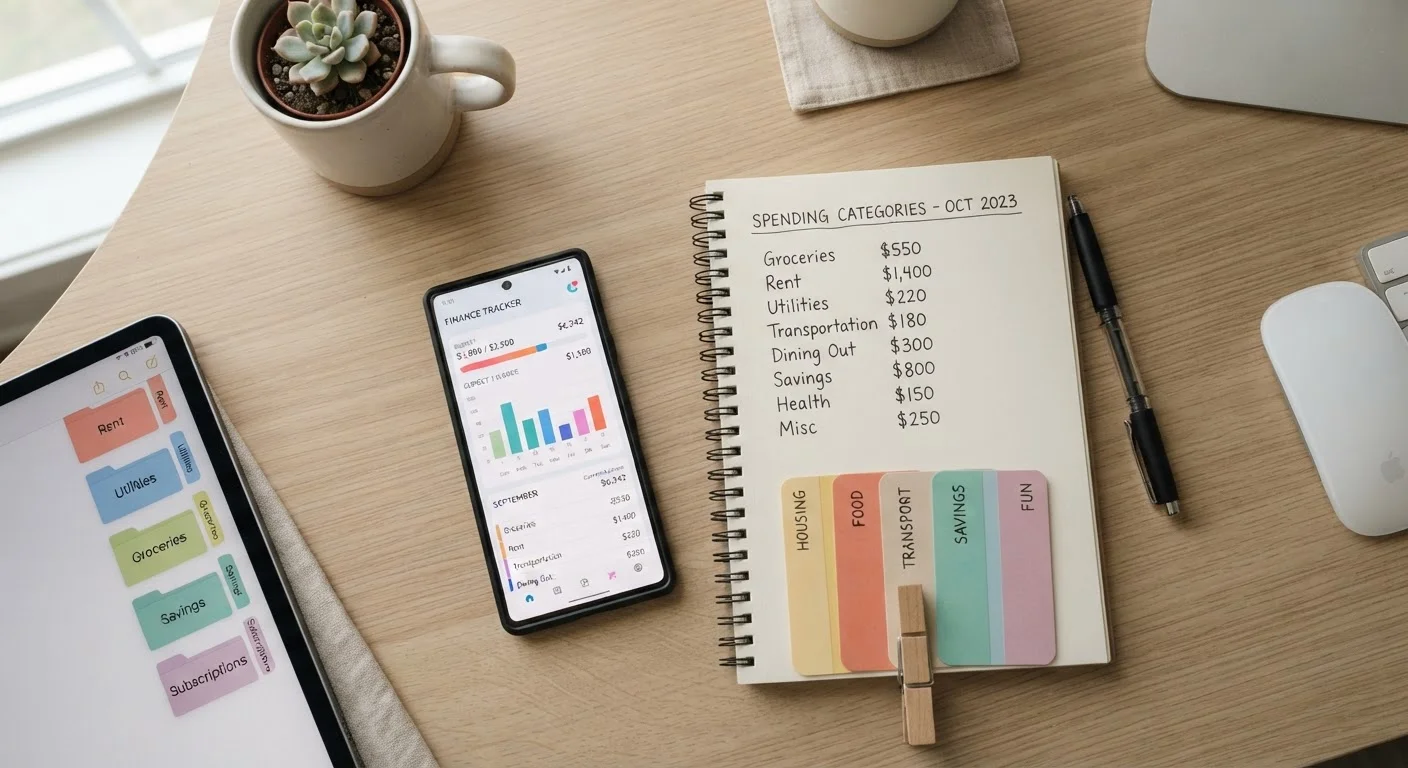
Photo: MoneyOnMind.net | Navigate Money With Clarity editorial
Key Takeaways
- Envelope budgeting assigns every dollar to a spending category before the month begins, preventing overspending.
- Digital sub-accounts, budgeting apps, and spending limits replicate physical envelopes without cash.
- The method works best when categories reflect your real spending habits, not an idealized version of them.
- Reviewing and adjusting your digital envelopes monthly keeps the system accurate and sustainable.
- This guide is general financial education - consult a qualified adviser for personalized budgeting advice.
Why Envelope Budgeting Still Makes Sense
The original envelope method is straightforward: you divide your cash into labeled envelopes - one for groceries, one for rent, one for transport - and when an envelope is empty, that category is done for the month. The physical constraint of cash made overspending impossible without a conscious decision to raid another envelope.
Most people rarely carry cash today, but the psychological and structural logic behind the method hasn't changed. Assigning money to a purpose before you spend it is fundamentally different from tracking what you already spent. The former is proactive; the latter is reactive. If built-in bank features haven't been working for you, it's often because they default to reactive tracking - a pattern explored in more depth in why your digital bank's budgeting tool isn't working for you.
Envelope budgeting also fills a gap that percentage-based frameworks leave open. Unlike the 50/30/20 rule, which sets broad targets, envelopes force you to decide exactly how much goes to groceries versus dining out - a distinction that matters a lot when money is tight. For a comparison of these frameworks side by side, see zero-based budgeting vs. the 50/30/20 rule.
Start With Fewer Categories
Tools and Setup: What You Need Before You Start
You don't need a specific app or a premium bank account to run a digital envelope system. What you need is a mechanism that separates money by category. Several options exist:
- Bank sub-accounts or savings pots: Many digital and traditional banks allow multiple named sub-accounts. These are the closest digital equivalent to physical envelopes. For a comparison of how different banks structure these features, see savings pots, vaults, and envelopes.
- Budgeting apps: Apps that support spending categories and balance alerts can simulate envelopes within a single account.
- A spreadsheet: A simple table with columns for each category, starting balance, and remaining balance works for anyone who prefers manual control.
The right tool is whichever one you'll actually use consistently. Complexity is the enemy of habit.
What you will need
Bank sub-accounts or savings pots
Act as individual digital envelopes by holding earmarked funds for specific categories.
Spreadsheet (e.g., Google Sheets)
Manually track envelope balances and spending if you prefer a no-app approach.
Dedicated budgeting app
Automate category tracking and send alerts when a spending category runs low.
Printed or digital spending log
Record each transaction against its envelope in real time to maintain accuracy.
Step-by-Step: Building Your Digital Envelope System
Follow the steps below to move from a blank slate to a functioning digital envelope budget. The process takes between 20 and 45 minutes the first time; monthly maintenance typically takes under 15 minutes once your categories are established.
Calculate your monthly take-home income
Before you can fill any envelope, you need a firm number. Add up all reliable after-tax income sources: salary, freelance payments, side income. If your income varies, use a conservative estimate - the lowest amount you expect in a typical month. Budgeting from an inflated income figure is one of the fastest ways to overspend.
Review your actual spending to build realistic categories
Pull two to three months of bank and card statements. Group every transaction into broad categories: housing, groceries, transport, dining, subscriptions, personal care, entertainment, savings, and debt repayments. Note the average monthly spend in each group - these averages become the starting allocations for your envelopes. Guessing at categories without data almost always produces a budget you won't follow.
Define your envelopes and set spending limits
List your categories and assign a dollar amount to each one. The total must not exceed your monthly take-home income. If it does, you need to trim discretionary categories or find ways to reduce fixed costs. Every dollar should belong to an envelope - including savings and debt payments, which are non-negotiable envelopes, not afterthoughts.
Set up your digital envelopes
Open sub-accounts or savings pots at your bank - many modern banks allow multiple named accounts at no cost. Label each one to match your category list (e.g., "Groceries," "Transport," "Emergency Fund"). On payday, transfer the allocated amount into each sub-account. For categories you spend from daily, keep the relevant sub-account linked to your debit card or set up a small transfer buffer. If your bank doesn't support multiple accounts, a spreadsheet or budgeting app works equally well - the mechanics differ, but the logic is identical.
Spend only from the correct envelope
Each time you make a purchase, record it against its envelope - either by checking the sub-account balance or logging it in your app or spreadsheet. When an envelope reaches zero, spending in that category stops for the month. This constraint is the entire point of the system: it makes trade-offs visible and deliberate rather than invisible and accidental.
Review and rebalance at the end of each month
At month's end, check every envelope. Note which ran out early, which had money left over, and whether any category was missing entirely. Adjust allocations for the following month based on what you learned. An envelope budget is a living document - the first version is rarely the right version. Consistent monthly reviews are what transform it from a one-time exercise into a durable financial habit.
Don't Let Empty Envelopes Hide Real Problems
This Is Education, Not Personalised Advice
Common Adjustments and Long-Term Maintenance
A few patterns come up repeatedly for new envelope budgeters:
- Variable income
- If your income fluctuates, fund essential envelopes first - housing, utilities, food, minimum debt payments - and treat discretionary envelopes as variable. In a lower-income month, those envelopes get less or nothing.
- Shared finances
- Couples can run a joint envelope system using shared sub-accounts, with each partner also maintaining individual discretionary envelopes. This balances transparency with autonomy.
- Credit card spending
- You can still use a credit card for day-to-day purchases, but track spending against your digital envelopes in real time and pay the balance in full each month. The envelope is depleted when you spend - not when the bill arrives.
The system works best when it's reviewed regularly. Treat your monthly check-in as a 10-minute appointment with your future self - not a judgment session, but a calibration. The goal is a budget that reflects your real life, not a hypothetical one. For broader context on building this kind of financial foundation, explore modern banking tools that can complement your envelope setup.
This article is intended for general informational and educational purposes only. It does not constitute personalised financial advice. Budgeting needs vary by individual circumstances - consult a qualified financial adviser for guidance specific to your situation.
The content on this site is for informational purposes only and is not a substitute for professional advice. Always consult a qualified professional for guidance specific to your situation.