
Savings Pots, Vaults, and Envelopes: How Digital Budgeting Tools Differ

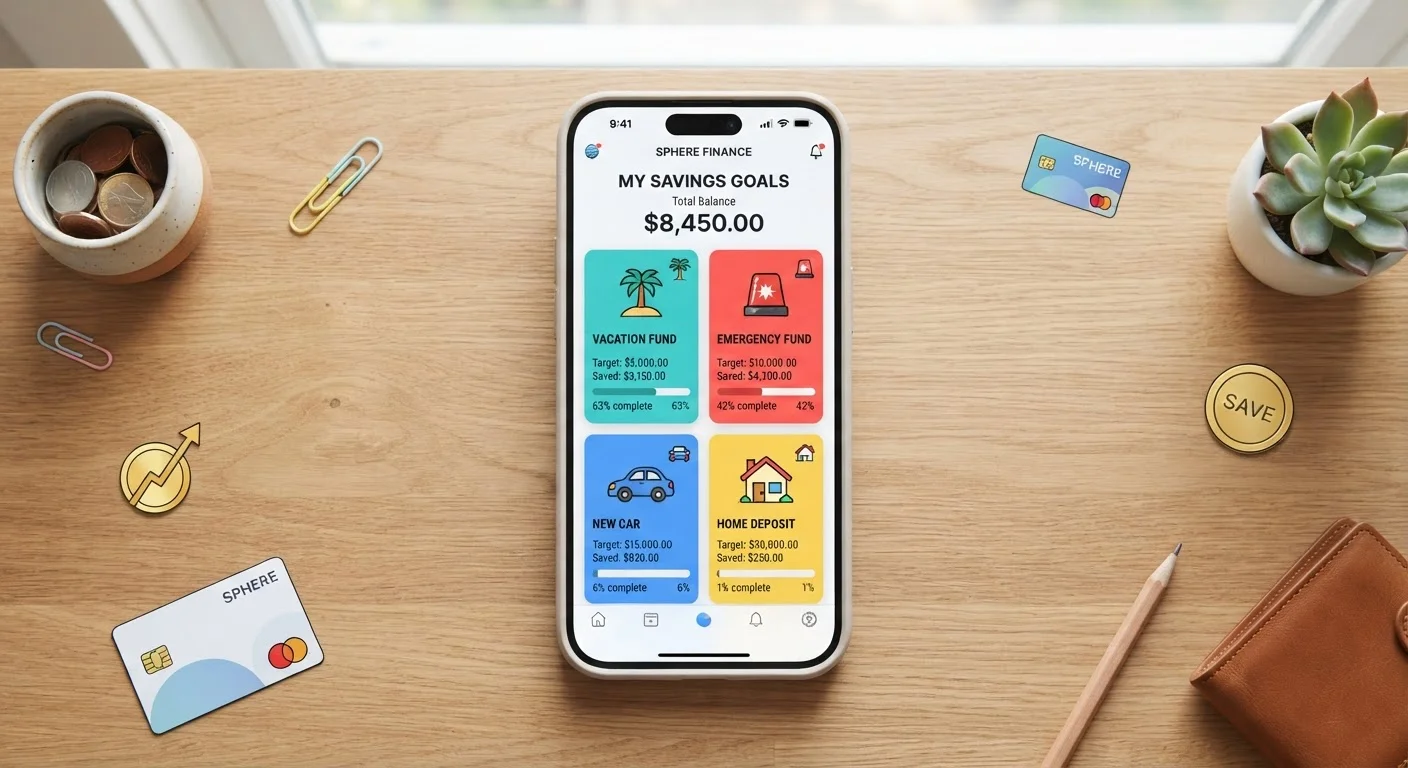
Photo: MoneyOnMind.net | Navigate Money With Clarity editorial
Key Takeaways
- Savings pots, vaults, and envelopes are different names for compartmentalised saving - the core logic is identical.
- The key differences lie in access restrictions, interest eligibility, and automation capabilities.
- Envelope budgeting applies the same concept to spending categories, not just saving goals.
- No single approach suits every financial situation - your choice should match your spending habits and goals.
- Always confirm whether compartmentalised funds are FDIC-insured under your account's total coverage limit.
Same Idea, Different Packaging
Walk through the features of several popular digital banks and you'll encounter a rotating cast of terms: pots, vaults, envelopes, buckets, spaces. The marketing differs, but the underlying concept is consistent - compartmentalised saving means dividing your money into named, purpose-driven sub-accounts so you always know what each dollar is for.
This approach has deep roots. The classic cash envelope system, popularised long before mobile banking, worked on the same principle: divide your paycheck into physical envelopes labeled "Rent," "Groceries," and "Fun Money," and spend only what's in each envelope. Digital tools have digitised that logic, though with meaningful structural differences that affect how well each one actually works for you. See how the original method translates today in Envelope Budgeting in a Cashless World.
Breaking Down Each Tool
Understanding the distinctions helps you choose - or combine - these tools more deliberately.
Savings Pots
Pots are the most common implementation. They're sub-sections of your main account, each with a custom label and target amount. Funds in a pot are typically still held within your primary account, meaning they remain accessible instantly. Most pots earn no separate interest rate - they share whatever rate (often zero) your checking account carries. The value is purely psychological and organizational: seeing "Emergency Fund: $1,200" clearly separated from your spendable balance makes you less likely to treat it as available cash.
Vaults
Vaults tend to add a friction layer. Some implementations require a deliberate unlock step, a waiting period before withdrawal, or a confirmation prompt to remove funds. This design is intentional - the goal is to make impulsive withdrawal slightly harder. Certain vaults also allow funds to earn interest, functioning more like a high-yield savings account attached to your checking account. The trade-off is reduced liquidity compared to a standard pot.
Digital Envelopes
Where pots and vaults are primarily saving tools, digital envelopes are often spending tools. You allocate a set amount to categories - dining, transport, subscriptions - and the app tracks spending against those allocations in real time. When the envelope empties, you've hit your limit. Some apps link envelopes directly to a debit card so purchases are automatically deducted from the relevant category. This is closest in spirit to the original cash envelope method.
| Savings Pots | Vaults | Digital Envelopes | |
|---|---|---|---|
| Primary purpose | Goal-based saving | Restricted goal saving | Spending category control |
| Withdrawal ease | Instant, no friction | Delayed or requires unlock | Immediate, category-tracked |
| Interest potential | Rarely earns interest | Sometimes earns interest | Typically none |
| Automation support | Common (scheduled transfers) | Common (scheduled transfers) | Varies by app |
| Behavioral benefit | Visual separation of goals | Built-in friction deters dipping | Real-time spending feedback |
| Best suited to | Multiple savings goals | Long-term or temptation-prone saving | Day-to-day budget management |
What Actually Determines Which Works for You
The right tool depends less on the feature set and more on your own behavioral tendencies.
Combine Tools for Better Results
If you struggle with impulse spending, a vault with a withdrawal delay is more effective than a pot you can empty in one tap. The friction is the feature, not a flaw.
If your challenge is tracking where money goes rather than saving it, digital envelopes paired with real-time spending notifications will give you better feedback than a passive pot.
If you're saving toward multiple distinct goals simultaneously - a vacation, a car down payment, and a six-month emergency fund - labeled pots give you visual clarity without overcomplicating your setup. For a deeper look at whether goal-specific saving outperforms a single savings pool, see Goal-Based Saving vs General Saving.
Automation amplifies any of these approaches. Scheduled transfers that move money into pots or vaults on payday remove the willpower requirement entirely. Setting up automated savings rules inside your app can make consistent saving nearly effortless.
Important Considerations Before You Rely on These Tools
A few practical cautions apply regardless of which approach you use.
Don't Assume Compartments Mean Coverage
FDIC coverage: Funds held in pots, vaults, or envelopes within a single bank account typically count toward your aggregate FDIC insurance limit at that institution (currently $250,000 per depositor, per bank, per ownership category). Sub-accounts don't multiply your coverage - they're still part of the same insured account. If your total deposits at one institution approach that ceiling, consult a financial adviser about how to structure your accounts.
Interest rates: Most pots earn nothing. If you're parking a meaningful emergency fund in a pot, verify whether it's accruing any interest. You may be better served by a separate high-yield savings account for longer-term reserves.
Finally, even well-designed tools fail if the underlying setup doesn't match your actual income and spending patterns. If you find your budgeting tool consistently underperforming, explore the common patterns that undermine these features before assuming the method doesn't work for you.
This article is for general informational and educational purposes only. It does not constitute personalised financial, banking, or investment advice. Banking features, insurance rules, and product availability vary by provider. Consult a licensed financial adviser before making decisions specific to your circumstances.
The content on this site is for informational purposes only and is not a substitute for professional advice. Always consult a qualified professional for guidance specific to your situation.