
Debt Consolidation vs. Debt Settlement: Understanding the Difference

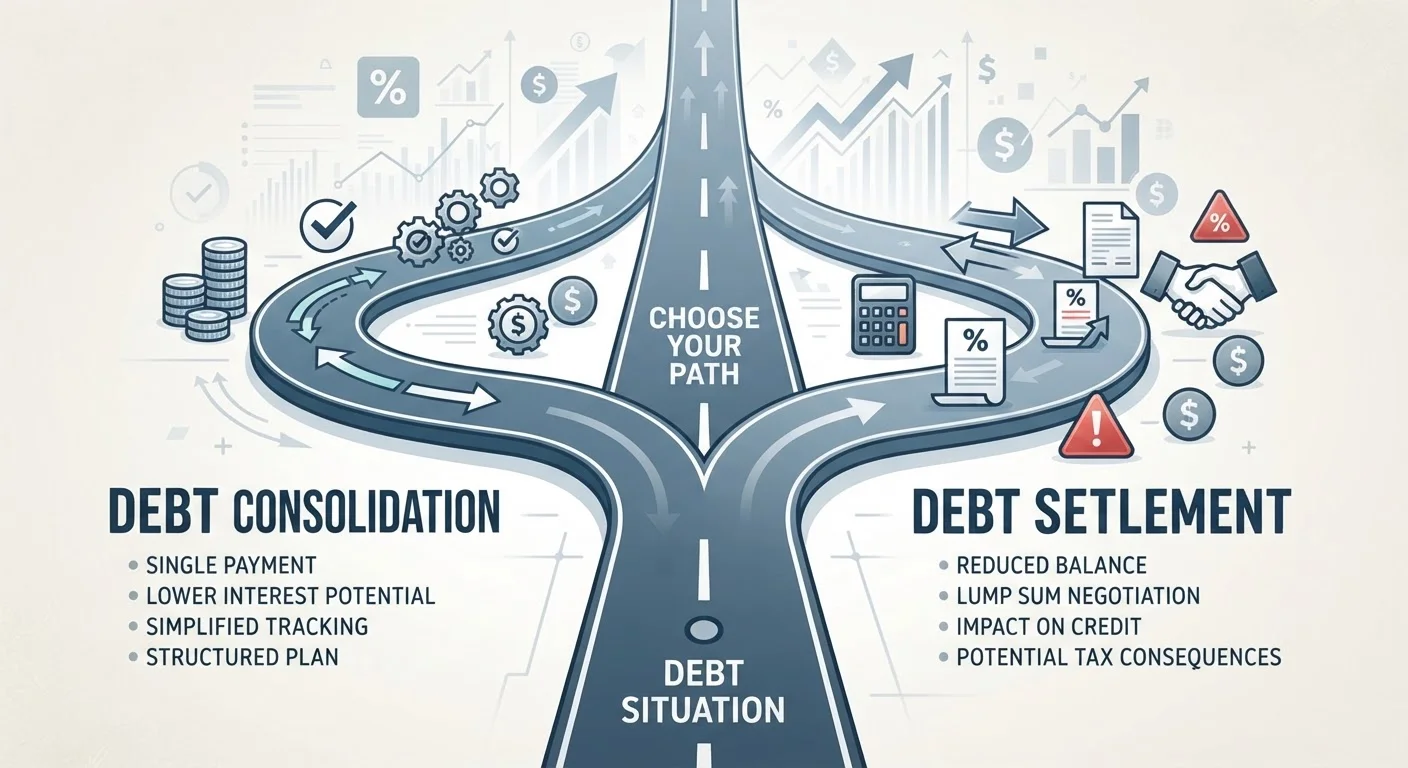
Photo: MoneyOnMind.net | Navigate Money With Clarity editorial
Key Takeaways
- Debt consolidation combines multiple debts into one loan, keeping the full balance intact but simplifying repayment.
- Debt settlement negotiates with creditors to accept less than you owe, but typically causes significant credit damage.
- Consolidation generally preserves your credit standing; settlement can lower your score by 100 points or more.
- Settlement may result in forgiven debt being treated as taxable income by the IRS.
- Neither option eliminates the underlying cause of debt - a budget and repayment plan remain essential.
- Always consult a licensed financial counselor or attorney before pursuing either strategy.
What Each Strategy Actually Does
When debt feels unmanageable, two terms tend to surface quickly: debt consolidation and debt settlement. They sound similar, but they work in fundamentally different ways - and choosing the wrong one for your situation can create more problems than it solves.
Debt consolidation means taking out a new loan or enrolling in a structured repayment program to combine multiple existing debts into a single monthly payment. You still repay the full amount you owe. The goal is simplification and, ideally, a lower interest rate. Common vehicles include personal loans, balance transfer credit cards, and nonprofit debt management plans (DMPs). For a deeper look at how this changes your monthly obligations, see what consolidation does to your repayments.
Debt settlement, by contrast, involves negotiating with creditors to accept a lump-sum payment that is less than the full balance owed - essentially agreeing to cancel the remainder. This can be done directly with creditors or through a third-party settlement company. It does not mean your debt simply disappears; it means the creditor agrees to write off part of what you owe, often after months of non-payment.
| Criterion | Debt Consolidation | Debt Settlement |
|---|---|---|
| Amount repaid | Full balance owed | Less than full balance |
| Credit score impact | Neutral to positive | Significant negative impact |
| Credit report duration | On-time payments improve history | Settled status stays up to 7 years |
| Tax consequences | Generally none | Forgiven debt may be taxable income |
| Requires income stability | Yes - consistent payments needed | Less critical during negotiation |
| Typical fees | Loan origination or DMP fees | 15-25% of enrolled debt (if using a company) |
| Outcome certainty | Predictable if payments are made | Not guaranteed - creditors can refuse |
| Best suited for | Multiple debts, manageable total | Severe hardship, unmanageable total |
The Real Costs and Trade-Offs
Understanding the mechanics is only half the picture. The real decision comes down to what each approach costs you - financially and otherwise.
With consolidation, you typically preserve your credit score. If you make on-time payments on the new consolidated loan, your score can actually improve over time. The main risks are extending your repayment period (which may increase total interest paid) or using a secured loan, such as a home equity loan, to pay unsecured debt - which puts your home at risk. Our article on secured vs. unsecured debt explains why that distinction matters significantly.
Debt settlement carries steeper consequences. Because most settlement programs require you to stop paying creditors while funds accumulate in a dedicated account, your credit score will likely drop substantially - sometimes by 100 points or more. Settled accounts remain on your credit report for up to seven years. There is also a tax consideration: the IRS generally treats forgiven debt as taxable income, meaning a $5,000 reduction in what you owe could increase your tax bill.
7 years
Credit report impact of settled debt
Settled accounts are typically reported as negative items on a credit report for up to seven years under the Fair Credit Reporting Act.
15-25%
Typical debt settlement company fees
The Consumer Financial Protection Bureau notes that for-profit settlement companies often charge fees ranging from 15 to 25 percent of the enrolled debt amount.
~$0.48
Average cents-on-dollar settlement outcome
Research from the American Fair Credit Council suggests settled debts are often resolved at roughly 48 cents per dollar owed, though results vary widely.
Settlement companies may also charge fees of 15-25% of the enrolled debt, and creditors are under no legal obligation to negotiate. Results are not guaranteed.
This article is for general informational purposes only and does not constitute personalized financial, legal, or tax advice. Outcomes vary widely depending on individual circumstances, creditor policies, and applicable law. Consult a licensed financial counselor, certified credit counselor, or attorney before making decisions about your debt.
How to Think Through Your Decision
The right choice depends on the specifics of your financial situation - not a general preference. Ask yourself these questions before acting:
- Can I realistically repay what I owe? If yes, consolidation is worth exploring. If the total is genuinely beyond your reach, settlement may be the more honest path.
- Is my income stable? Consolidation requires consistent monthly payments. Without steady income, it may not be sustainable.
- What is my credit standing now? If your credit is still relatively intact, settlement's damage may close doors - for housing, employment, or future borrowing - that consolidation would leave open.
- Am I dealing with secured or unsecured debt? Settlement is rarely viable for secured debts like mortgages or auto loans, where the lender holds collateral.
Before pursuing either option independently, consider speaking with a nonprofit credit counseling agency accredited by the National Foundation for Credit Counseling (NFCC). These organizations can help you map your full debt picture and evaluate options without the conflicts of interest that some for-profit settlement companies carry.
For a comprehensive framework on tackling debt from beginning to end, our complete guide to paying off debt walks through every stage - from understanding your balances to staying on track long-term. You can also explore what debt management really involves if you want grounding in the broader concept before committing to any strategy.
Watch Out for Settlement Company Red Flags
The content on this site is for informational purposes only and is not a substitute for professional advice. Always consult a qualified professional for guidance specific to your situation.