
The Real Cost of Minimum Payments on a Credit Card

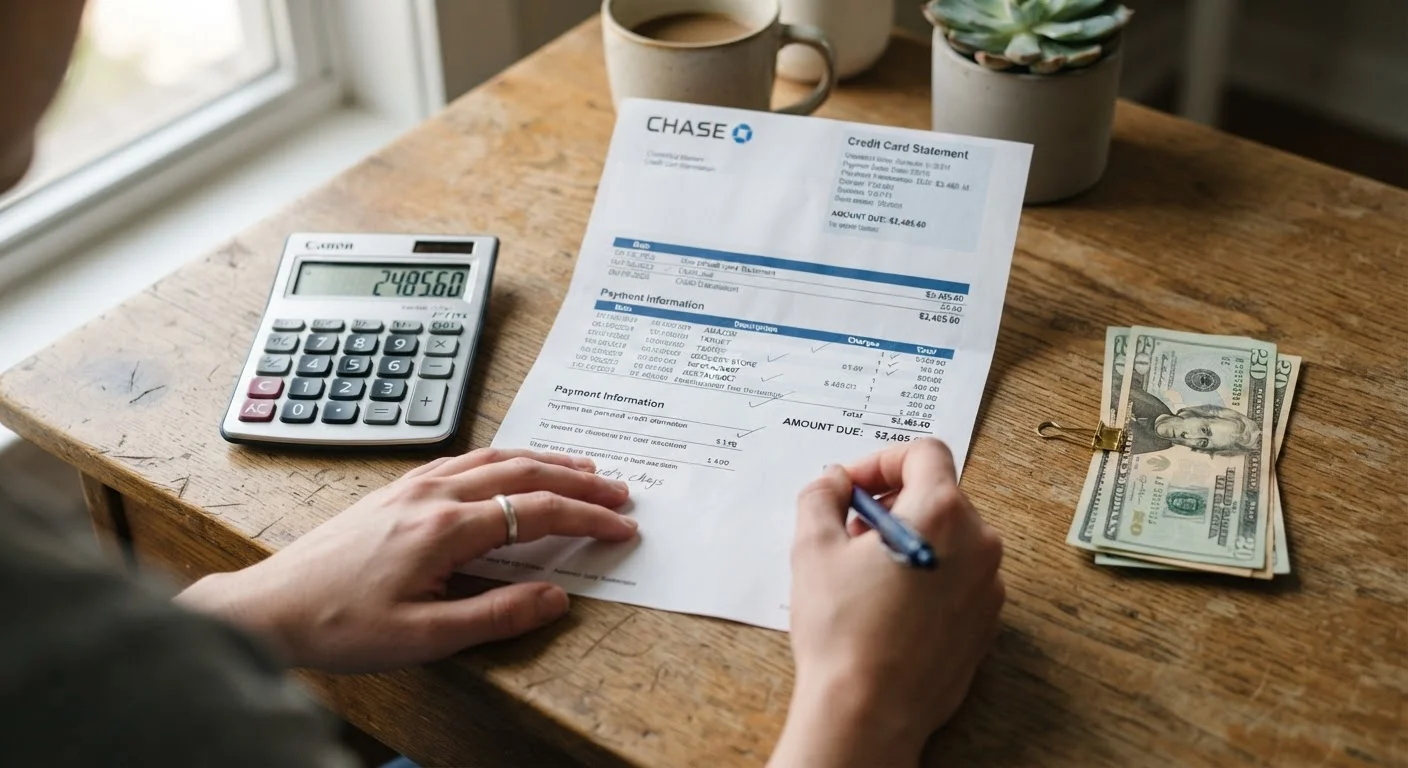
Photo: MoneyOnMind.net | Navigate Money With Clarity editorial
Key Takeaways
- Making only minimum payments means most of your payment covers interest, not the principal balance.
- A $3,000 credit card balance can take over a decade to pay off on minimums alone.
- The total interest paid often exceeds the original balance you borrowed.
- Even modest increases above the minimum dramatically shorten repayment time.
- Carrying high credit card balances can negatively affect your credit score over time.
Why Minimum Payments Feel Safe But Aren't
When a credit card bill arrives, the minimum payment figure is prominently displayed - and for good reason. It is the lowest barrier to keeping your account active. For someone stretched thin at the end of the month, paying $45 instead of $1,200 feels like a reasonable compromise. The problem is that this "manageable" choice carries a steep hidden price.
Credit card interest is charged as an Annual Percentage Rate (APR) - a yearly rate divided and applied monthly to your remaining balance. When you only pay the minimum, you leave a large balance in place, and that balance earns interest every single month. This is compounding working against you: interest accrues on previously unpaid interest, steadily inflating the total amount you owe.
See how this pattern connects to how small balances become big problems over time.
20%+
Average credit card APR in the US
According to Federal Reserve data, average credit card interest rates have risen significantly in recent years, making carrying balances increasingly expensive.
14+ years
Time to repay $3,000 on minimums at 20% APR
This estimate is based on a standard 2% minimum payment formula - illustrating how slowly minimum payments reduce a balance.
$3,000+
Potential interest on a $3,000 balance
On a long minimum-payment timeline, total interest paid can match or exceed the original balance borrowed.
The Math Behind the Trap
Consider a concrete scenario: a $3,000 balance on a card with a 20% APR. If your minimum payment is 2% of the balance (with a $25 floor), your first payment might be around $60. That sounds manageable - but roughly $50 of it goes toward interest, leaving only $10 applied to the actual debt.
As your balance slowly falls, so does your minimum payment, which means you pay less and less each month - stretching the repayment timeline further. On this trajectory, paying off that $3,000 balance could take over 14 years and cost more than $3,000 in interest alone - meaning you effectively pay double the original amount.
This is the core of why paying the minimum each month keeps you trapped. The repayment window keeps extending because the minimum shrinks with the balance, never applying enough force to break the cycle.
“The minimum payment on a credit card is designed to keep you in debt longer - it is not designed to help you get out of debt faster.”
— Consumer Financial Protection Bureau, U.S. federal agency overseeing consumer financial products and education
What You Can Do Instead
The good news is that you don't need to pay off your entire balance at once to make a meaningful difference. Even modest increases above the minimum can significantly accelerate repayment.
- Fix your payment amount: Rather than paying a percentage of the balance each month, commit to a fixed dollar amount - say, the first minimum payment figure - and keep paying that same amount even as the balance drops.
- Use a debt repayment strategy: The debt avalanche method targets the highest-interest balance first, minimizing total interest paid. The debt snowball method targets the smallest balance first for psychological momentum. Both are more effective than minimums alone. Explore practical debt repayment strategies to find the approach that suits your situation.
- Make bi-weekly payments: Splitting your monthly payment in half and paying every two weeks results in one extra full payment per year, reducing interest accumulation.
Start With Just $25 More Per Month
Before settling on a strategy, it's also worth understanding how your debt behavior affects your broader financial picture. Carrying high balances affects your credit utilization ratio, which is a key factor in your credit score - and a lower score creates its own long-term costs, as explored in the long-term cost of a low credit score.
This article is for general informational purposes only and does not constitute personalized financial or legal advice. Credit card terms, interest rates, and minimum payment formulas vary by issuer. Consult a licensed financial adviser to discuss strategies appropriate for your individual circumstances.
Frequently Asked Questions
The content on this site is for informational purposes only and is not a substitute for professional advice. Always consult a qualified professional for guidance specific to your situation.