
Health Insurance Plan Types Compared: HMO, PPO, EPO, and HDHP

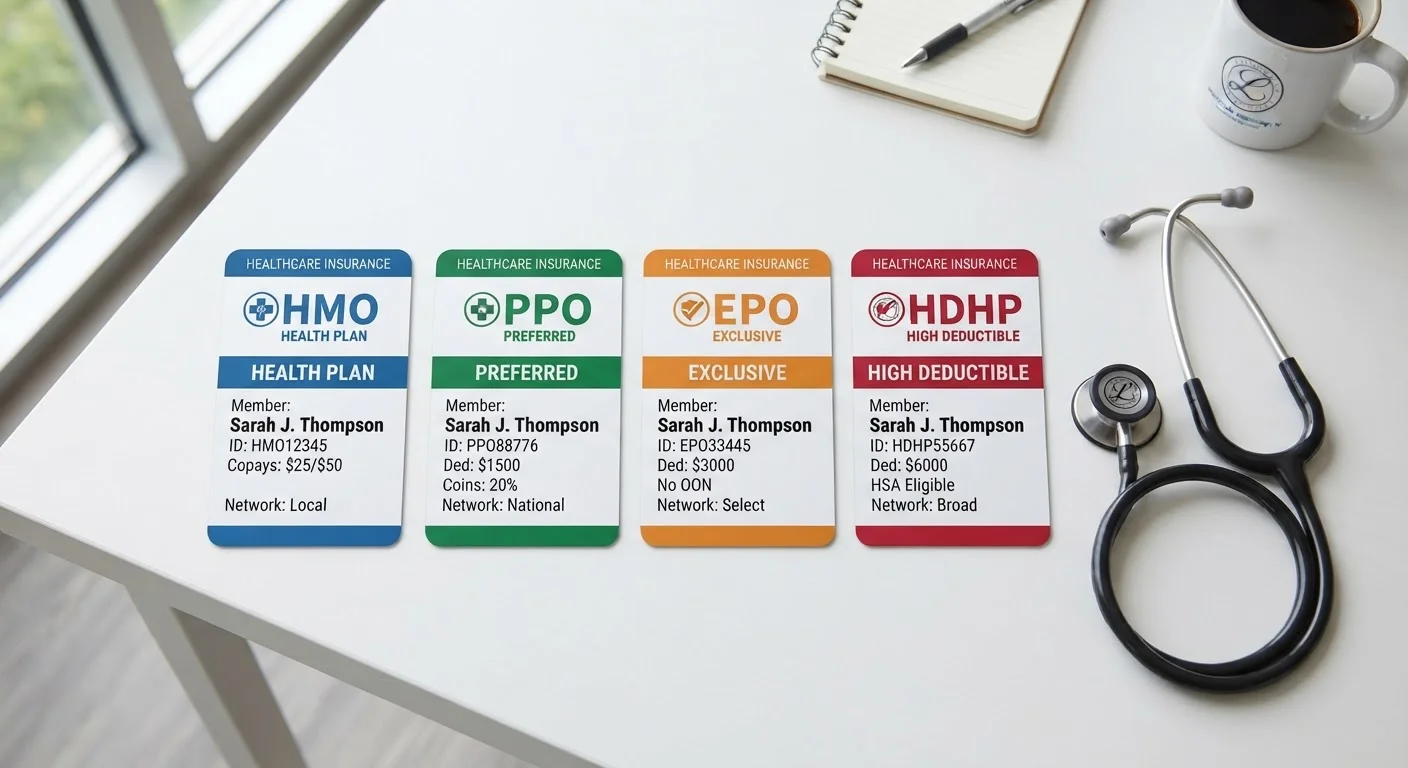
Photo: MoneyOnMind.net | Navigate Money With Clarity editorial
Key Takeaways
- HMOs offer the lowest premiums but require a primary care physician and strict network use.
- PPOs give the most flexibility to see any provider, but typically come with higher monthly costs.
- EPOs combine network restrictions with no referral requirement - a middle-ground option.
- HDHPs pair low premiums with high deductibles and allow access to a Health Savings Account (HSA).
- Your expected healthcare usage and budget are the two most important factors when choosing a plan type.
Why Plan Type Matters Before You Compare Premiums
When you enroll in health insurance - whether through an employer, a marketplace, or Medicaid - you're not just choosing a price. You're choosing a structure that determines which doctors you can see, whether you need permission to visit a specialist, and how costs are split between you and your insurer. Getting this wrong can mean unexpected out-of-pocket bills or losing access to a provider you rely on.
Before diving into plan differences, make sure you understand the underlying cost terminology. Premiums, deductibles, and copays each play a distinct role in your total annual healthcare spend - and plan types affect all three differently. This article focuses on the structural differences between the four most common plan types in the US market.
The Four Plan Types at a Glance
Each plan type represents a different trade-off between cost, convenience, and provider access. Here's how they compare across the criteria that matter most to everyday enrollees.
| HMO | PPO | EPO | HDHP | |
|---|---|---|---|---|
| Monthly Premium | Lowest | Highest | Moderate | Low |
| Deductible Level | Low to moderate | Moderate | Moderate | High (IRS-defined minimum) |
| Requires PCP | Yes | No | No | Varies by plan |
| Specialist Referral Needed | Yes | No | No | Varies by plan |
| Out-of-Network Coverage | Emergency only | Yes, at higher cost | Emergency only | Varies by plan |
| HSA Eligible | No | No | No | Yes |
| Best For | Budget-focused, routine care | Frequent specialist users | Direct access, network-bound | Healthy, HSA savers |
The table above gives a quick reference, but the real decision hinges on your individual health habits and financial priorities - explored in the sections below.
HMO and EPO: Network-Restricted Plans
A Health Maintenance Organization (HMO) requires you to choose a primary care physician (PCP) who acts as your healthcare coordinator. To see a specialist, you generally need a referral from your PCP. Care must be received within the plan's provider network, except in genuine emergencies. In exchange for these restrictions, HMOs typically carry the lowest monthly premiums and predictable copays.
An Exclusive Provider Organization (EPO) removes the referral requirement - you can go directly to a specialist - but still locks you into the plan's network. Out-of-network care is almost never covered outside of emergencies. EPOs often sit between HMOs and PPOs on price.
Check the Network Before You Enroll
Both plan types work best when you live in a metro area with a robust local network and don't expect to travel frequently for care. If your preferred doctor isn't in-network, these plans can become a significant inconvenience.
PPO and HDHP: Flexibility and Cost Trade-Offs
A Preferred Provider Organization (PPO) is the most flexible plan type. You can see in-network or out-of-network providers without a referral, though out-of-network care costs more. PPOs are well-suited for people managing ongoing conditions who see multiple specialists, or anyone who values freedom in choosing providers. That flexibility typically comes with higher premiums and more complex cost-sharing.
A High-Deductible Health Plan (HDHP) is defined by the IRS: in 2024, a qualifying HDHP must have a minimum deductible of $1,600 for individuals or $3,200 for families. The major upside is a lower monthly premium - and HDHP enrollees are eligible to open a Health Savings Account (HSA), a tax-advantaged account you can use to pay qualified medical expenses. HDHPs come with meaningful trade-offs that deserve careful review before enrolling.
HDHPs can expose you to significant costs if you face a major health event early in the year before your deductible is met. They tend to work best for generally healthy individuals who can afford to fund an HSA and carry some financial risk.
How to Choose the Right Plan for Your Situation
Start by honestly assessing two things: how often you use healthcare, and what you can absorb financially in a bad year. If you rarely see a doctor and have an emergency fund, an HDHP with an HSA may save you money over time. If you manage a chronic condition or see specialists regularly, a PPO's higher premium may be offset by lower per-visit costs and wider access.
For a broader view of how health insurance fits into your overall protection strategy, see the four core insurance types every young professional should understand. You can also explore scenarios where each coverage type applies - and where it doesn't to pressure-test your thinking.
Coverage details, network breadth, and cost structures vary significantly by insurer and region. Always review the actual plan documents - specifically the Summary of Benefits and Coverage (SBC) - and consult a licensed insurance agent or broker for guidance tailored to your situation.
This article provides general educational information about health insurance plan types and is not personalised insurance, financial, or legal advice. Coverage terms, costs, and network details vary by provider and state. Consult a licensed insurance professional before making enrollment decisions.
The content on this site is for informational purposes only and is not a substitute for professional advice. Always consult a qualified professional for guidance specific to your situation.