
The Pros and Cons of Choosing a High-Deductible Insurance Plan

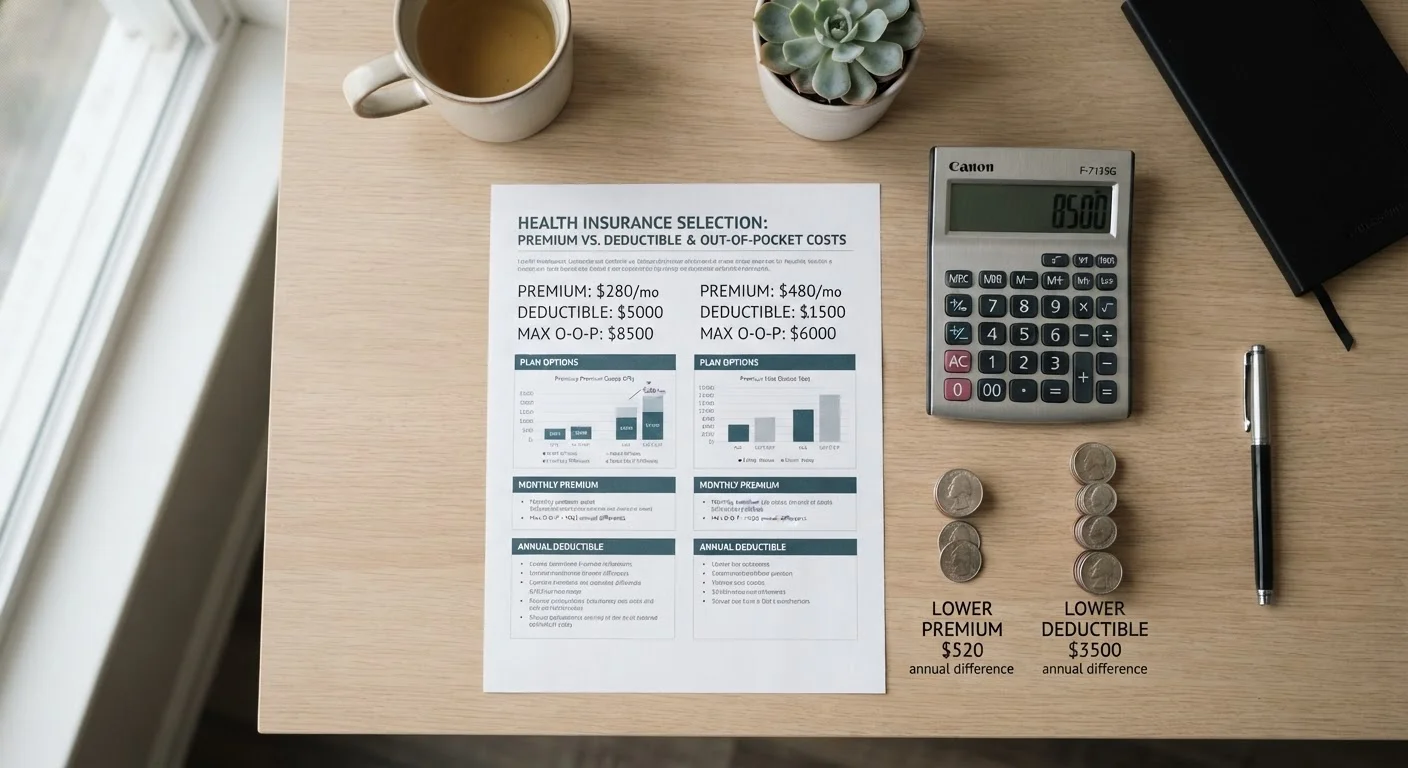
Photo: MoneyOnMind.net | Navigate Money With Clarity editorial
Key Takeaways
- A high-deductible plan (HDHP) charges lower monthly premiums but requires you to pay more out-of-pocket before coverage kicks in.
- HDHPs are generally paired with Health Savings Accounts (HSAs), which offer meaningful tax advantages.
- This trade-off favors healthy, financially prepared individuals; it carries real risk for frequent or unpredictable healthcare users.
- Always compare your total potential out-of-pocket cost, not just the monthly premium, before choosing a plan.
Lower monthly premiums reduce fixed expenses
Paying less each month frees up cash flow for other financial goals, including building an emergency fund or contributing to savings.
HSA eligibility provides a triple tax advantage
Contributions are pre-tax, growth is tax-free, and withdrawals for qualified medical expenses are also tax-free - a benefit unavailable with standard plans.
Encourages cost-conscious healthcare decisions
Because you bear more initial cost, you're more likely to compare prices and avoid unnecessary services, which can reduce overall spending.
Unused HSA funds accumulate and can be invested
Unlike Flexible Spending Accounts (FSAs), HSA balances roll over indefinitely and can be invested in mutual funds or other instruments after a threshold balance is reached.
High out-of-pocket costs before coverage activates
Until you meet the deductible, you're paying full price for most non-preventive services - a significant burden if you face an unexpected illness or injury.
Risky for those with chronic conditions or families
People who regularly see specialists, take ongoing medications, or have children with frequent medical needs may consistently hit their deductible, eliminating any premium savings.
Can discourage necessary care
Research suggests that high cost-sharing leads some people to delay or skip care, which can worsen health outcomes and lead to higher costs down the road.
Requires financial discipline and emergency reserves
Without savings to cover the deductible, a single medical event can push you into debt - negating the lower-premium benefit entirely.
What Makes a Plan 'High-Deductible'?
A deductible is the amount you pay for covered medical services before your insurer starts sharing costs. A High-Deductible Health Plan (HDHP) is any plan that meets the IRS minimum thresholds - for 2024, that means at least $1,600 for an individual or $3,200 for a family. In exchange for that higher financial threshold, the insurer charges you a lower monthly premium (the fixed amount you pay each month to keep your coverage active).
Understanding how these two figures work together is foundational. See our guide to premiums and deductibles for a deeper breakdown of that trade-off. HDHPs are also one of four major plan structures - if you want to see how they compare to HMOs, PPOs, and EPOs, our health plan comparison covers the differences clearly.
The Advantages of a High-Deductible Plan
For the right person, an HDHP offers real financial benefits that go beyond just a smaller premium bill each month.
Lower monthly premiums reduce fixed expenses
Paying less each month frees up cash flow for other financial goals, including building an emergency fund or contributing to savings.
HSA eligibility provides a triple tax advantage
Contributions are pre-tax, growth is tax-free, and withdrawals for qualified medical expenses are also tax-free - a benefit unavailable with standard plans.
Encourages cost-conscious healthcare decisions
Because you bear more initial cost, you're more likely to compare prices and avoid unnecessary services, which can reduce overall spending.
Unused HSA funds accumulate and can be invested
Unlike Flexible Spending Accounts (FSAs), HSA balances roll over indefinitely and can be invested in mutual funds or other instruments after a threshold balance is reached.
$1,600
Minimum individual HDHP deductible (2024 IRS threshold)
The IRS sets minimum deductible thresholds annually; plans below these limits do not qualify for HSA pairing.
$4,150
Maximum HSA contribution for individuals (2024)
The IRS also caps how much you can contribute to an HSA each year; the 2024 limit for self-only coverage is $4,150.
One often-overlooked advantage is HSA eligibility. Only HDHP enrollees can open a Health Savings Account, which lets you contribute pre-tax dollars to pay for qualified medical expenses. Unused funds roll over year to year and can even be invested - making an HSA a secondary retirement savings vehicle. This connects to the broader logic explored in our article on holding investments inside a retirement account.
The Disadvantages of a High-Deductible Plan
The savings on your premium can evaporate quickly if your health needs are unpredictable or frequent. Before enrolling, it's worth understanding the real downside risks.
High out-of-pocket costs before coverage activates
Until you meet the deductible, you're paying full price for most non-preventive services - a significant burden if you face an unexpected illness or injury.
Risky for those with chronic conditions or families
People who regularly see specialists, take ongoing medications, or have children with frequent medical needs may consistently hit their deductible, eliminating any premium savings.
Can discourage necessary care
Research suggests that high cost-sharing leads some people to delay or skip care, which can worsen health outcomes and lead to higher costs down the road.
Requires financial discipline and emergency reserves
Without savings to cover the deductible, a single medical event can push you into debt - negating the lower-premium benefit entirely.
It's also worth noting that a low premium isn't the same as low cost. Our article on why cheap coverage can cost more than it saves examines how underinsuring can leave you exposed in ways that compound over time - a dynamic that applies directly to HDHPs when the deductible goes unmet.
How to Decide If an HDHP Is Right for You
The central question is not "Which plan has the lowest premium?" but rather "What is my realistic total annual cost under each option?"
Don't Compare Premiums Alone
Run this calculation: take the annual premium savings of the HDHP over a comparable low-deductible plan, then subtract the difference in deductibles. If you're likely to reach your deductible, the savings may disappear. If you're healthy and rarely seek care, you may pocket the difference. Also consider whether carrying a large deductible would force you to delay care or take on debt - if so, a lower-deductible plan may protect your finances better. If you're managing existing debt obligations, this decision intersects with the kind of trade-offs discussed in our debt management overview.
This article is for general informational purposes only and does not constitute personalized financial, insurance, or legal advice. Coverage terms, deductible thresholds, and HSA contribution limits vary by provider and change annually. Always read your policy documents carefully and consult a licensed insurance agent or financial adviser before making coverage decisions.
The content on this site is for informational purposes only and is not a substitute for professional advice. Always consult a qualified professional for guidance specific to your situation.