
The Relationship Between Premiums and Deductibles

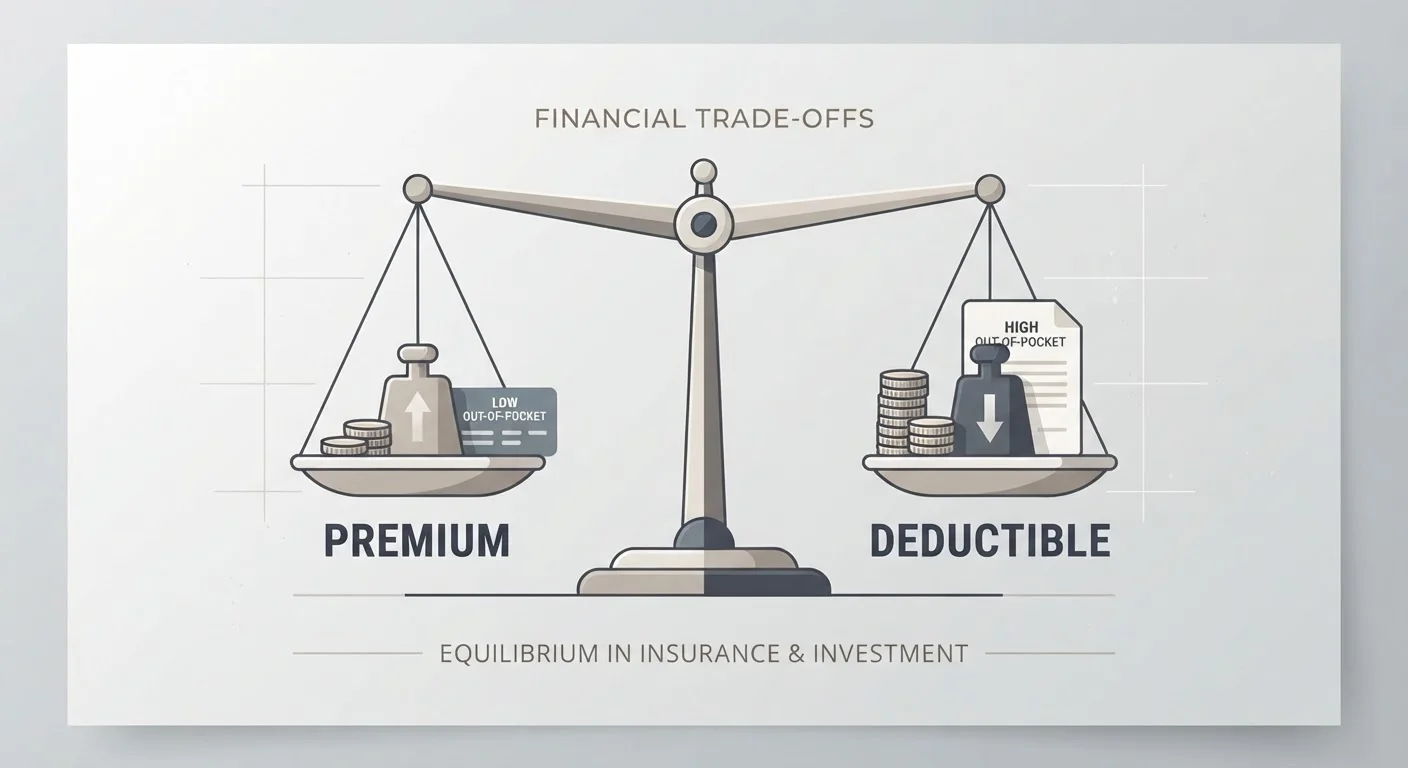
Photo: MoneyOnMind.net | Navigate Money With Clarity editorial
Key Takeaways
- Premiums are the regular payments you make to maintain an active insurance policy.
- Deductibles are the amount you pay out of pocket before your insurer covers the rest.
- Higher deductibles generally result in lower monthly premiums, and vice versa.
- The right balance depends on your financial cushion and how often you expect to file claims.
- Both figures must be weighed together - focusing on just one can lead to costly surprises.
What Each Term Actually Means
When you buy an insurance policy, two numbers shape most of your financial relationship with your insurer: the premium and the deductible. They're often mentioned together, but they work in opposite directions.
Your premium is what you pay to keep your policy active - typically monthly or annually - regardless of whether you ever file a claim. Think of it as a membership fee for access to coverage.
Your deductible is the amount you agree to pay out of pocket when you do file a claim, before your insurer steps in. For example, if your home insurance policy has a $1,500 deductible and a covered event causes $6,000 in damage, you pay the first $1,500 and your insurer covers the remaining $4,500.
These two figures are set at the time you purchase or renew your policy - and how you choose them has real financial consequences.
| Criterion | Premium | Deductible |
|---|---|---|
| When you pay | Regularly (monthly or annually) | Only when you file a claim |
| What it represents | Cost of maintaining coverage | Your share of a claim before insurer pays |
| Effect of choosing higher amount | More expensive ongoing cost | Lower monthly premium |
| Effect of choosing lower amount | Less expensive ongoing cost | Higher monthly premium |
| Predictability | Fixed and predictable | Variable - only triggered by claims |
| Risk bearer | Insurer collects to cover their risk | You absorb this portion of any loss |
The Inverse Relationship: Why They Move in Opposite Directions
Premiums and deductibles have an inverse relationship: as one rises, the other typically falls. This isn't arbitrary - it reflects how risk is shared between you and your insurer.
When you choose a high deductible, you're telling your insurer you'll absorb more of the initial cost in a claim. Because the insurer's financial exposure is lower, they charge you less in premiums. When you choose a low deductible, the insurer takes on more risk immediately, and they charge you more each month to compensate.
$1,644
Average annual car insurance premium (US)
According to the National Association of Insurance Commissioners, average auto insurance costs vary widely by state and coverage level.
$1,000-$2,000
Common auto insurance deductible range
Most standard auto policies offer deductible options in this range, with higher options available for those seeking lower premiums.
This trade-off mirrors a broader principle in financial decision-making. Much like the relationship between risk and return in investing, accepting more short-term exposure in exchange for lower ongoing costs is a calculated bet - not a guaranteed win.
The critical question isn't which number is lower - it's which combination makes sense given your financial situation and the likelihood you'll need to file a claim.
How to Think About the Trade-Off
Choosing between a higher or lower deductible isn't just about minimizing monthly costs. Here's a practical framework for thinking it through:
- Assess your emergency fund. A high-deductible plan only works if you can actually cover that deductible when a claim arises. If a $3,000 deductible would wipe out your savings, the lower premium may not be worth the financial risk.
- Estimate your claim likelihood. If you're insuring a newer car, live in a low-risk area, or are generally healthy, you may rarely file claims - making a higher deductible and lower premium a sensible choice.
- Do the break-even math. Calculate the annual premium difference between a high- and low-deductible plan. Divide the deductible difference by the annual premium savings. That tells you how many claim-free years you need before the high-deductible plan pays off.
For a deeper look at when high-deductible plans make financial sense - and when they don't - see our guide to the pros and cons of high-deductible insurance plans.
Deductibles Don't Apply to Every Claim
This article provides general educational information about insurance concepts and is not personalized financial, insurance, or legal advice. Coverage terms, deductible structures, and premium calculations vary significantly by insurer, policy type, and state. Always read your policy documents carefully and consult a licensed insurance agent or financial adviser before making coverage decisions.
The content on this site is for informational purposes only and is not a substitute for professional advice. Always consult a qualified professional for guidance specific to your situation.