
Actual Cash Value vs. Replacement Cost Coverage

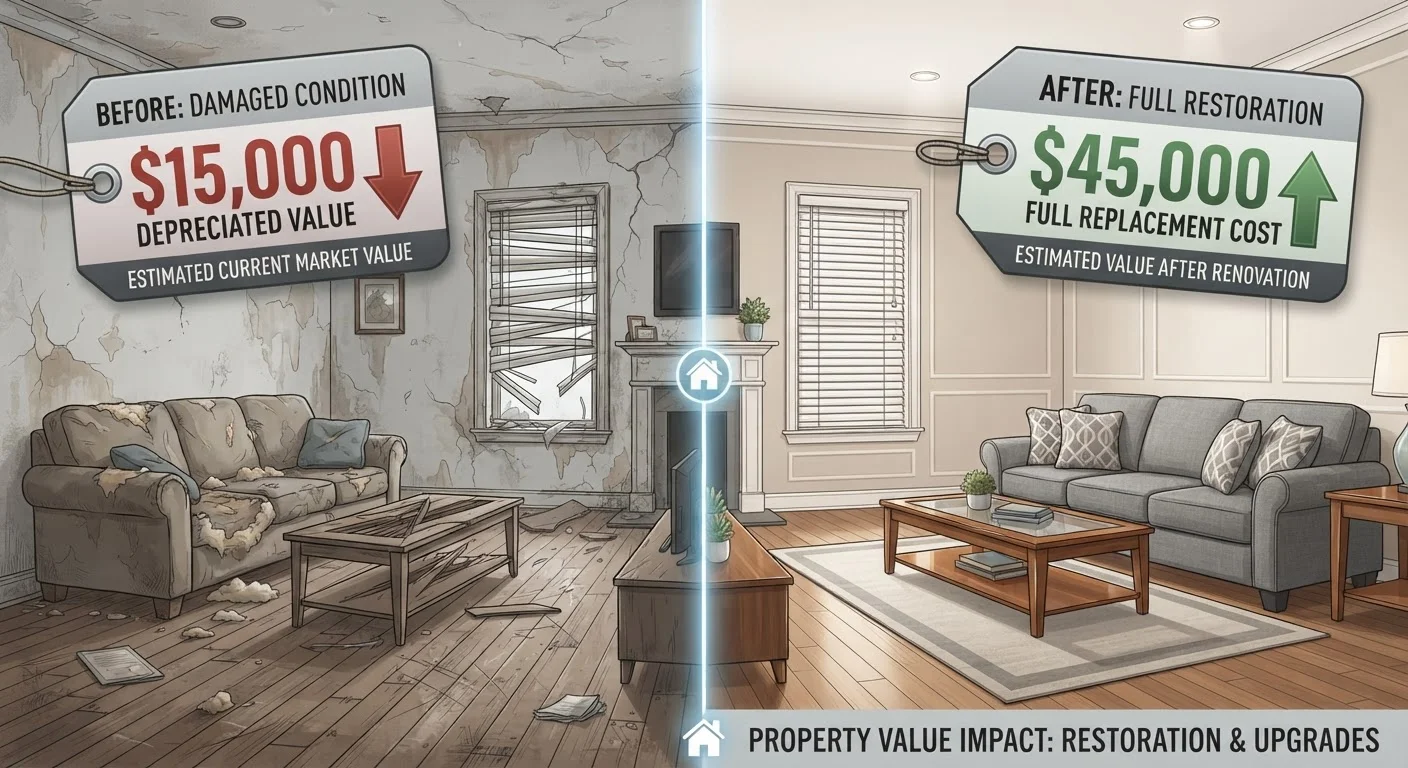
Photo: MoneyOnMind.net | Navigate Money With Clarity editorial
Key Takeaways
- ACV pays what your damaged property is worth today - after depreciation is subtracted.
- RCV pays what it actually costs to repair or replace the item with a new equivalent.
- The premium difference between ACV and RCV policies can be significant, but so can the payout gap.
- Depreciation on older items like roofs or appliances can reduce an ACV check by thousands of dollars.
- Always confirm which payout method applies to each category of property in your policy documents.
What These Two Terms Actually Mean
When you file a property insurance claim, the settlement you receive is calculated using one of two methods: Actual Cash Value (ACV) or Replacement Cost Value (RCV). Understanding the difference isn't just useful - it can mean thousands of dollars in a real loss scenario.
Actual Cash Value is the depreciated worth of your property at the time of the loss. Insurers calculate it roughly as: replacement cost minus depreciation. Depreciation accounts for age, wear, and obsolescence. A roof that cost $15,000 to install ten years ago may have an ACV of only $7,500 today if it's considered halfway through its useful life.
Replacement Cost Value pays what it actually costs to repair or replace the damaged item with a new equivalent - no depreciation deducted. Using the same example, you'd receive the full current cost to install a comparable new roof, which may now be $18,000 due to material price increases.
Before going further, it helps to understand related claims vocabulary. See our guide to insurance terms you'll encounter when filing a claim for definitions of terms like depreciation, proof of loss, and settlement.
| Criterion | Actual Cash Value (ACV) | Replacement Cost Value (RCV) |
|---|---|---|
| Payout basis | Depreciated value at time of loss | Current cost to repair or replace |
| Depreciation deducted | Yes - reduces settlement | No - full replacement covered |
| Premium cost | Generally lower | Generally higher |
| Out-of-pocket risk after claim | Higher - policyholder covers gap | Lower - insurer covers full cost |
| Common on older property | Yes, often applied automatically | Less common; may be excluded |
| Two-stage payout possible | No - single settlement | Yes - ACV first, depreciation released after repairs |
| Best for | Cost-conscious buyers with savings buffer | Those prioritising full restoration |
How Depreciation Works Against You in ACV Claims
Depreciation is the core mechanism that separates these two payout methods in practice. Insurers use depreciation schedules - tables that assign useful lifespans to categories of property - to calculate how much value an item has lost. Roofing materials, HVAC systems, appliances, flooring, and personal electronics all depreciate at different rates.
For example, if your insurer's schedule assigns carpet a 10-year lifespan and your carpet is 7 years old at the time of a water damage claim, you may only receive 30% of its replacement cost under an ACV policy. On $5,000 of damaged carpet, that's a $1,500 check - leaving you $3,500 short of restoring it.
~30%
Typical ACV payout shortfall on aged roofing
Industry estimates suggest ACV settlements on roofs over 10 years old commonly pay 30-50% less than current replacement costs, depending on the depreciation schedule applied.
15-20%
Average RCV premium increase over ACV
According to general industry guidance, upgrading from ACV to RCV coverage on a homeowners policy typically raises premiums by roughly 15-20%, though this varies by insurer and property.
This gap compounds quickly when multiple items are damaged simultaneously, as in a fire or severe storm. Policyholders who choose ACV coverage primarily for its lower premiums sometimes discover mid-claim that their out-of-pocket exposure is far larger than they anticipated. That dynamic is explored in more depth in our piece on why cheap coverage can cost more than it saves.
Key Differences at a Glance and What to Check in Your Policy
Your declarations page will typically state which valuation method applies to your dwelling, other structures, and personal property - but not always consistently. Some policies apply RCV to the structure and ACV to personal property. Others apply ACV to roofs regardless of the rest of the policy. Reading the fine print matters enormously.
Key questions to ask when reviewing your policy:
- Does the same valuation method apply to my dwelling, detached structures, and personal property?
- Are there specific exclusions - such as roofs over a certain age - where ACV automatically applies even on an RCV policy?
- If my policy is RCV, does it pay out the full amount immediately, or does it withhold the recoverable depreciation until repairs are completed?
That last point is significant. Many RCV policies operate in two stages: they first issue an ACV payment, then release the withheld depreciation (called recoverable depreciation) once you submit proof that repairs were made. If you don't complete repairs, you may never receive the second check.
Recoverable Depreciation: Don't Leave It on the Table
Once you understand your coverage type, you'll also want to think carefully about when and whether to file. Our comparison of claiming too often versus absorbing small losses out of pocket walks through that decision. And if the claims process itself feels daunting, see our piece on filing a claim yourself versus using a public adjuster to understand your options.
This article provides general insurance education and is not personalized advice. Coverage terms, depreciation schedules, and payout methods vary by insurer and policy. Always read your actual policy documents and consult a licensed insurance agent or advisor for guidance specific to your situation.
The content on this site is for informational purposes only and is not a substitute for professional advice. Always consult a qualified professional for guidance specific to your situation.