
Claiming Too Often vs. Absorbing Small Losses Out of Pocket

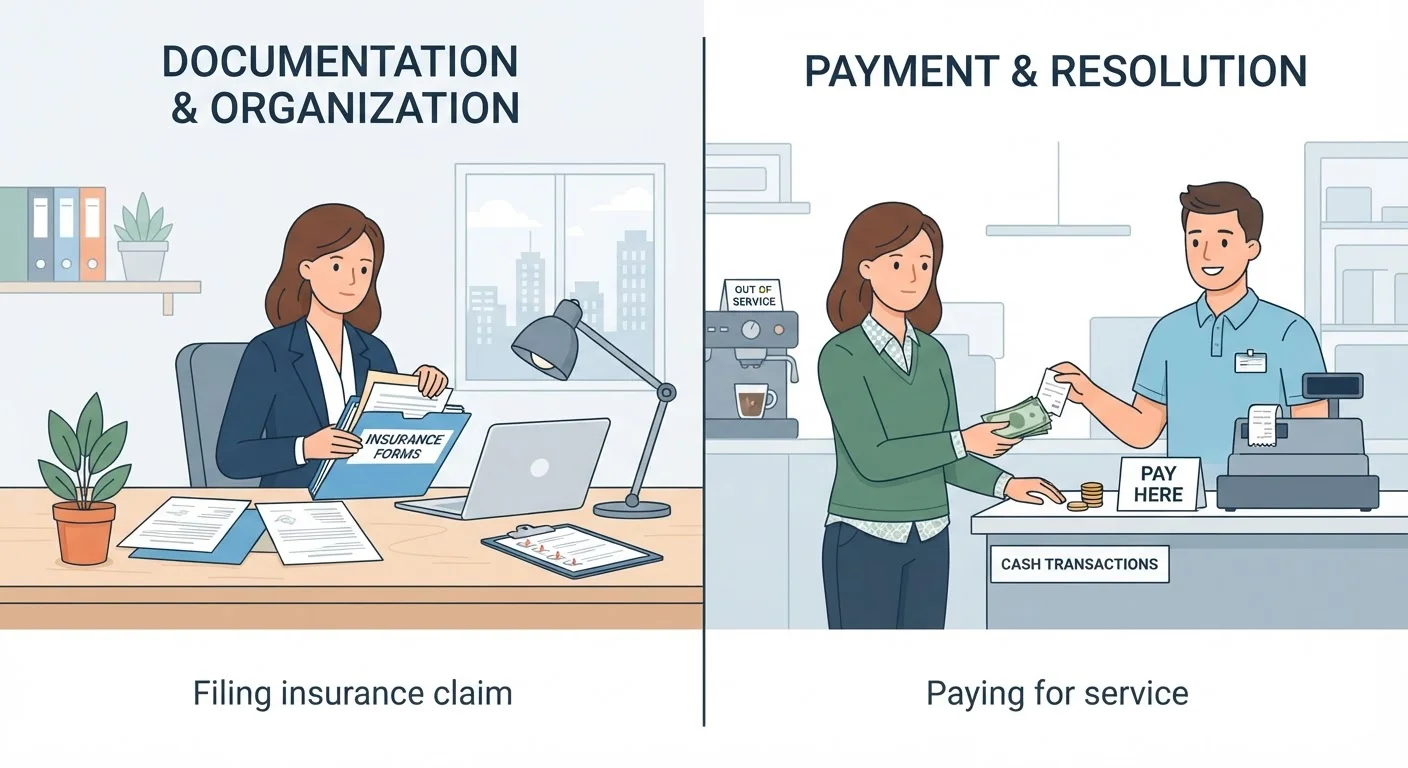
Photo: MoneyOnMind.net | Navigate Money With Clarity editorial
Key Takeaways
- Filing a claim for small losses can raise your premium more than the payout is worth.
- Your deductible is a natural filter: if the loss barely exceeds it, paying out of pocket often makes financial sense.
- Frequent claims can trigger non-renewal, making coverage harder and more expensive to obtain.
- Large, catastrophic losses are exactly what insurance is designed for - file without hesitation in those cases.
- Your claims history follows you across insurers through databases like CLUE, so each filing has lasting consequences.
Covers losses too large to absorb alone
A house fire, major roof damage from a storm, or a multi-thousand-dollar liability judgment are exactly the situations insurance is designed for. Filing ensures you're not wiped out financially by a single event.
Protects cash flow when savings are limited
If you don't have an emergency fund large enough to cover a significant repair, filing a claim prevents you from going into debt or depleting essential savings.
Liability claims should almost always be filed
When a third party is injured or suffers property damage, the potential costs are open-ended. Filing immediately protects you from escalating legal and financial exposure.
Payout can cover the true cost of replacement
Depending on your policy type, a claim may reimburse at replacement cost value rather than depreciated value, yielding significantly more than you'd recover paying out of pocket. See how actual cash value vs. replacement cost affects your payout.
Small claims can trigger premium increases
Insurers may raise your renewal premium after even a single claim, particularly if you've filed before. The additional cost over several years can easily exceed what you received in the payout.
Claims history follows you across insurers
Your CLUE report is accessible to most insurers and typically stores up to seven years of claims data. A record of frequent filings can limit your options when shopping for coverage.
Too many claims can lead to non-renewal
Insurers may choose not to renew a policy if they consider the policyholder too high-risk, forcing you into a higher-cost market or a state-run insurer of last resort.
Net payout on small claims is often minimal
Once your deductible is subtracted, a small claim may yield very little actual reimbursement - sometimes less than $200 - making the risk to your record difficult to justify.
Why the File-or-Pay Decision Matters More Than You Think
Most policyholders assume that because they pay premiums, every covered loss should go through a claim. That's a reasonable assumption - but the economics of insurance don't always work that way. Each claim you file becomes part of your permanent record and can directly influence what you pay for coverage going forward.
Insurers use a national database called the Comprehensive Loss Underwriting Exchange (CLUE) to track claims history. A pattern of frequent filings - even for small, fully paid claims - can signal to underwriters that you represent elevated risk. The result: higher renewal premiums, reduced coverage options, or in some cases, non-renewal of your policy.
Understanding how to weigh a potential claim isn't about gaming the system - it's about using your insurance the way it was intended. For a broader look at how misunderstandings shape policyholder decisions, see common insurance claims misconceptions that can end up costing real money.
7 years
How long claims stay on your CLUE report
The CLUE database, maintained by LexisNexis, retains claims activity for up to seven years, influencing how insurers assess your risk profile at each renewal.
~40%
Premium increase risk after a single claim
According to analyses of insurer rate filings, homeowners who file even one claim can see renewal premiums rise by a substantial margin, with the exact amount varying widely by state and insurer.
The Case for Filing a Claim
Insurance exists to protect you from financial shocks that would be genuinely difficult to absorb on your own. Filing a claim in the right circumstances is not just appropriate - it's exactly what your policy is there for.
Covers losses too large to absorb alone
A house fire, major roof damage from a storm, or a multi-thousand-dollar liability judgment are exactly the situations insurance is designed for. Filing ensures you're not wiped out financially by a single event.
Protects cash flow when savings are limited
If you don't have an emergency fund large enough to cover a significant repair, filing a claim prevents you from going into debt or depleting essential savings.
Liability claims should almost always be filed
When a third party is injured or suffers property damage, the potential costs are open-ended. Filing immediately protects you from escalating legal and financial exposure.
Payout can cover the true cost of replacement
Depending on your policy type, a claim may reimburse at replacement cost value rather than depreciated value, yielding significantly more than you'd recover paying out of pocket. See how actual cash value vs. replacement cost affects your payout.
If you're uncertain about the communication involved once you do file, it's worth reading up on how to talk to your insurer after a loss to protect your position.
The Case for Paying Out of Pocket
Not every covered loss is worth turning into a claim. When the damage is modest, absorbing the cost yourself can be the smarter long-term financial move.
Small claims can trigger premium increases
Insurers may raise your renewal premium after even a single claim, particularly if you've filed before. The additional cost over several years can easily exceed what you received in the payout.
Claims history follows you across insurers
Your CLUE report is accessible to most insurers and typically stores up to seven years of claims data. A record of frequent filings can limit your options when shopping for coverage.
Too many claims can lead to non-renewal
Insurers may choose not to renew a policy if they consider the policyholder too high-risk, forcing you into a higher-cost market or a state-run insurer of last resort.
Net payout on small claims is often minimal
Once your deductible is subtracted, a small claim may yield very little actual reimbursement - sometimes less than $200 - making the risk to your record difficult to justify.
A practical rule of thumb: if the repair estimate is less than twice your deductible, strongly consider paying out of pocket. The premium increase triggered by a claim can easily surpass the net payout over just two or three renewal cycles.
Your Deductible Is Your Decision Threshold
A Framework for Making the Decision
Every situation is different, but a few structured questions can guide your thinking before you call your insurer:
- What is the total out-of-pocket cost? Get a repair estimate first. If the damage costs $600 to fix and your deductible is $500, your claim nets you only $100 - far too little to justify a filing.
- How many claims have you filed recently? Even two claims in three years can flag your file. If you've filed within the last 24 months, think carefully before filing again.
- Is the loss clearly covered? Filing for something that gets denied still appears on your CLUE report. Review your policy or speak with your agent before submitting. Our guide on why claims get denied explains the most common coverage gaps.
- Is this a liability situation? If another person is injured or their property is damaged, file immediately regardless of cost. Liability exposure can escalate far beyond what any individual can manage out of pocket.
Staying organized and knowing your policy well also reduces delays when you do need to file. Good claims habits make a real difference in how smoothly the process unfolds.
This article is for general informational purposes only and does not constitute personalized insurance, financial, or legal advice. Coverage terms, premium impacts, and eligibility vary by insurer, policy, and state. Always read your policy documents carefully and consult a licensed insurance agent or adviser for guidance specific to your situation.
The content on this site is for informational purposes only and is not a substitute for professional advice. Always consult a qualified professional for guidance specific to your situation.