
Open Banking: The Infrastructure Behind Your Favourite Money Apps

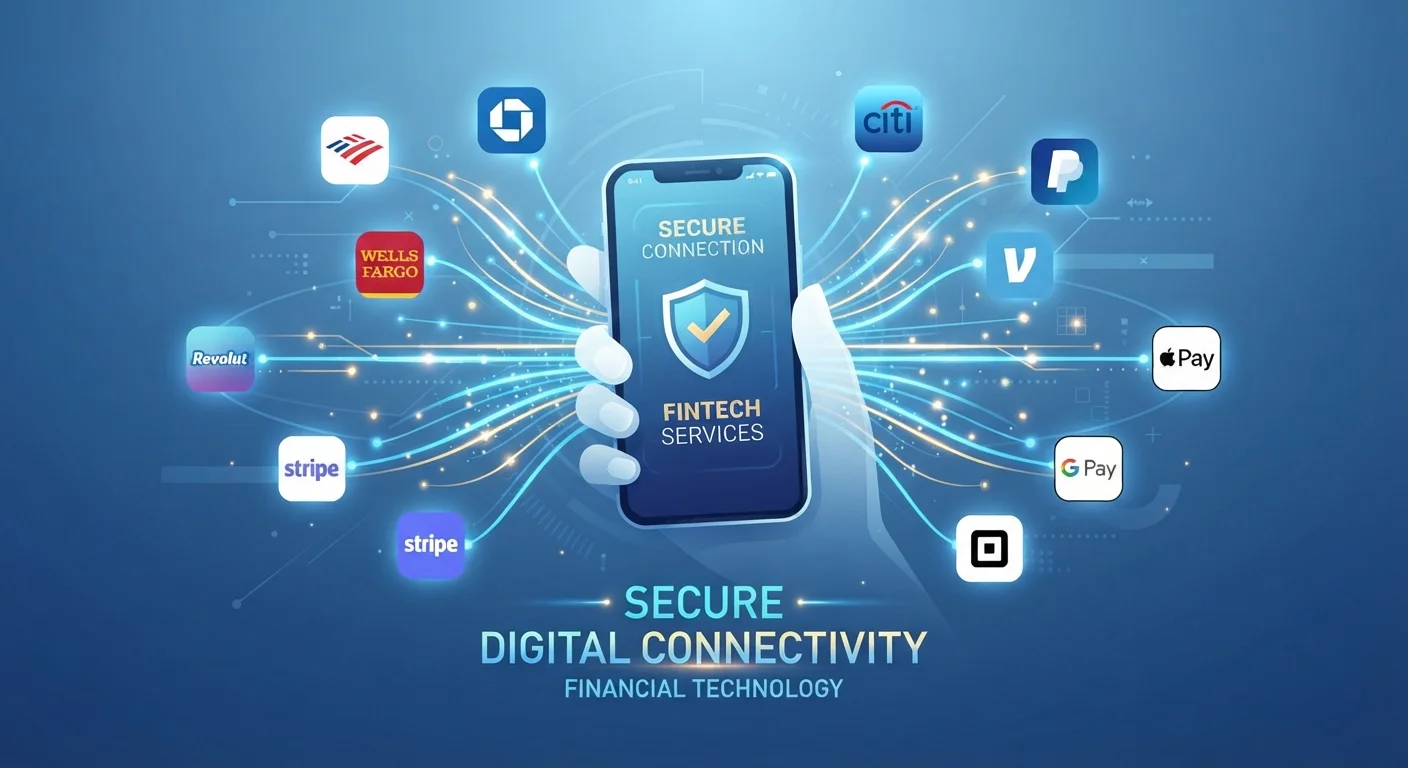
Photo: MoneyOnMind.net | Navigate Money With Clarity editorial
Key Takeaways
- Open banking lets apps access your financial data through secure APIs, not stored passwords.
- You must explicitly grant permission before any third party can read your account data.
- The CFPB's Section 1033 rule is expanding formal consumer data rights in the US.
- You can revoke third-party data access at any time through your bank or the app itself.
- Open banking enables faster loan decisions, smarter budgeting tools, and unified account views.
What Actually Happens When You Connect an App to Your Bank
When you link a budgeting app or a money-transfer service to your bank account, it might feel like magic - but there's a well-defined infrastructure making it work. Open banking is the framework that allows your bank to securely share your financial data with authorized third-party applications.
The core mechanism is an API (Application Programming Interface) - a standardized digital handshake that lets two software systems exchange data in a controlled way. Your bank exposes specific API endpoints, and the third-party app uses those endpoints to retrieve only the data you've approved. At no point does the app need your bank username or password to function; it receives a time-limited access token instead.
This is a significant upgrade over an older method called screen scraping, where apps would log in to your bank as you and scrape the page for data. Screen scraping was fragile, insecure, and put your credentials at risk. Open banking APIs replaced that with a purpose-built, encrypted channel. For a broader look at how digital infrastructure shapes your everyday money management, see our explainer on digital banking.
Open Banking in the US vs. Other Countries
How Consent and Permissions Work
Open banking is fundamentally consent-driven. Before any app can read a single transaction, you must actively authorize it. That authorization typically happens through a flow called OAuth - you're redirected to your bank's own login screen, you approve the connection, and the bank issues a token to the app. You never type your password into the third-party app itself.
Permissions are usually scoped, meaning you can grant access to specific data categories - for example, read-only transaction history - without giving the app the ability to move money or change your account settings. This granularity is an important consumer protection.
You can revoke access at any time. Most banks now maintain a dashboard showing every connected app and allow you to disconnect them with one click. The third-party app may also have its own disconnection option in its settings. Either method stops future data pulls immediately.
Audit Your Connected Apps Regularly
What Open Banking Makes Possible
The practical benefits of open banking are already visible in tools millions of people use daily:
- Budgeting and spending insights: Apps that aggregate transactions across all your accounts - checking, savings, credit cards - into a single dashboard rely on open banking connections to pull that data automatically.
- Faster loan and credit decisions: Lenders can verify your income and cash-flow history in real time instead of requiring weeks of paper bank statements. This is particularly useful for freelancers and gig workers whose income doesn't fit traditional pay-stub verification.
- Account-to-account payments: Open banking enables direct bank-to-bank transfers within payment apps, sometimes eliminating card network fees entirely.
- Personalized financial advice: With a complete picture of your finances, some apps can flag unusual spending, identify subscription charges, or flag when your balance is likely to dip before a large bill hits.
For guidance on getting the most out of these connected tools while keeping fundamentals in order, see practical tips for your banking app.
48M+
US consumers using open banking-linked apps
Industry estimates cited by the Financial Data Exchange (FDX) suggest tens of millions of US consumers have at least one third-party app connected to a financial account.
Section 1033
Key CFPB rule formalizing data rights
The CFPB's Personal Financial Data Rights rule, finalized in 2024, requires covered financial institutions to share consumer data with authorized third parties upon the consumer's request.
Privacy, Risk, and What to Watch For
Open banking improves on screen scraping, but it doesn't eliminate risk entirely. The security of your data depends on both your bank's API implementation and the third party's own practices. Before connecting an app, it's worth reviewing what data it requests, how long it retains that data, and whether it shares it with other companies.
Data minimization is a useful principle: grant only the permissions the app actually needs to function. If a simple budgeting app is asking for the ability to initiate payments, that's worth scrutinizing.
You should also be aware that if a third-party provider suffers a data breach, your transaction history could be exposed even if your bank account itself is untouched. Reading privacy policies is tedious, but the data-sharing section specifically is worth skimming. Our companion article on banking app security goes deeper on how these protections layer together.
For unfamiliar terminology you encounter when connecting accounts, our plain-language glossary is a useful reference.
This article is for general informational purposes only and does not constitute financial, legal, or regulatory advice. Consult a qualified professional for guidance specific to your situation.
Frequently Asked Questions
The content on this site is for informational purposes only and is not a substitute for professional advice. Always consult a qualified professional for guidance specific to your situation.