
Credit Utilisation: The Ratio That Quietly Shapes Your Score

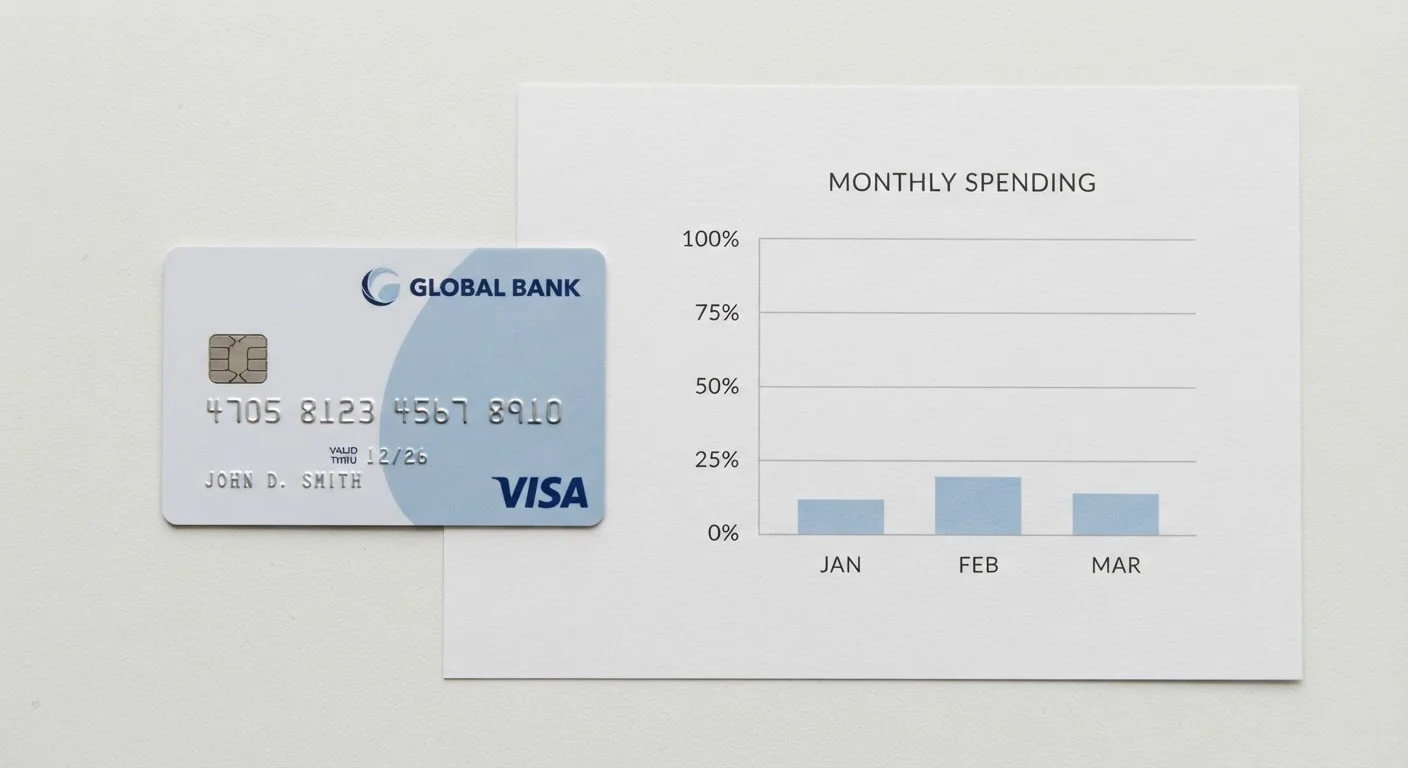
Photo: MoneyOnMind.net | Navigate Money With Clarity editorial
Key Takeaways
- Credit utilisation measures how much of your available revolving credit you're currently using.
- It accounts for roughly 30% of your FICO score - the second-largest scoring factor.
- Most credit experts recommend keeping utilisation below 30%, with below 10% being ideal.
- Your utilisation is typically reported at your statement closing date, not your payment due date.
- Paying balances down and requesting credit limit increases are two proven ways to lower your ratio.
Why Utilisation Matters So Much
Of all the factors shaping your credit score, credit utilisation is the one many beginners overlook - yet it carries outsized weight. It represents approximately 30% of a FICO score, making it the second most influential factor after payment history. To understand your full score picture, it helps to read our breakdown of all five credit score factors.
The logic behind utilisation is straightforward: lenders view high balances relative to your credit limits as a sign of financial strain. Even if you've never missed a payment, consistently using most of your available credit suggests you may be over-reliant on borrowed money - and that increases perceived lending risk.
~30%
Share of FICO score tied to amounts owed
According to FICO, 'amounts owed' - which includes credit utilisation - is the second-largest factor in standard FICO score calculations.
<10%
Utilisation rate seen in consumers with top scores
FICO data indicates that high scorers (800+) typically carry very low utilisation ratios, often in the single digits.
30%
Commonly cited utilisation threshold
Consumer finance educators widely reference 30% as the upper boundary to aim for, with lower being better for score optimization.
How Credit Utilisation Is Calculated
The formula is simple: divide your current revolving balance by your total credit limit, then multiply by 100 to get a percentage.
Example: You have two credit cards. Card A has a $2,000 limit with a $500 balance. Card B has a $3,000 limit with a $600 balance. Your total balance is $1,100 and your total limit is $5,000 - giving you an aggregate utilisation of 22%.
Scoring models look at both your overall utilisation and individual card utilisation. A single maxed-out card can hurt your score even if your combined ratio looks healthy. It's also worth knowing that utilisation figures reported to the bureaus typically reflect your statement closing balance - not what you owe on your payment due date. This means your balance could appear high even if you pay it off immediately after.
For a deeper look at how utilisation data flows into your overall credit profile, see our article on how your credit report and credit score work together.
Practical Ways to Lower Your Utilisation
Improving your credit utilisation ratio doesn't require dramatic financial changes. Several straightforward strategies can move the needle meaningfully:
- Pay before your statement closes. Since balances are usually reported at your statement closing date, making a payment before that date ensures a lower balance gets reported to the bureaus.
- Make mid-cycle payments. If you tend to carry balances, making an extra payment mid-month can reduce what gets reported.
- Request a credit limit increase. If your income or credit profile has improved, asking your card issuer for a higher limit raises your available credit - lowering your ratio without reducing spending, as long as balances stay the same.
- Avoid closing unused cards. Keeping old accounts open preserves your total available credit. Closing them shrinks that limit and pushes utilisation up. Learn more about habits that quietly erode a good credit score.
Time Your Payments Strategically
These strategies work best when applied consistently over time. Credit scores reflect recent behavior, so sustained low utilisation compounds positively month after month.
This article is for general informational purposes only and does not constitute personalised financial or credit advice. For guidance specific to your situation, consider consulting a licensed financial professional.
Frequently Asked Questions
The content on this site is for informational purposes only and is not a substitute for professional advice. Always consult a qualified professional for guidance specific to your situation.