
The Three Credit Bureaus and Why Your Reports Differ Between Them

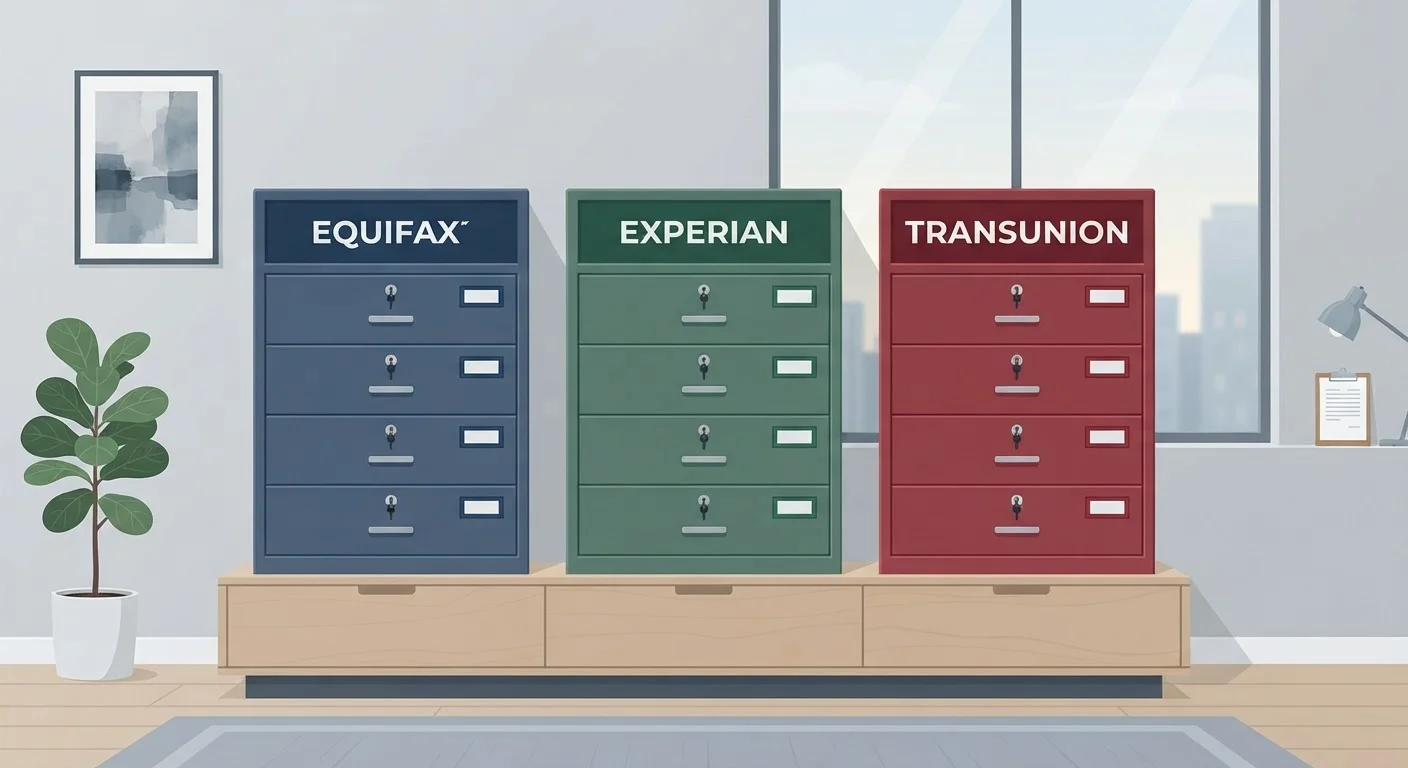
Photo: MoneyOnMind.net | Navigate Money With Clarity editorial
Key Takeaways
- Equifax, Experian, and TransUnion each collect credit data independently from one another.
- Not all lenders report to all three bureaus, causing your reports to differ.
- Discrepancies between reports are normal but should still be reviewed for errors.
- You are entitled to a free credit report from each bureau annually via AnnualCreditReport.com.
- A difference in report data directly causes differences in your credit scores across bureaus.
How the Three Bureaus Actually Work
Most people assume the three major credit bureaus - Equifax, Experian, and TransUnion - share a single pool of data. They don't. Each bureau operates its own independent database, building your credit file from information submitted directly to them by creditors, lenders, and other data furnishers.
Think of each bureau as a separate filing system. When a bank extends you a credit card or a student loan servicer updates your balance, they send that information to whichever bureaus they have a reporting relationship with. There is no central clearinghouse that automatically synchronizes this data across all three.
To understand what goes into each file, it helps to first review what a credit report actually contains - from account history to public records and hard inquiries.
The Bureaus Are Not Government Agencies
Why Your Reports Look Different Across Bureaus
The most common reason your reports differ is straightforward: not every lender reports to all three bureaus. A creditor might send updates to Equifax and TransUnion but not Experian, or vice versa. This means an account that appears on two of your reports may be completely absent from the third.
Beyond coverage gaps, timing plays a role. Lenders typically report on a monthly cycle, but those cycles don't align perfectly across bureaus. A payment you made last week might be reflected in one bureau's data before the others catch up. This lag can cause temporary discrepancies in balances, credit utilization, and payment status.
Personal information can also drift. If you've moved recently or changed your name, each bureau updates its records independently - so your address or name history may not match across all three files.
3
Separate credit reports maintained per consumer
Every U.S. consumer has a distinct credit file at each of the three major bureaus - Equifax, Experian, and TransUnion - because each collects data independently.
~1 in 5
Consumers with errors on at least one credit report
A study by the Federal Trade Commission found that approximately one in five consumers had an error on at least one of their three credit reports.
These differences cascade directly into your credit scores. Because scoring models like FICO calculate your score from the data in a specific bureau's report, different input data produces different output numbers. This is explained in more detail in our article on why credit scores differ across bureaus and platforms.
What This Means for Managing Your Credit
Because your three reports are independent, managing your credit health means paying attention to all three - not just the one a particular app or lender happens to show you. A problem on one report may not appear on the others, which means you could be unaware of it until a lender pulls that specific file.
Errors and inaccuracies are more likely to affect one report than all three simultaneously. Common issues - like a debt being reported multiple times or an account belonging to someone else - may only appear at one bureau. Our explainer on why the same debt can appear multiple times breaks down how duplicate entries happen and what you can do about them.
Space Out Your Free Report Requests
Under federal law, you're entitled to one free credit report from each bureau annually through AnnualCreditReport.com. Reviewing all three - not just one - gives you a complete picture of your credit standing and helps you catch discrepancies before they affect a loan application or rental decision.
For a deeper look at how your credit report and credit score work together, see our guide on the difference between your credit report and credit score.
This article is for general informational and educational purposes only and does not constitute personalized financial, legal, or credit advice. For guidance specific to your situation, consult a qualified financial professional.
Frequently Asked Questions
The content on this site is for informational purposes only and is not a substitute for professional advice. Always consult a qualified professional for guidance specific to your situation.