
The Honest Trade-Offs of Zero-Based Budgeting

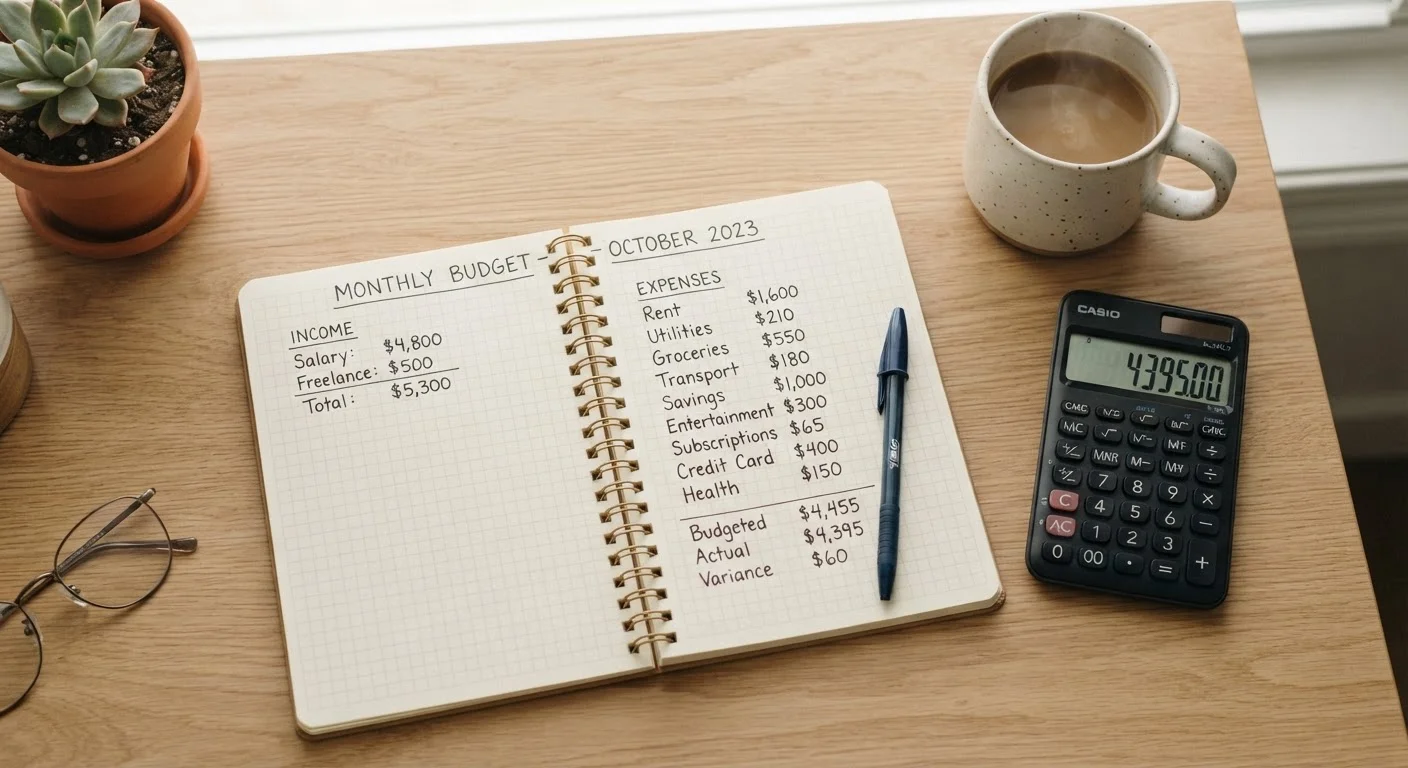
Photo: MoneyOnMind.net | Navigate Money With Clarity editorial
Key Takeaways
- Zero-based budgeting assigns every dollar of income to a specific category, leaving a balance of zero.
- It offers exceptional spending visibility but requires significant time and consistency to maintain.
- The method works best for people with stable, predictable incomes rather than irregular earners.
- Digital tools can reduce the time burden, but the mental discipline is still required.
- No single budgeting method suits everyone - knowing the trade-offs helps you choose wisely.
Complete visibility over every dollar spent
Assigning each dollar to a category forces you to confront all spending - including the small, habitual purchases that quietly drain accounts over time.
Savings and debt payments become non-negotiable
When savings are allocated at the start of the month rather than funded with 'whatever's left,' they happen consistently - a structural shift with meaningful long-term impact.
Reveals spending misalignments quickly
If your categories don't add up to your income, the gap is immediately obvious - making it easier to identify and cut spending that doesn't match your priorities.
Builds active financial awareness over time
Regular engagement with your budget reinforces the habit of thinking about money deliberately, which tends to improve financial decision-making more broadly.
Time-intensive to set up and maintain monthly
A complete zero-based budget can take an hour or more to build each month, plus ongoing check-ins to stay on track - a real commitment for busy individuals.
Difficult to apply with variable or irregular income
Without a fixed monthly income, estimating totals introduces uncertainty that undermines the precision ZBB is designed to provide, requiring extra planning steps.
Can feel overly rigid or restrictive
Some people find granular category limits stressful rather than empowering, especially when unexpected expenses push them over a single category's allocation mid-month.
Higher risk of abandonment if not simplified
The more detailed the budget, the harder it is to sustain; without the right tools or habits, many people drop the method within one to three months.
What Zero-Based Budgeting Actually Means
Zero-based budgeting (ZBB) is a method where you assign every dollar of your take-home income to a specific category - expenses, savings, debt payments, or discretionary spending - until your remaining balance equals zero. The name can be misleading: it doesn't mean you spend everything or end the month broke. It means every dollar has a deliberate destination before you spend it.
This differs from casual budgeting, where spending happens first and tracking comes after. With ZBB, you build the plan upfront. If you earn $3,500 a month, you allocate exactly $3,500 across all categories. If $200 is unassigned, you give it a purpose - whether that's an emergency fund contribution or a debt payment.
To understand how this fits alongside other approaches, see budgeting methods worth knowing for a broader comparison.
The Real Advantages
ZBB's core strength is visibility. Because you categorize every dollar, it becomes very hard to lose track of where money goes. Passive spending - the subscriptions you forgot, the daily small purchases that accumulate - gets surfaced immediately.
Complete visibility over every dollar spent
Assigning each dollar to a category forces you to confront all spending - including the small, habitual purchases that quietly drain accounts over time.
Savings and debt payments become non-negotiable
When savings are allocated at the start of the month rather than funded with 'whatever's left,' they happen consistently - a structural shift with meaningful long-term impact.
Reveals spending misalignments quickly
If your categories don't add up to your income, the gap is immediately obvious - making it easier to identify and cut spending that doesn't match your priorities.
Builds active financial awareness over time
Regular engagement with your budget reinforces the habit of thinking about money deliberately, which tends to improve financial decision-making more broadly.
The method also accelerates goal progress. When savings and debt payments are treated as fixed allocations rather than afterthoughts, they tend to actually happen. Many people who switch to ZBB report that it's the first time they consistently contribute to savings - not because they earned more, but because the structure made it non-negotiable.
If you're challenging the belief that budgeting limits your life, common budgeting myths offers some useful perspective on what structured budgeting actually delivers.
The Honest Disadvantages
ZBB's demands are significant. Building a zero-based budget from scratch takes time - often an hour or more at the start of each month - and maintaining it requires regular check-ins throughout the month. For people with busy schedules or low tolerance for administrative tasks, this friction is a genuine barrier.
Time-intensive to set up and maintain monthly
A complete zero-based budget can take an hour or more to build each month, plus ongoing check-ins to stay on track - a real commitment for busy individuals.
Difficult to apply with variable or irregular income
Without a fixed monthly income, estimating totals introduces uncertainty that undermines the precision ZBB is designed to provide, requiring extra planning steps.
Can feel overly rigid or restrictive
Some people find granular category limits stressful rather than empowering, especially when unexpected expenses push them over a single category's allocation mid-month.
Higher risk of abandonment if not simplified
The more detailed the budget, the harder it is to sustain; without the right tools or habits, many people drop the method within one to three months.
Budgeting With Irregular Income
The method is also harder to apply when income is variable. Freelancers, gig workers, or people with commission-based pay face an extra layer of complexity: they must estimate income before budgeting, which introduces uncertainty into a system designed for precision. This doesn't make ZBB impossible for irregular earners, but it does require additional strategies, such as budgeting from a conservative income baseline.
How It Compares to Simpler Alternatives
The most common alternative to ZBB is the 50/30/20 rule - a framework that allocates 50% of after-tax income to needs, 30% to wants, and 20% to savings and debt repayment. It's faster to set up and easier to maintain, but it sacrifices the granular control that makes ZBB powerful.
~1 in 3
Americans follow a detailed written budget
According to Gallup polling data, only around one-third of U.S. adults maintain a detailed household budget - suggesting the discipline ZBB requires is genuinely uncommon.
20%
Savings target under the 50/30/20 rule
The 50/30/20 framework allocates a fixed percentage to savings, offering a simpler but less granular alternative to zero-based budgeting for beginners.
For those new to budgeting altogether, starting with a broader framework and moving toward ZBB over time is a reasonable path. a detailed comparison of these two methods can help you decide which fits your current situation. And if you're still building the foundational habit, what personal budgeting really means is a useful starting point.
This article is for general informational purposes only and does not constitute personalized financial advice. Your financial situation is unique - consider speaking with a qualified financial adviser before making significant changes to how you manage your money.
The content on this site is for informational purposes only and is not a substitute for professional advice. Always consult a qualified professional for guidance specific to your situation.