
Rebalancing a Portfolio: What It Means and When to Do It

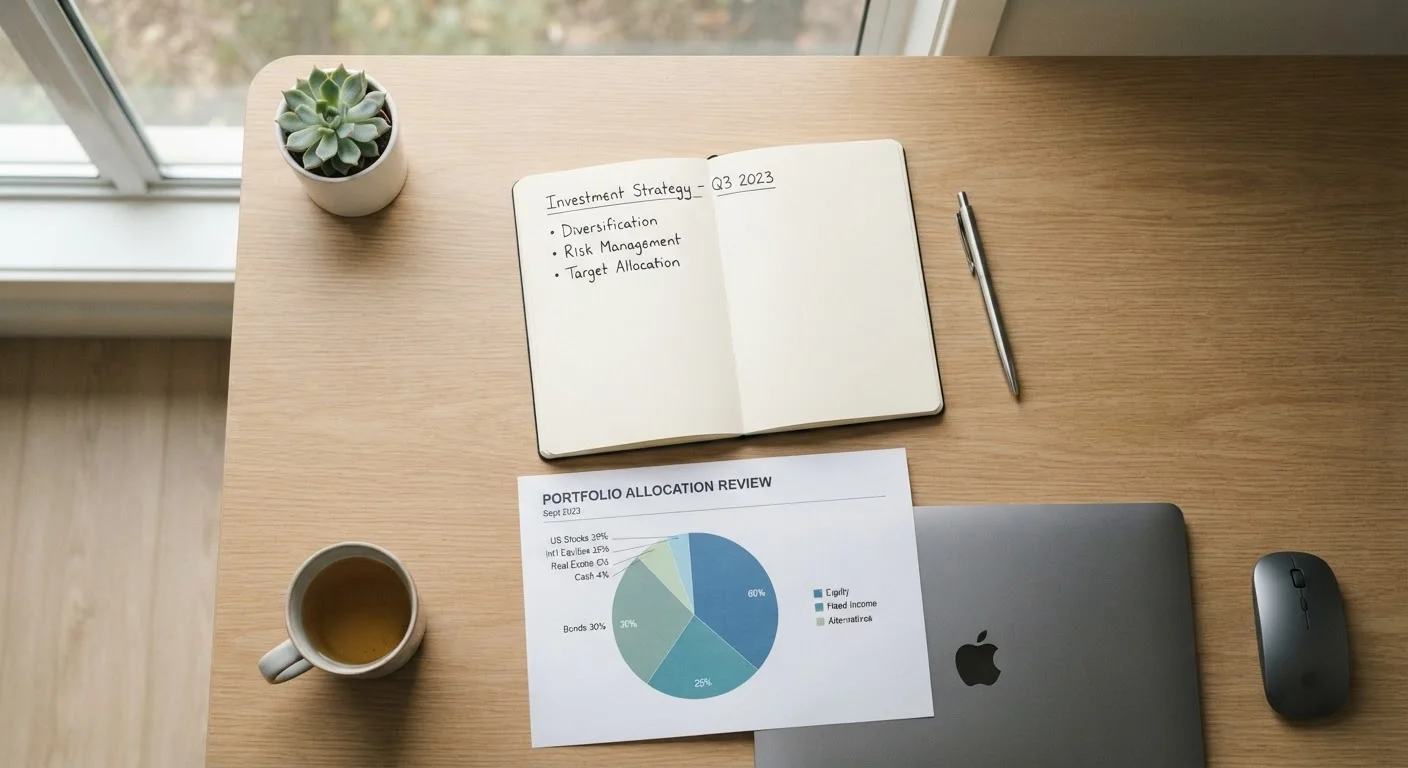
Photo: MoneyOnMind.net | Navigate Money With Clarity editorial
Key Takeaways
- Rebalancing restores your portfolio to its original target allocation after market drift.
- You can rebalance on a set schedule (calendar-based) or when drift exceeds a set threshold.
- Rebalancing is not about chasing performance - it is about managing risk consistently.
- In tax-advantaged accounts, rebalancing has no immediate tax consequences.
- New contributions can sometimes rebalance a portfolio without requiring any selling.
Why Your Portfolio Drifts Over Time
When you first build an investment portfolio, you choose a specific mix of assets - for example, 70% stocks and 30% bonds - based on your goals and comfort with risk. This is your target allocation. The problem is that different assets grow at different rates. If stocks have a strong year, that 70% slice might swell to 80%, leaving you with more risk than you originally intended.
This gradual shift is called allocation drift. It is entirely natural and happens in every portfolio. Left unaddressed, drift means you could be taking on significantly more (or less) risk than your plan was designed for - without realising it. That misalignment can work against your long-term strategy, especially when markets eventually correct.
Understanding drift is the first step. The second step is knowing how to fix it. That is exactly what rebalancing does. If you are still deciding on your original mix, the guide on asset allocation across your lifetime explains how to choose a starting allocation that matches your life stage.
Two Common Rebalancing Approaches
There is no single correct way to rebalance. Most investors use one of two approaches - or a combination of both.
Calendar-Based Rebalancing
You review and adjust your portfolio on a fixed schedule - typically once or twice a year. This approach is simple and requires minimal monitoring. It works well for investors who prefer a low-maintenance strategy and want to avoid constantly watching the market.
Threshold-Based Rebalancing
You set a drift limit - say, 5% - and rebalance only when any asset class moves beyond that boundary. This is more responsive to actual market conditions and can reduce unnecessary trading during calm periods. It does require more regular check-ins to track your allocations.
Many beginner investors find calendar-based rebalancing easier to stick with, since it removes emotion from the decision. The annual investor review checklist is a useful companion for anyone using a once-a-year approach.
Use New Contributions to Rebalance First
The Mechanics: How Rebalancing Actually Works
Rebalancing works by selling assets that are now overweight and buying those that are underweight. Suppose your target is 70% stocks and 30% bonds, but strong stock performance has pushed you to 80%/20%. To rebalance, you would sell some stocks and use the proceeds to buy bonds until you return to 70/30.
Alternatively - and often more tax-efficiently - you can simply direct new contributions toward the underweight asset class. If you invest a set amount each month, routing it toward bonds until balance is restored avoids selling altogether.
5%
Common drift threshold triggering rebalancing
Many financial planning frameworks suggest rebalancing when any asset class strays more than 5 percentage points from its target weight.
1-2×
Recommended rebalancing frequency per year
Academic research on portfolio management generally finds that annual or semi-annual rebalancing captures most of the risk-control benefit without excessive trading costs.
In tax-advantaged accounts such as a 401(k) or IRA, rebalancing is generally straightforward because trades do not trigger immediate tax consequences. In taxable brokerage accounts, selling appreciated assets may generate capital gains. Consulting a qualified tax professional can help you understand the implications for your specific situation before you act.
If you are still setting up the structure of your portfolio, the walkthrough for building a long-term portfolio from scratch covers the foundational decisions that make rebalancing easier down the line.
This article is for general informational and educational purposes only and does not constitute personalised financial, investment, or tax advice. Consult a licensed financial adviser or tax professional before making decisions based on your individual circumstances.
Frequently Asked Questions
The content on this site is for informational purposes only and is not a substitute for professional advice. Always consult a qualified professional for guidance specific to your situation.