
Short-Term vs. Long-Term Loans: How Loan Length Reshapes Your Finances

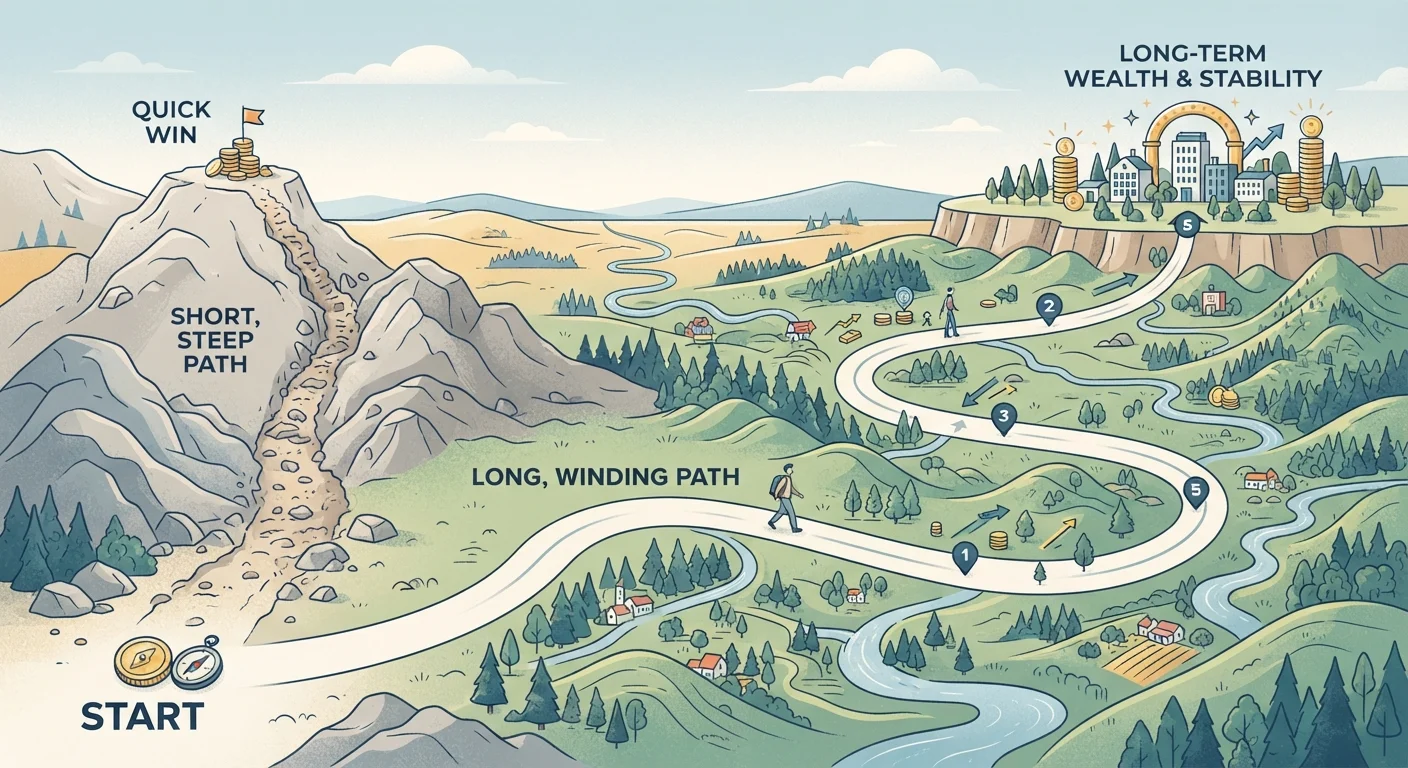
Photo: MoneyOnMind.net | Navigate Money With Clarity editorial
Key Takeaways
- Short-term loans cost less in total interest but demand higher monthly payments.
- Long-term loans reduce monthly pressure but significantly increase the total amount repaid.
- Loan term length affects your cash flow, credit profile, and long-term financial flexibility.
- Neither option is universally better - the right choice depends on your income stability and goals.
- Always calculate total repayment cost, not just the monthly payment, before committing.
What Loan Term Actually Means
The loan term is the length of time you have to repay what you borrowed. It is typically expressed in months or years and agreed upon at origination - the point when the loan is issued. Common short-term personal loan terms run from 12 to 36 months, while long-term loans can stretch from 5 to 30 years depending on the loan type (auto, mortgage, student, etc.).
The term you choose directly controls two things that pull in opposite directions: your monthly payment amount and your total interest cost. Understanding this tension is foundational. As the repayment terms guide explains, a lower interest rate does not automatically make a loan cheaper if the term is significantly longer.
Loan term interacts closely with amortisation - the process by which each payment is split between interest and principal. In early payments, a larger share goes to interest; over time, more chips away at the principal. A longer term means you spend more time in that interest-heavy phase. See how amortisation schedules work for a full breakdown of this mechanic.
Short-Term Loans: Higher Payments, Lower Total Cost
A short-term loan compresses repayment into a tighter window. That compression forces higher monthly payments, but it also means the lender has less time to collect interest - so the total amount you repay is lower.
Example: Borrow $15,000 at 7% APR over 24 months and your monthly payment is approximately $672. Total repaid: roughly $16,130. The same loan stretched to 60 months drops the monthly payment to about $297 - but total repayment climbs to around $17,820. That $1,690 difference is the cost of the longer term, all else equal.
~$1,690
Extra cost of extending a $15,000 loan from 24 to 60 months
Illustrative calculation at 7% APR; actual figures vary by lender, credit profile, and rate.
~2×
Total interest relative to principal on a 30-year mortgage
On a long-term fixed mortgage, cumulative interest payments can approach or exceed the original loan amount depending on the rate.
Short-term loans suit borrowers who have reliable income, limited existing debt obligations, and a goal of becoming debt-free quickly. They also tend to result in a faster improvement in your debt-to-income ratio (DTI) - the share of your gross monthly income consumed by debt payments - which matters when you apply for future credit. For more on how borrowing costs compound over time, the long-term cost of a low credit score illustrates how financial decisions interconnect.
Long-Term Loans: Lower Payments, Higher Total Cost
Spreading repayment over more years reduces your monthly obligation, which can make a loan feel manageable - or make an otherwise unaffordable purchase accessible. Mortgages exist almost entirely because of this principle: very few people could afford to buy a home on a 3-year repayment schedule.
The trade-off is real, though. Every additional month of repayment is another month the outstanding principal balance accumulates interest. Over 20 or 30 years on a mortgage, total interest paid can exceed the original loan amount.
| Short-Term Loan | Long-Term Loan | |
|---|---|---|
| Typical term length | 12-36 months | 5-30 years |
| Monthly payment | Higher | Lower |
| Total interest paid | Lower | Higher |
| Debt-free timeline | Faster | Slower |
| Impact on debt-to-income ratio | Improves quickly | Stays elevated longer |
| Budget flexibility | Less monthly room | More monthly room |
| Best suited to | Stable, higher income | Tighter or variable cash flow |
Long-term loans also keep your DTI elevated for longer, which can constrain future borrowing capacity. That said, a lower monthly payment does create budget flexibility - room to contribute to an emergency fund or retirement account. The article balancing debt repayment with forward-looking goals explores how to pursue both simultaneously.
Don't Let a Low Payment Mask High Total Cost
Choosing the Right Term for Your Situation
Neither short nor long is inherently superior. The right term depends on a structured assessment of your finances - not just what the lender offers or what minimises the monthly payment.
- Map your monthly cash flow. Calculate income minus essential expenses and existing debt payments. Can you comfortably absorb a higher short-term payment without cutting into your emergency fund?
- Quantify total repayment cost. Use a loan calculator to compare total interest across different term lengths at the quoted APR. Always compare this number, not just the monthly figure. The difference between APR and interest rate matters significantly here.
- Consider income stability. Variable or commission-based income may justify a longer term with lower minimums, even if you plan to make extra payments when income is higher.
- Factor in your broader goals. If you plan to apply for a mortgage or car loan within two years, reducing your DTI quickly via a short-term loan may be strategically worthwhile. The framework for sequencing financial goals can help you prioritise.
Make Extra Payments on Long-Term Loans
Finally, note that loan term interacts with rate structure. A variable-rate loan over a long term carries compounding uncertainty - the rate can shift over years in ways that affect total cost materially. The fixed vs. variable interest rate comparison should inform any long-term loan decision.
This article is for general informational purposes only and does not constitute personalised financial or lending advice. Loan terms, rates, and eligibility vary by lender and individual circumstances. Consult a qualified financial adviser before making borrowing decisions.
The content on this site is for informational purposes only and is not a substitute for professional advice. Always consult a qualified professional for guidance specific to your situation.